

How Can You Prepare a Realistic Budget for an Activity Proposal?
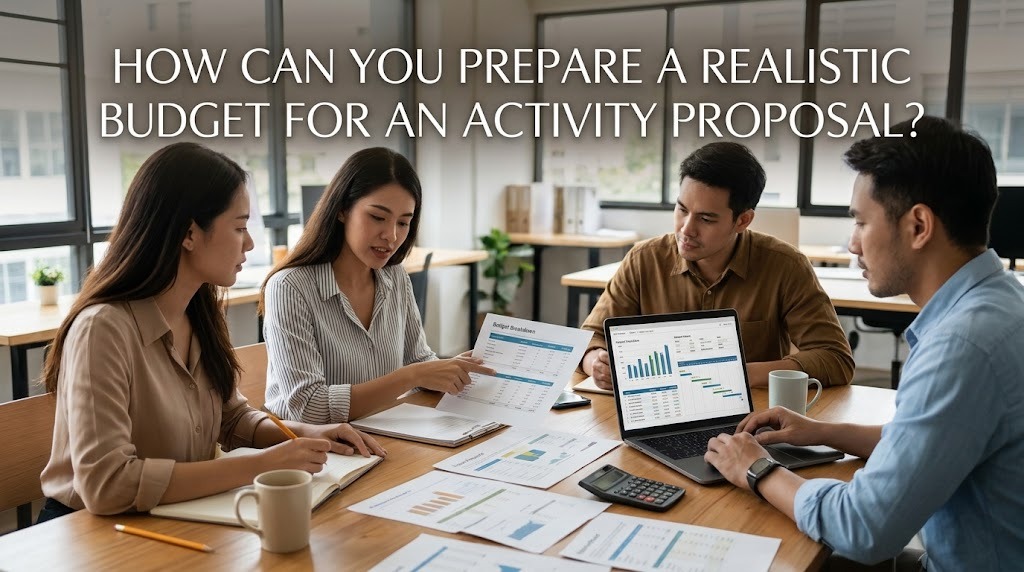
Preparing a realistic budget is an essential step in writing an effective activity proposal. A budget helps organizers estimate the costs required to conduct an event and determine whether the available funds are sufficient. Without proper financial planning, an activity may face unexpected expenses, resource shortages, or delays during implementation. A well-prepared budget also helps schools, universities, organizations, and potential sponsors evaluate whether a proposed activity is financially feasible. By identifying expenses carefully, comparing prices, and allocating funds appropriately, organizers can create a transparent, accurate, and responsible budget plan.
UNDERSTANDING THE IMPORTANCE OF A BUDGET PLAN
A budget plan is a financial estimate that describes the expected expenses and funding sources for a proposed activity. It provides an overview of how much money is needed and how the funds will be used. Common expenses include venue rental, equipment, transportation, food, printing, decorations, documentation, and other materials required for the event. The items included depend on the type, size, and duration of the activity. By preparing a detailed budget, organizers can understand the financial requirements before making final decisions.
A realistic budget also supports financial transparency and accountability. School administrators, organization leaders, and sponsors can review the estimated costs and determine whether the requested funding is reasonable. For example, a student seminar with 100 participants may require a different budget from a small classroom discussion with 20 participants. Listing expenses individually helps prevent unnecessary spending and makes financial decisions easier to explain. A clear budget also provides a reference for comparing estimated costs with actual expenses after the activity has finished.
IDENTIFY ALL EXPENSES REQUIRED FOR THE ACTIVITY
The first step in preparing a realistic budget is identifying every expense that may be necessary to carry out the proposed activity. Organizers should review the activity plan, schedule, venue, participant requirements, and equipment needs. Each planned activity should be checked to determine whether it requires materials, services, or additional personnel. This process helps prevent important expenses from being overlooked. Organizers should focus on items that directly support the objectives and successful implementation of the event.
Typical expenses in an activity proposal include the following:
- Venue and Facilities: Room rental, electricity, sound systems, and other necessary facilities.
- Equipment and Supplies: Stationery, presentation equipment, decorations, and activity materials.
- Consumption: Meals, drinking water, and refreshments for participants or committee members when necessary.
- Transportation: Travel expenses for speakers, organizers, equipment, or participants when applicable.
- Publication and Promotion: Posters, banners, printing, and approved promotional materials.
- Documentation: Photography, video recording, and preparation of activity reports.
- Certificates and Awards: Certificates, prizes, or recognition materials when included in the program.
Not every activity requires all these items. Organizers should select expenses according to actual needs rather than including unnecessary purchases. They should also distinguish between essential costs and optional expenses that can be reduced if funding is limited. This approach helps ensure that the budget remains focused and manageable.
ESTIMATE COSTS ACCURATELY AND COMPARE PRICES
After identifying the expenses, organizers should estimate the cost of each item using reliable information. They can check current market prices, request quotations from suppliers, or compare offers from several service providers. When possible, the budget should include the quantity, unit price, and total cost of each item. The basic calculation is to multiply the quantity required by the estimated unit price. This method makes the calculations easier to verify and update when circumstances change.
For example, if an activity requires 100 printed booklets at Rp5,000 each, the estimated printing cost is Rp500,000. If the organizers need 10 boxes of stationery at Rp25,000 per box, the total stationery cost is Rp250,000. These figures are illustrative examples, not current supplier quotations. Organizers should verify actual prices before submitting their proposals. They should also consider delivery fees, taxes, or other applicable charges so the final estimate reflects the likely total cost. Comparing prices can help reduce expenses without sacrificing essential quality.
DETERMINE FUNDING SOURCES AND ALLOCATE THE BUDGET
A realistic budget should explain where the money needed for the activity will come from. Potential funding sources may include school or university allocations, organization funds, participant registration fees, approved contributions, donations, or sponsorships. Organizers should distinguish between confirmed funding and expected funding so decision-makers can assess the financial situation accurately. They should not assume that a sponsor will provide money before receiving confirmation. If the activity depends on external support, the proposal should explain how the organizers will proceed if the expected funds are not available.
Budget allocation should prioritize expenses that are essential to achieving the activity's objectives. For example, an educational workshop may need to prioritize learning materials, a suitable venue, and necessary equipment before spending money on elaborate decorations. Organizers can prepare several options to accommodate different funding levels. A minimum budget can cover essential requirements, while an expanded budget can include additional features if sufficient funds become available. This approach supports flexible financial planning and helps organizers make responsible decisions when resources are limited.
PREPARE A CLEAR AND ORGANIZED BUDGET TABLE
A budget table allows readers to review the estimated expenses quickly and understand how the total cost is calculated. Each item should have a clear description, quantity, unit price, and total price. Expenses can also be grouped into categories, such as equipment, consumption, transportation, and documentation. The total budget should be calculated carefully to avoid arithmetic errors. If the proposal includes funding from several sources, organizers may provide a separate summary showing the expected contributions.
The figures above are examples for demonstrating budget preparation and should be adjusted to actual local prices and event requirements. Organizers should ensure that every item is necessary and that the total corresponds to the implementation plan. If a contingency allocation is appropriate, it should be identified separately, justified, and used in accordance with institutional or funding rules. A clear budget table makes the proposal easier to evaluate and helps establish trust with decision-makers.
REVIEW THE BUDGET AND PREPARE FOR UNEXPECTED COSTS
Before submitting the proposal, organizers should review the budget to confirm that all expenses are reasonable, necessary, and consistent with the activity plan. They should check calculations, verify quantities, compare prices, and ensure that the proposed funding can cover the estimated costs. The budget should also match the number of participants, the event schedule, and the resources required. If the total cost exceeds the available funding, organizers may need to reduce optional expenses, seek additional support, or adjust the scale of the activity. These adjustments should not undermine essential safety requirements or the main objectives.
Organizers should also consider the possibility of unexpected expenses, such as price changes, additional materials, or transportation adjustments. When permitted by the institution or sponsor, a contingency reserve can help manage reasonable unforeseen costs. The reserve should be based on the activity's risks and applicable financial guidelines rather than selected arbitrarily. During implementation, all spending should be documented through receipts, invoices, or other appropriate records. After the event, organizers should compare actual expenses with the original budget and explain significant differences. This process improves accountability and provides useful information for planning future activities.
CONCLUSION
Preparing a realistic budget for an activity proposal requires careful expense identification, accurate price estimates, appropriate funding sources, and clear financial calculations. Organizers should prioritize essential costs, compare supplier prices, and present their estimates in an organized budget table. They must also review the budget to ensure that it matches the activity plan and remains within the available resources. Preparing for unexpected expenses and documenting actual spending can further improve financial accountability. With realistic budgeting and responsible financial management, organizers can create activity proposals that are more credible, practical, and likely to gain approval.
Recent Posts

Bagaimana Sistem SKS pada Program Kuliah... 22.11.2026/56 View

How Does Technology Make Daily Evaluation... 21.11.2026/86 View

Apa Strategi Menghadapi Kesenjangan antara Kompetensi... 21.11.2026/84 View

Mengapa Inventaris Aset Penting bagi Kelancaran... 21.11.2026/82 View

When Should Musicians Join a Record... 21.11.2026/86 View
