

How Can You Prevent Recording Errors in Attendance Journals?
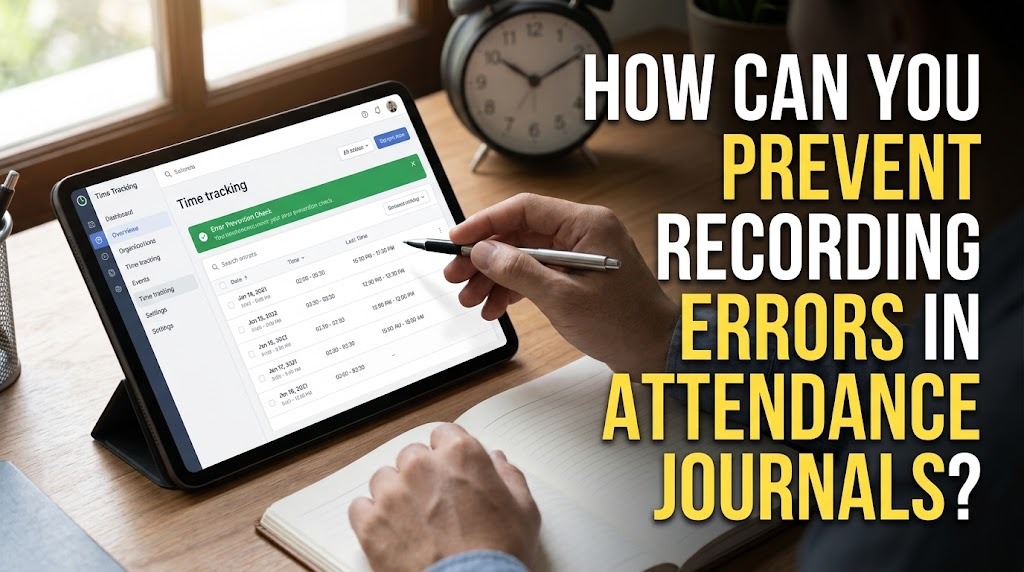
Attendance journals are essential tools for recording employee or student attendance accurately. Businesses, schools, and other organizations rely on these records to monitor punctuality, manage schedules, prepare reports, and evaluate attendance patterns. However, recording errors can occur because of incorrect data entry, forgotten check-ins, inconsistent formats, or technical problems. If these mistakes are not corrected, they may lead to inaccurate reports, payroll discrepancies, and misunderstandings between employees and management.
Preventing attendance recording errors requires clear procedures, consistent data entry, and regular verification. Organizations can use manual journals, spreadsheets, or digital attendance systems, depending on their needs and available resources. Each method requires appropriate controls to ensure that the information remains complete and reliable. By implementing effective attendance management practices, organizations can reduce mistakes, improve administrative efficiency, and maintain trustworthy records.
ESTABLISH CLEAR ATTENDANCE RECORDING PROCEDURES
Clear recording procedures help ensure that everyone follows the same process when documenting attendance. Organizations should explain who is responsible for recording attendance, when entries must be completed, and what information is required. For example, an employee attendance journal may include the employee's name, date, arrival time, departure time, and attendance status. Standard procedures reduce confusion and help prevent incomplete or inconsistent entries.
Employees and administrators should also understand how to report forgotten check-ins, incorrect timestamps, and other attendance problems. Corrections should follow a defined process that includes appropriate verification and documentation. Organizations should avoid relying on informal messages or undocumented changes that may create confusion later. Standardized procedures and clearly assigned responsibilities provide a strong foundation for accurate attendance records.
USE A CONSISTENT FORMAT FOR ALL RECORDS
A consistent attendance journal format makes information easier to read, compare, and verify. Organizations should use the same date format, time format, attendance categories, and employee identification methods throughout the recordkeeping process. For example, using a consistent 24-hour time format can reduce confusion between morning and evening entries. Clear column headings also help users enter information in the correct places.
Attendance categories should have specific meanings that everyone understands. Terms such as Present, Late, Absent, and Approved Leave should be used consistently according to organizational policies. In spreadsheets, data validation and standardized dropdown lists can help prevent spelling differences and invalid entries. Consistent formatting and standardized categories reduce avoidable errors and make attendance journals more useful for reporting and administrative review.
VERIFY ATTENDANCE ENTRIES REGULARLY
Regular verification helps organizations identify mistakes before they affect payroll, attendance evaluations, or administrative decisions. Managers or designated administrators should review records for missing entries, duplicated names, incorrect dates, and unusual working-hour calculations. Comparing attendance records with approved schedules or supporting documentation can help identify discrepancies. These checks are particularly important when attendance information is used to calculate overtime or determine attendance-related payments.
Organizations should establish a reasonable review schedule based on their size and operational needs. Daily checks may be appropriate for busy workplaces, while additional reviews can be conducted before payroll processing or monthly reporting. When an error is identified, the responsible person should investigate the issue and document the correction appropriately. Routine verification and timely correction help maintain accurate records and prevent small mistakes from becoming larger administrative problems.
USE DIGITAL TOOLS TO REDUCE MANUAL ERRORS
Digital attendance systems can reduce certain mistakes associated with handwriting, manual calculations, and repeated data entry. Employees may record attendance through web applications, mobile devices, electronic time clocks, or other supported systems. Depending on the software, features such as automatic timestamps, required fields, duplicate-entry checks, and automated calculations can improve consistency. These tools can also simplify the preparation of attendance summaries and reports.
However, digital systems do not guarantee perfect accuracy. Employees may forget to check in, devices may malfunction, and incorrect settings can produce misleading results. Organizations should provide clear instructions, test system configurations, and maintain alternative procedures for technical disruptions. Appropriate digital tools combined with human verification offer a more reliable approach than assuming every automated entry is correct.
TRAIN EMPLOYEES AND ADMINISTRATORS PROPERLY
Training helps employees and administrators understand how to record attendance correctly. Employees should know how to check in and out, report absences, request corrections, and follow attendance policies. Administrators need additional guidance on reviewing records, handling exceptions, protecting personal information, and maintaining consistent documentation. Clear instructions reduce uncertainty and help prevent mistakes caused by unfamiliarity with the system.
Organizations should provide practical examples of common attendance problems and explain the correct response to each situation. For instance, employees should understand what to do if their mobile application fails or if they forget to record their arrival time. Refresher training may be useful when policies change or new software is introduced. Proper training and accessible guidance help create consistent attendance habits and reduce preventable recording errors across the organization.
PROTECT RECORDS AND MAINTAIN A CLEAR AUDIT TRAIL
Protecting attendance records helps prevent accidental deletion, unauthorized changes, and loss of important information. Paper journals should be stored securely, while digital records should use appropriate access permissions, authentication, and backup procedures. Access should be limited to people who need the information for legitimate responsibilities. These safeguards help preserve record accuracy and protect employee or student privacy.
Organizations should also maintain a clear history of significant corrections and changes when appropriate. An audit trail can show what was changed, when the change occurred, and who authorized it. This information makes it easier to investigate discrepancies and explain differences between earlier and corrected records. Secure storage, regular backups, and documented changes strengthen accountability and help organizations maintain reliable attendance journals over time.
CONCLUSION
Preventing recording errors in attendance journals requires clear procedures, consistent formatting, regular verification, suitable technology, and proper employee training. Organizations should also protect attendance data and document important corrections to maintain accountability. Although digital systems can reduce many manual errors, human oversight remains necessary to identify unusual entries and resolve technical problems. By applying these practices consistently, organizations can maintain accurate attendance records, improve administrative efficiency, and make more reliable decisions about attendance and working hours.
Recent Posts

Bagaimana Sistem SKS pada Program Kuliah... 22.11.2026/57 View

How Does Technology Make Daily Evaluation... 21.11.2026/86 View

Apa Strategi Menghadapi Kesenjangan antara Kompetensi... 21.11.2026/84 View

Mengapa Inventaris Aset Penting bagi Kelancaran... 21.11.2026/82 View

When Should Musicians Join a Record... 21.11.2026/86 View
