

How Can You Report Social Media Accounts Using Fake Identities?
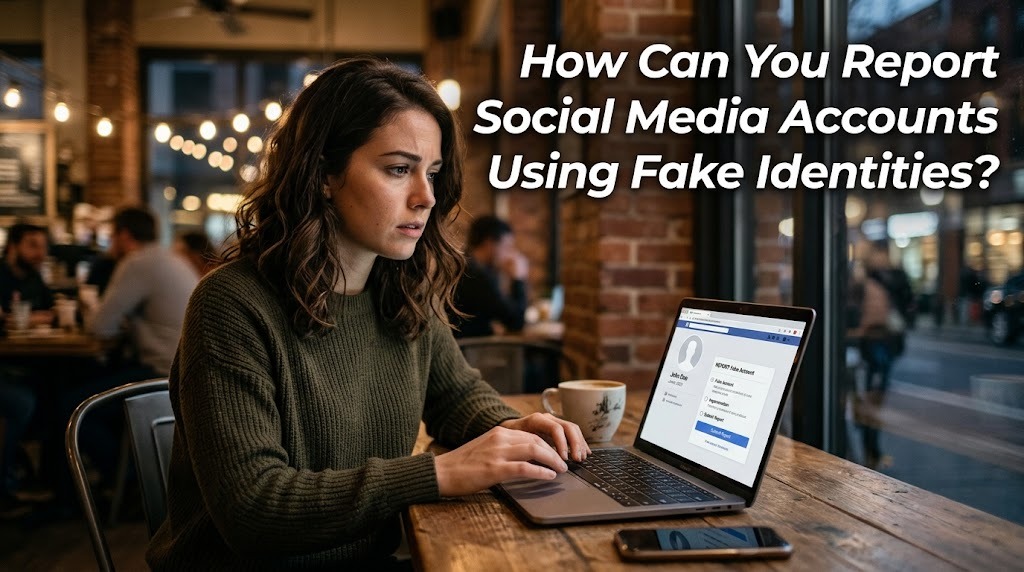
Fake identities on social media have become a serious concern in the digital age. Many people use social media to communicate, build relationships, promote businesses, and share personal information. However, some individuals misuse these platforms by creating fake accounts to impersonate others, spread misleading information, commit fraud, or steal personal data. These activities can harm victims financially, emotionally, and socially.
Reporting social media accounts that use fake identities is an important step in preventing further misuse. Most social media platforms provide reporting features that allow users to report suspicious accounts and request investigations. Understanding how to report fake accounts correctly can help protect personal information, prevent online scams, and create a safer digital environment.
IDENTIFY THE FAKE SOCIAL MEDIA ACCOUNT
Before reporting an account, it is important to identify signs that suggest someone may be using a fake identity. Suspicious accounts sometimes use stolen profile photographs, false names, misleading personal information, or images belonging to other people. Some accounts also pretend to represent celebrities, public figures, businesses, or government institutions without permission.
Another warning sign is inconsistent information between the account's profile, posts, and communication history. For example, someone may claim to represent a company but use an unrelated email address or provide contact details that cannot be verified. Accounts that frequently request money, passwords, or personal information should also be treated with caution.
However, unusual account activity does not automatically prove that someone is committing identity fraud. Some legitimate users have limited profiles or use different names for personal reasons. Therefore, collect relevant information and avoid making accusations without reasonable evidence.
COLLECT EVIDENCE BEFORE SUBMITTING A REPORT
Collecting evidence is an important part of reporting social media accounts that use fake identities. Evidence can help platform moderators understand why an account is suspicious and determine whether it violates their policies. Useful information may include screenshots of the profile, profile photographs, suspicious messages, misleading posts, and links to the account.
If the account is impersonating you or someone you know, document the specific information being misused. Save relevant messages and record the dates when suspicious activities occurred. Avoid editing screenshots because original evidence can provide a clearer picture of the situation.
You should also keep evidence of any financial transactions if the account has been involved in a scam. Do not delete important conversations before saving the relevant information. However, avoid sharing sensitive personal documents publicly because doing so could create additional privacy risks.
USE THE REPORTING FEATURES ON SOCIAL MEDIA PLATFORMS
Most major social media platforms provide reporting features to help users report fake identities and impersonation. Although the steps may differ, the general process usually involves opening the suspicious profile, selecting the report option, choosing the appropriate violation category, and submitting the required information.
On Instagram and Facebook, users can report accounts that impersonate themselves, another person, or a business. On TikTok, users can report suspicious profiles through the account's reporting menu. X also provides reporting options for accounts involved in impersonation and misleading behavior.
When submitting a report, select the category that best describes the problem. Provide accurate explanations and include supporting evidence when requested. Avoid submitting false or repeated reports against legitimate accounts because reporting systems are intended to address genuine violations.
REPORT IDENTITY FRAUD TO THE RELEVANT AUTHORITIES
Reporting a fake social media account to the platform may not always be enough, especially when the activity involves financial fraud, threats, or the misuse of sensitive personal information. In these situations, victims may also need to contact relevant authorities or financial institutions. The appropriate reporting channel depends on the type of incident and the country where it occurred.
For example, victims of financial scams should contact their bank or payment service provider as soon as possible to report suspicious transactions. If someone uses stolen identity information to commit fraud, victims can seek assistance from the relevant law enforcement authorities. In Indonesia, reports involving suspected criminal activity can be submitted to the police through official channels.
Prepare supporting evidence, including account links, screenshots, transaction records, and communication history. Explain what happened clearly and provide accurate information during the reporting process. Reporting serious incidents promptly can help reduce further damage and support investigations.
PROTECT YOUR ACCOUNT AFTER REPORTING A FAKE IDENTITY
After reporting a suspicious account, take additional steps to protect your social media accounts and personal information. Change passwords if you suspect that your account has been accessed without permission. Use strong and unique passwords for different platforms and enable two-factor authentication whenever available.
Review your account privacy settings to control who can view your personal information, photographs, and contact details. Be careful when accepting friend requests or responding to messages from unfamiliar accounts. Never share passwords, verification codes, financial information, or identification documents with unverified individuals.
If someone has created an account using your name or photographs, inform friends and family so they do not become victims of impersonation scams. You can also warn them through your verified account without publicly exposing unnecessary personal information. Continue monitoring suspicious activity and keep records of any additional attempts to misuse your identity.
CONCLUSION
Reporting social media accounts that use fake identities is an important way to prevent impersonation, online scams, and personal data misuse. Users should identify suspicious accounts, collect relevant evidence, and use the official reporting features provided by social media platforms.
If the activity involves financial losses, threats, or identity theft, reporting the incident to relevant authorities is also important. Protecting personal accounts through strong passwords, privacy settings, and two-factor authentication can further reduce potential risks. With greater awareness and responsible reporting, everyone can contribute to a safer social media environment.
Recent Posts

Bagaimana Sistem SKS pada Program Kuliah... 22.11.2026/37 View

How Does Technology Make Daily Evaluation... 21.11.2026/70 View

Apa Strategi Menghadapi Kesenjangan antara Kompetensi... 21.11.2026/73 View

Mengapa Inventaris Aset Penting bagi Kelancaran... 21.11.2026/68 View

When Should Musicians Join a Record... 21.11.2026/71 View
