

How Can You Request Full-Text Papers on ResearchGate?
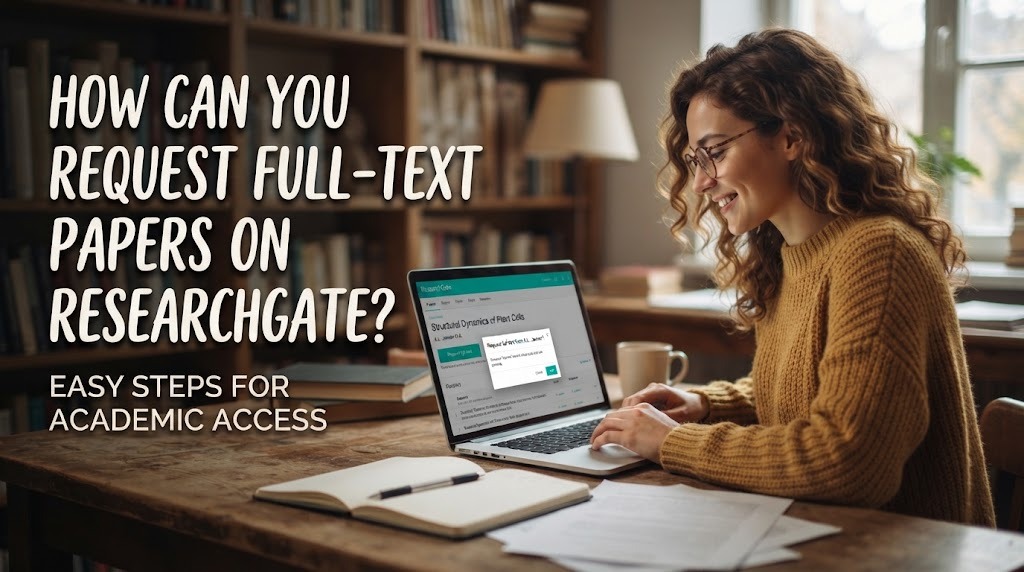
Access to scientific publications is important for students, lecturers, and researchers who need credible information for academic assignments and research projects. ResearchGate helps users discover publications and connect with the academics who produce them. However, some publication pages display only an abstract or basic bibliographic information instead of the complete paper. In these situations, requesting a full-text copy from the author may be a useful option. Understanding the process can help readers obtain relevant research while respecting copyright and publication policies.
LOCATE THE PAPER YOU WANT TO READ
Start by searching for the publication on ResearchGate. You can enter the exact article title, the author's name, or keywords related to your research topic. Using an exact title is particularly helpful when you already have a reference from a lecturer, bibliography, or academic discussion.
Once you find a possible match, review the publication details carefully. Check the title, author names, publication year, and journal information when available. These details help you avoid requesting the wrong paper, especially when several studies cover similar subjects. If the publication does not appear immediately, try a shorter title phrase or search for the author’s profile and browse their listed work.
CHECK THE AVAILABLE FULL-TEXT OPTIONS
Before sending a request, examine the publication page to see whether the complete document is already accessible. Some authors share full-text files that can be opened or downloaded, while other records contain only an abstract or a link to the publisher. The options available may vary depending on the publication and ResearchGate's current interface.
If the full text is already available, use the provided access option. If it is not, look for a feature that allows you to request the document from the author. You may need to sign in to your ResearchGate account to use certain features. If no request option is displayed, consider contacting the author through an appropriate professional channel or looking for an authorized version elsewhere.
SUBMIT A REQUEST THROUGH RESEARCHGATE
When a full-text request feature is available, follow the instructions displayed on the publication page. Make sure the request refers to the correct article and that you are asking for a copy for a legitimate academic purpose. A clear request makes it easier for the author to understand which document you need.
After submitting the request, allow the author time to respond. Researchers may have teaching duties, ongoing projects, and other professional responsibilities that prevent them from replying immediately. A request also does not guarantee that the author can provide a copy, because copyright agreements or other restrictions may limit what they are permitted to share.
WRITE A CLEAR AND POLITE MESSAGE
If you can contact the author directly, keep your message short, respectful, and relevant. Introduce yourself briefly, identify the paper by its title, and explain how it relates to your studies or research. Avoid making demands or sending generic messages that do not mention the publication.
For example, a student preparing a literature review can explain that the paper is relevant to a particular research question. This context helps the author understand the reason for the request. A professional tone also supports respectful communication between readers and researchers.
EXPLORE OTHER LEGITIMATE ACCESS SOURCES
If the author does not respond or cannot share the document, you can search for alternative access options. Google Scholar may show links to copies hosted on publisher websites, university pages, or institutional repositories. Your college or university library may also provide access through subscriptions to academic journals.
Another option is to search the title in an open-access repository or visit the publisher's official website. Some authors are permitted to share an accepted manuscript even when the final published version is restricted. Always check the source and any usage conditions before downloading or distributing a document.
USE THE PAPER RESPONSIBLY IN ACADEMIC WORK
Once you obtain the full text, read it carefully and determine whether it provides suitable evidence for your assignment or research project. Pay attention to the research objectives, methods, findings, and limitations rather than relying only on the abstract. Comparing the paper with other credible sources can help you understand the topic more thoroughly.
You should also record the complete publication details for accurate referencing. Cite the original authors using the citation style required by your institution, such as APA or another specified format. Receiving a paper directly from an author does not remove the need to acknowledge their work or follow the conditions under which the document was shared.
CONCLUSION
Requesting full-text papers on ResearchGate starts with finding the correct publication and checking whether a complete document is available. If the paper cannot be accessed directly, users can submit a request through the available platform feature or contact the author professionally. University libraries, publisher websites, and authorized repositories can provide additional access options. By following these steps and respecting publication rights, students and researchers can obtain useful academic materials and use them responsibly.
Recent Posts

Bagaimana Sistem SKS pada Program Kuliah... 22.11.2026/44 View

How Does Technology Make Daily Evaluation... 21.11.2026/73 View

Apa Strategi Menghadapi Kesenjangan antara Kompetensi... 21.11.2026/75 View

Mengapa Inventaris Aset Penting bagi Kelancaran... 21.11.2026/70 View

When Should Musicians Join a Record... 21.11.2026/74 View
