

How Can You Spot a Double Rainbow in the Sky?
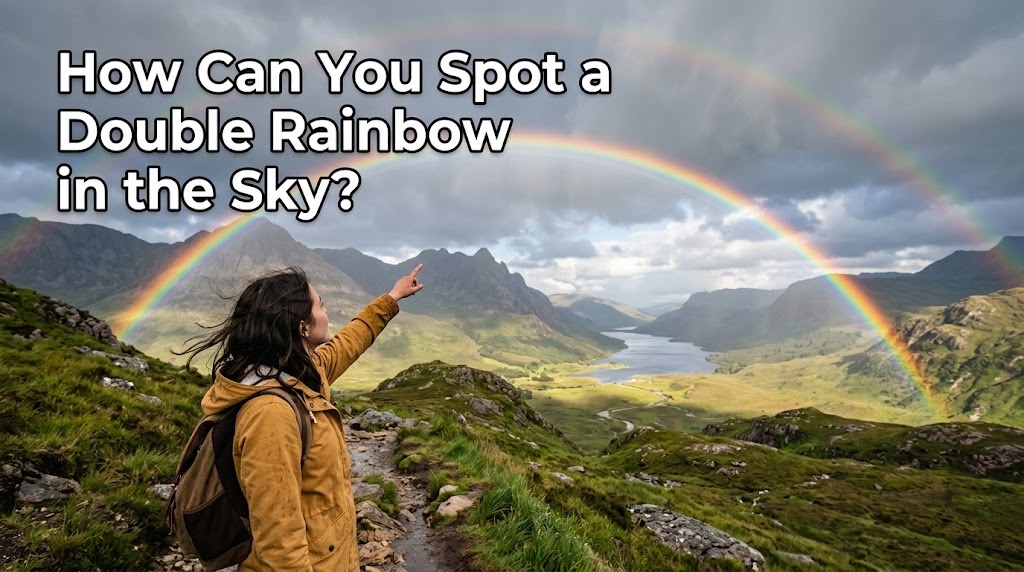
A double rainbow is a natural optical phenomenon in which two colorful arcs appear in the sky at the same time. The primary rainbow is usually brighter, while the secondary rainbow appears outside it with reversed colors and lower intensity. Although double rainbows can be difficult to notice at first, understanding their appearance and the conditions that produce them can help you identify both arcs.
Spotting a double rainbow requires attention to sunlight, water droplets, viewing direction, and color patterns. The phenomenon often occurs during or after rain when sunlight shines through droplets suspended in the atmosphere. By knowing where to look and what characteristics to observe, you can improve your chances of recognizing a double rainbow when suitable weather conditions occur.
LOOK FOR SUNLIGHT AFTER RAINFALL
One of the first steps in spotting a double rainbow is to observe the sky when sunlight appears during or after rainfall. Rain provides the water droplets needed to redirect sunlight, while sunshine supplies the light that produces the colored arcs. When both occur together, the conditions may become suitable for a rainbow to appear.
However, rain and sunshine do not always produce a double rainbow. The droplets must be positioned correctly, and the light must emerge at angles that allow the observer to see the arcs. A primary rainbow may appear without a clearly visible secondary rainbow because the outer arc is generally fainter. Watching the sky when sunshine and rain overlap can help you recognize opportunities to observe both arcs.
POSITION YOURSELF IN THE RIGHT DIRECTION
The direction in which you look is important when trying to identify a double rainbow. In general, the Sun should be behind you, while rain or water droplets should be in front. The rainbow appears in the part of the sky opposite the Sun because the light emerging from droplets reaches your eyes from specific directions.
Rainbows are often easier to observe when the Sun is relatively low in the sky, such as during the morning or late afternoon. An open area with a broad view of the horizon can make the arcs easier to see without buildings or trees blocking them. Avoid looking directly at the Sun, and choose a safe place where you can observe the sky comfortably.
IDENTIFY THE PRIMARY AND SECONDARY ARCS
A double rainbow consists of a primary arc and a secondary arc. The primary rainbow is usually brighter and appears closer to the center of the rainbow pattern. The secondary rainbow is located outside the primary arc and generally appears wider and less intense.
The secondary arc may be faint enough to blend into the surrounding sky, so it can require careful observation. Look beyond the outer edge of the brighter primary rainbow for a second, broader band of colors. A darker cloud background may make the outer arc easier to distinguish. Recognizing the two arcs' different positions and brightness levels is an important step in confirming that you are seeing a double rainbow.
CHECK THE COLOR ORDER OF BOTH RAINBOWS
Color order is one of the most reliable visual clues for identifying a double rainbow. In the primary rainbow, red appears along the outer edge and violet along the inner edge. The colors between them form the familiar visible spectrum, although their boundaries may not always be sharply defined.
In the secondary rainbow, the color sequence is reversed. Violet appears on the outer edge, while red appears on the inner edge. This happens because the sunlight forming the secondary arc undergoes two internal reflections inside water droplets, compared with one for the primary arc. Observing this reversed arrangement can help distinguish a true secondary rainbow from other colorful effects in the sky.
USE THE SURROUNDING ENVIRONMENT TO IMPROVE VISIBILITY
The surrounding sky can affect how clearly a double rainbow appears. A darker background often makes the secondary arc easier to notice because it provides stronger contrast with the fainter colors. Against a bright sky, the outer rainbow may look pale or almost invisible even when the primary arc is clear.
An unobstructed view can also help you observe the full shape of both arcs. Open fields, coastal areas, and other locations with a broad view of the sky may be useful, provided the weather and lighting conditions are suitable. Waterfalls and fountains can sometimes create rainbow effects when sunlight interacts with fine water droplets. Regardless of the location, the key is to observe from a safe position and look carefully outside the brighter primary arc.
CONCLUSION
You can spot a double rainbow in the sky by looking for sunlight during or after rain, positioning yourself with the Sun behind you, and examining the area outside the brighter primary arc. The secondary rainbow is generally wider and fainter, so it may require more careful observation. A darker background and an unobstructed view can make both arcs easier to distinguish.
Checking the color sequence can provide further confirmation. The primary rainbow has red on the outside and violet on the inside, while the secondary rainbow displays the opposite arrangement. These characteristics result from the different paths sunlight follows inside water droplets. By recognizing the right conditions and visual clues, you can better identify and appreciate this fascinating natural phenomenon.
Recent Posts

Bagaimana Sistem SKS pada Program Kuliah... 22.11.2026/54 View

How Does Technology Make Daily Evaluation... 21.11.2026/83 View

Apa Strategi Menghadapi Kesenjangan antara Kompetensi... 21.11.2026/82 View

Mengapa Inventaris Aset Penting bagi Kelancaran... 21.11.2026/78 View

When Should Musicians Join a Record... 21.11.2026/84 View
