

How Can You Train Your Voice to Become an Engaging Radio Announcer?
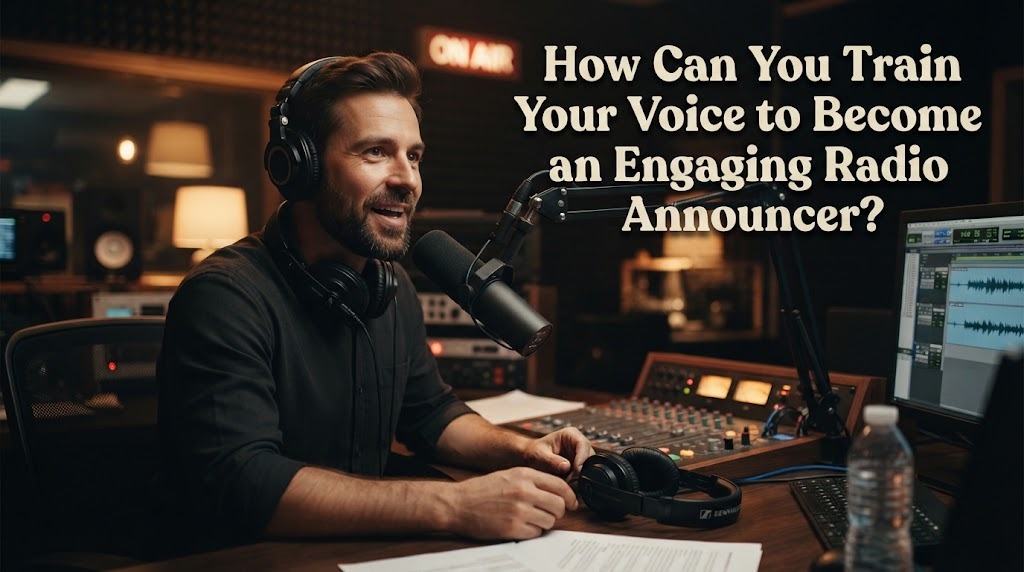
A strong and engaging voice is one of the most valuable assets for a radio announcer. Since listeners cannot see the announcer, the voice must communicate information, emotion, and personality clearly. However, having a naturally good voice is not the only requirement for success in radio broadcasting. Beginners can train their voice through regular exercises, proper breathing, clear pronunciation, and consistent speaking practice.
UNDERSTAND THE IMPORTANCE OF VOICE TRAINING
Voice training helps radio announcers develop better control over their sound and delivery. An announcer needs to sound clear, confident, natural, and comfortable when speaking to listeners. Good voice control also makes it easier to communicate different emotions without sounding artificial. These abilities are especially important during live broadcasts, where there may be little opportunity to repeat a sentence.
A trained voice can also help an announcer maintain consistent quality throughout a program. Speaking for a long period can cause vocal fatigue if the voice is used incorrectly. Beginners should therefore treat their voice as an important professional tool that needs regular care. With proper training, they can gradually develop a distinctive broadcasting style.
PRACTICE PROPER BREATHING
Breathing is the foundation of effective voice production. Radio announcers need enough breath support to complete sentences comfortably without stopping at inappropriate moments. Beginners can practice slow breathing by inhaling comfortably and releasing the air gradually while speaking. This exercise can help improve breath control and reduce the habit of speaking too quickly.
Good breathing can also make the voice sound more stable. When speakers run out of breath, their volume may become weaker and their delivery can sound rushed. Practicing controlled breathing every day can help beginners speak with greater confidence. They should also avoid forcing the voice when they feel tired or uncomfortable.
IMPROVE ARTICULATION AND PRONUNCIATION
Clear articulation allows listeners to understand every word without unnecessary effort. Beginners can practice by reading newspapers, articles, or scripts aloud at a moderate pace. Difficult words should be repeated until their pronunciation becomes comfortable and consistent. Tongue twisters can also be useful for improving coordination between the tongue, lips, and other speech muscles.
Pronunciation should remain natural rather than exaggerated. Radio announcers need to sound professional while still maintaining a conversational style. Beginners can record themselves and listen for unclear sounds, swallowed words, or excessive repetition. This simple habit can reveal problems that may not be noticeable while speaking.
DEVELOP VOICE PITCH AND TONE CONTROL
Pitch refers to how high or low the voice sounds, while tone helps communicate emotion and attitude. A professional announcer knows how to vary these elements depending on the content of the program. For example, serious information may require a calm and controlled tone, while entertainment content can use more energetic expression. Beginners should practice changing pitch and tone without making their delivery sound forced.
Using the same pitch throughout an entire program can make a broadcast sound monotonous. However, too much variation can also become distracting for listeners. The goal is to create natural changes that support the meaning of the message. Listening to experienced radio announcers can help beginners understand how professional voice variation works.
CONTROL SPEAKING SPEED AND PAUSES
Speaking speed has a major influence on how easily listeners understand a radio program. Speaking too quickly can make important information difficult to follow, while speaking too slowly can reduce energy and listener interest. Beginners should practice speaking at a comfortable pace and adjust their speed according to the topic. Recording practice sessions can help them identify whether their delivery is too fast or too slow.
Pauses are equally important because they give listeners time to process information. A short pause can also emphasize an important statement or create a natural transition between ideas. Beginners should avoid filling every silence with words such as "um," "uh," or repeated phrases. Learning to use purposeful pauses can make a voice sound more confident and professional.
PRACTICE A NATURAL RADIO STYLE
An engaging radio voice should not sound like someone is simply reading a written document. Beginners should practice speaking as if they are having a friendly conversation with one listener. This approach can make the delivery feel warmer and more personal. Using simple language and natural expressions can also make the program easier to follow.
Beginners can choose a short topic and explain it without reading every sentence from a script. They can then compare this recording with a scripted version of the same topic. This exercise helps them develop flexibility and spontaneity. Over time, they can learn how to combine preparation with natural conversation.
USE EMOTION AND ENERGY EFFECTIVELY
Emotion gives a radio voice personality and helps listeners connect with the content. An announcer may need to sound enthusiastic, calm, serious, friendly, curious, or sympathetic depending on the situation. Beginners can practice reading the same short passage using different emotional approaches. This exercise helps them understand how changes in voice can influence the meaning of a message.
Energy should also match the program format and audience. High energy may work well for entertainment programs, while excessive excitement may be inappropriate during serious news content. Professional delivery is not about speaking loudly all the time. Instead, it is about using the right level of energy to support the message.
RECORD AND EVALUATE YOUR VOICE
Recording is one of the most practical ways to improve a radio voice. Beginners can use a smartphone or basic recording equipment to capture short practice sessions. They should listen carefully to their pronunciation, breathing, speed, volume, pauses, and overall expression. Taking notes after each recording can help them identify specific areas for improvement.
It is useful to compare recordings over time rather than expecting immediate perfection. A voice that sounds uncomfortable at the beginning can become much more confident after regular practice. Beginners can also ask trusted teachers, broadcasters, or communication professionals for constructive feedback. External feedback can reveal habits that the speaker may not notice independently.
TAKE CARE OF YOUR VOICE
Voice training should always be combined with proper vocal care. Beginners should stay adequately hydrated and avoid habits that unnecessarily strain the voice. Speaking loudly for long periods can increase vocal fatigue, especially when the voice is already tired. Adequate rest is also important because the vocal system needs time to recover.
Announcers should pay attention to persistent discomfort, pain, or unusual changes in their voice. Continuing to force the voice despite these symptoms can make the problem worse. When vocal problems persist, professional medical or voice-related advice may be appropriate. Taking care of vocal health is an important part of maintaining a sustainable broadcasting career.
PRACTICE CONSISTENTLY
Voice training produces better results when it becomes a regular habit. Beginners do not need extremely long practice sessions to make progress. Short and focused exercises performed consistently can be more useful than occasional intensive practice. They can create a routine that includes breathing, articulation, reading, improvisation, and recording.
Progress should be measured gradually. Beginners may first notice clearer pronunciation, followed by better breath control, improved confidence, and more natural expression. Over time, these skills can become automatic during live broadcasting. Consistent practice is what transforms individual techniques into professional broadcasting ability.
CONCLUSION
Training your voice to become an engaging radio announcer requires patience, regular practice, and proper technique. Beginners should focus on breathing, articulation, pronunciation, pitch, tone, speaking speed, pauses, and emotional expression. Recording the voice and reviewing the results can provide valuable insight into areas that need improvement. At the same time, proper vocal care helps protect the voice from unnecessary strain. With consistent training and a natural communication style, beginners can develop a confident and engaging voice suitable for professional radio broadcasting.
Recent Posts

Bagaimana Sistem SKS pada Program Kuliah... 22.11.2026/35 View

How Does Technology Make Daily Evaluation... 21.11.2026/69 View

Apa Strategi Menghadapi Kesenjangan antara Kompetensi... 21.11.2026/69 View

Mengapa Inventaris Aset Penting bagi Kelancaran... 21.11.2026/67 View

When Should Musicians Join a Record... 21.11.2026/68 View
