

How Can You Understand Your Psychometric Test Results?
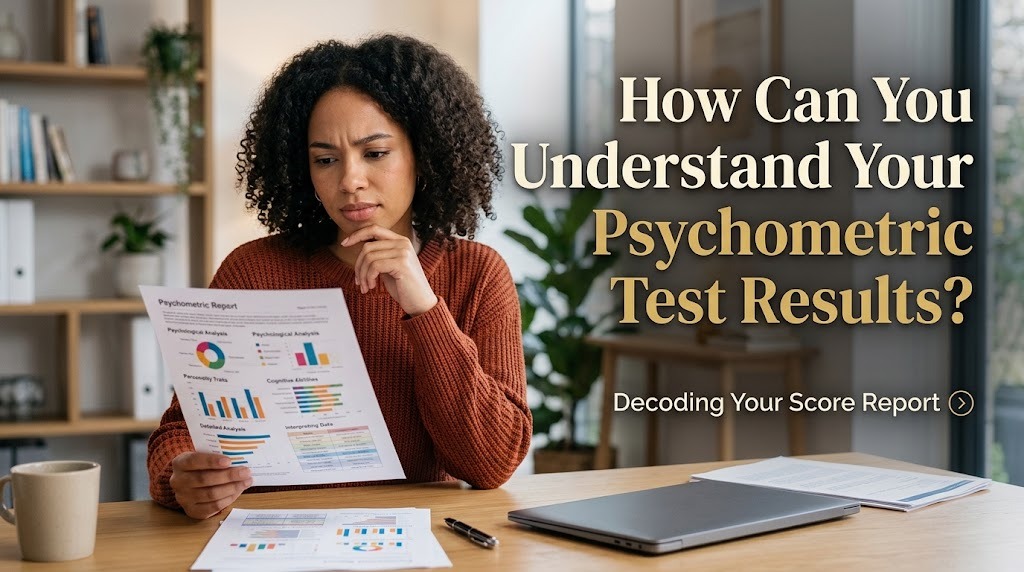
Psychometric test results can provide useful information about a person's reasoning abilities, problem-solving skills, personality traits, and behavioral preferences. Employers often use these assessments during recruitment to understand how candidates may approach tasks and respond to workplace situations. However, interpreting the results correctly is important because a test score does not describe every aspect of a person's abilities or potential.
Understanding psychometric test results involves more than looking at a final score or a category assigned by the assessment provider. Candidates should consider the type of test, the scoring method, and the purpose of the assessment. By reviewing these elements carefully, applicants can gain a clearer understanding of their performance and use the information to identify areas for further development.
UNDERSTAND THE TYPE OF PSYCHOMETRIC TEST
The first step in interpreting psychometric assessment results is identifying which type of test was completed. Cognitive ability tests may measure numerical reasoning, verbal reasoning, logical reasoning, or other problem-solving skills. Personality assessments, on the other hand, focus on behavioral preferences, typical responses, or personal characteristics relevant to a particular context.
Each assessment measures different aspects of a person, so the results should be interpreted according to the test's purpose. A strong numerical reasoning score does not necessarily indicate strong verbal reasoning, just as a particular personality profile does not automatically predict success in every job. Understanding the assessment type helps candidates avoid drawing conclusions that go beyond what the test was designed to measure.
REVIEW THE SCORE AND SCORING METHOD
When reviewing psychometric test scores, candidates should first check how the assessment reports performance. Some tests provide a raw score based on correct answers, while others use standardized scores or compare results with a reference group. These methods provide different kinds of information and should not be interpreted as though they mean the same thing.
For example, a raw score indicates how many questions were answered correctly, whereas a comparative score may show how performance relates to a specified group of test-takers. The meaning of a result depends on the scoring system, the reference group, and the assessment provider's guidance. Candidates should read the accompanying explanation rather than assuming that a particular number represents a universal measure of intelligence or ability.
INTERPRET PERSONALITY RESULTS IN CONTEXT
Personality test results often describe tendencies, preferences, or behavioral patterns rather than fixed abilities. An assessment might indicate a preference for structured tasks, collaborative activities, independent work, or particular ways of approaching decisions. These descriptions can help candidates reflect on how they usually behave in different situations.
However, personality results should not be treated as permanent labels. A person's behavior can vary according to the situation, experience, responsibilities, and working environment. For example, someone may prefer independent work but still collaborate effectively when a project requires teamwork. Candidates should consider whether the descriptions reflect their experiences while recognizing that no single personality profile is suitable for every occupation.
COMPARE RESULTS WITH YOUR SKILLS AND EXPERIENCES
A useful way to understand psychometric test results is to compare them with evidence from everyday experiences. Candidates can consider whether the results align with their academic performance, previous work, personal projects, or problem-solving experiences. This comparison can help them identify strengths and recognize areas where additional practice may be beneficial.
If the results differ from personal expectations, there is no need to immediately assume that the assessment is wrong or that personal abilities are limited. Test performance can be influenced by factors such as familiarity with the question format, concentration, time pressure, and testing conditions. Reviewing these possibilities can provide a more balanced interpretation. Candidates can also seek clarification from the assessment provider or a qualified professional when the results are unclear or particularly important for career planning.
USE THE RESULTS TO PLAN FURTHER DEVELOPMENT
After reviewing the findings, candidates can use psychometric assessment results to guide practical development activities. If a reasoning test highlights difficulty with numerical questions, for example, practicing calculations, percentages, and data interpretation may help strengthen relevant skills. If verbal reasoning is challenging, candidates can practice analyzing written passages and distinguishing supported conclusions from assumptions.
Personality results may also encourage reflection on communication preferences, work habits, and collaboration styles. These insights can help candidates consider which environments support their productivity and what skills they may want to develop. Nevertheless, results should be treated as one source of information rather than a fixed prediction of career success. Combining them with personal goals, practical experience, feedback, and learning opportunities can support more informed decisions.
CONCLUSION
Understanding psychometric test results begins with identifying the type of assessment, reviewing its scoring method, and interpreting the findings within the appropriate context. Cognitive ability tests and personality assessments measure different aspects of a person, so their results should not be treated as interchangeable or as complete descriptions of individual potential.
Candidates can gain more value from their results by comparing them with real experiences, considering factors that may have influenced performance, and identifying opportunities for development. Psychometric test results are most useful when viewed as guidance rather than absolute judgments. By interpreting them carefully, candidates can improve self-awareness and make more informed decisions about learning, career preparation, and professional growth.
Recent Posts

Bagaimana Sistem SKS pada Program Kuliah... 22.11.2026/61 View

How Does Technology Make Daily Evaluation... 21.11.2026/87 View

Apa Strategi Menghadapi Kesenjangan antara Kompetensi... 21.11.2026/85 View

Mengapa Inventaris Aset Penting bagi Kelancaran... 21.11.2026/83 View

When Should Musicians Join a Record... 21.11.2026/87 View
