

How Can Young People Help Fight Global Warming?
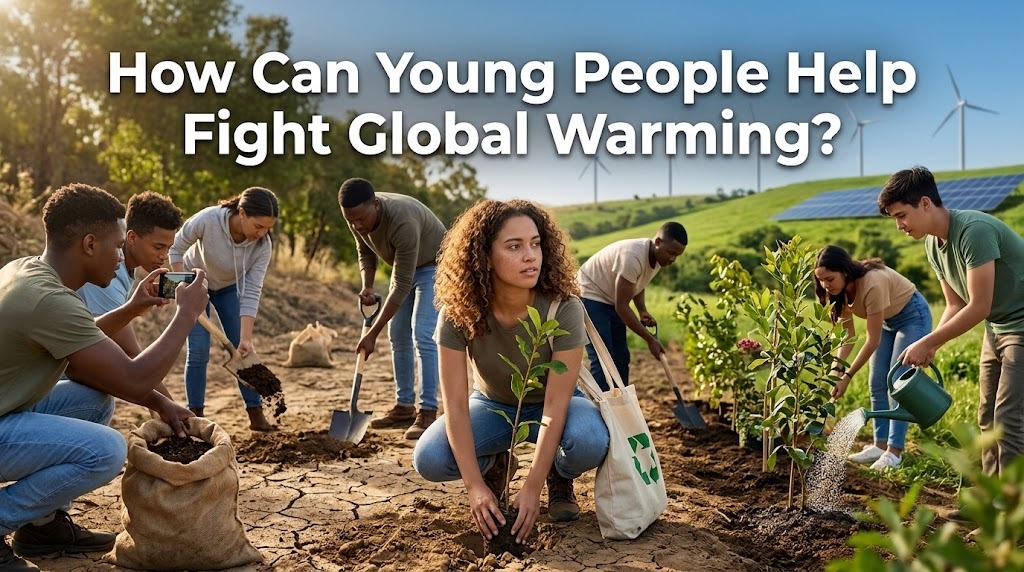
Global warming is a major environmental challenge that affects ecosystems, human health, and the future of communities around the world. Rising temperatures are largely driven by greenhouse gas emissions from activities such as burning fossil fuels, deforestation, and certain industrial processes. Although governments and businesses have important responsibilities in addressing this issue, young people can also contribute through everyday choices and collective action.
Young people can help fight global warming by reducing energy consumption, choosing more sustainable transportation, limiting waste, protecting natural environments, and raising awareness about climate change. These actions may seem small when performed individually, but they can contribute to broader efforts when adopted by many people. By developing sustainable habits and participating in community initiatives, young people can support a more environmentally responsible future.
REDUCE ENERGY USE AT HOME AND SCHOOL
One practical way young people can reduce global warming is by using electricity more efficiently. Much of the world's electricity is still generated using fossil fuels, which release carbon dioxide when burned. Reducing unnecessary electricity consumption can therefore help lower emissions, depending on how the electricity is produced.
Simple habits include turning off lights when they are not needed, unplugging devices when appropriate, and using fans or natural ventilation when conditions allow. Students can also encourage schools to use energy-efficient lighting and maintain electrical equipment properly. These actions can reduce wasted energy and help build awareness of the relationship between daily habits and greenhouse gas emissions. Although individual savings may be modest, consistent efforts across households and schools can make a meaningful contribution.
CHOOSE MORE SUSTAINABLE TRANSPORTATION
Transportation is another area where young people can make practical changes. Cars and motorcycles that use petrol or diesel release greenhouse gases, contributing to global warming. Whenever it is safe and practical, walking, cycling, carpooling, or using public transportation can reduce emissions associated with individual journeys.
Students can consider walking or cycling for short distances when routes and conditions are suitable. For longer trips, public transportation or sharing a ride with others may help reduce the number of vehicles on the road. Schools and communities can support these choices by improving pedestrian facilities, bicycle access, and public transportation connections. Choosing transportation options carefully can also reduce traffic congestion and improve local air quality.
REDUCE WASTE AND MAKE RESPONSIBLE CONSUMPTION CHOICES
The way products are made, transported, used, and discarded can contribute to greenhouse gas emissions. Manufacturing new goods requires energy and raw materials, while organic waste in landfills can produce methane as it decomposes under certain conditions. Therefore, reducing waste to fight global warming involves more than simply keeping surroundings clean.
Young people can bring reusable water bottles, avoid unnecessary packaging, repair usable items, and choose durable products when possible. Separating waste for appropriate recycling and composting can also help reduce the amount sent to landfills. Another useful habit is to avoid wasting food because food production, transportation, and disposal all require resources. By buying only what is needed and using available items responsibly, young people can support more sustainable consumption patterns.
PROTECT TREES AND SUPPORT NATURAL ENVIRONMENTS
Forests, wetlands, and other natural ecosystems help regulate the climate by storing carbon and supporting biodiversity. Trees absorb carbon dioxide as they grow, while healthy ecosystems provide habitats for animals and plants. Deforestation and ecosystem degradation can release stored carbon and reduce the ability of natural environments to absorb it.
Young people can help protect nature by participating in local tree-planting activities, maintaining green spaces, and supporting habitat restoration projects. However, planting trees is most beneficial when the right species are selected for the location and the trees receive proper care. Protecting existing forests and preventing damage to natural habitats are also important. Through school environmental clubs and community programs, young people can learn how nature conservation supports both climate action and biodiversity.
RAISE CLIMATE AWARENESS AND JOIN COMMUNITY ACTION
Individual lifestyle changes are useful, but addressing global warming also requires broader changes in energy systems, transportation, industry, and land management. Young people can contribute by learning about climate change, sharing reliable information, and encouraging their schools or communities to adopt practical environmental measures. Accurate information helps people understand the causes of global warming and distinguish scientific evidence from misleading claims.
Students can organize environmental discussions, waste-reduction campaigns, school energy-saving projects, or community cleanups. They can also participate in youth organizations and communicate constructive suggestions to local decision-makers. When advocating for climate action, it is important to use credible information, listen to different perspectives, and focus on solutions supported by evidence. Collective participation can help turn individual concern into wider efforts to reduce emissions and protect the environment.
CONCLUSION
Young people can help fight global warming by saving electricity, choosing sustainable transportation, reducing waste, protecting natural environments, and raising awareness about climate change. These habits can lower some sources of greenhouse gas emissions while encouraging more responsible use of natural resources. Schools, families, and communities can strengthen these efforts by providing opportunities for young people to participate in environmental programs.
However, individual actions alone cannot solve global warming. Governments, businesses, and communities also need to reduce emissions and support the transition to cleaner energy and more sustainable systems. By combining everyday habits with collective action and informed participation, young people can contribute to climate change mitigation and help build a healthier environment for future generations.
Recent Posts

Bagaimana Sistem SKS pada Program Kuliah... 22.11.2026/48 View

How Does Technology Make Daily Evaluation... 21.11.2026/76 View

Apa Strategi Menghadapi Kesenjangan antara Kompetensi... 21.11.2026/78 View

Mengapa Inventaris Aset Penting bagi Kelancaran... 21.11.2026/73 View

When Should Musicians Join a Record... 21.11.2026/78 View
