

How Can Young People Help Improve Political Literacy?
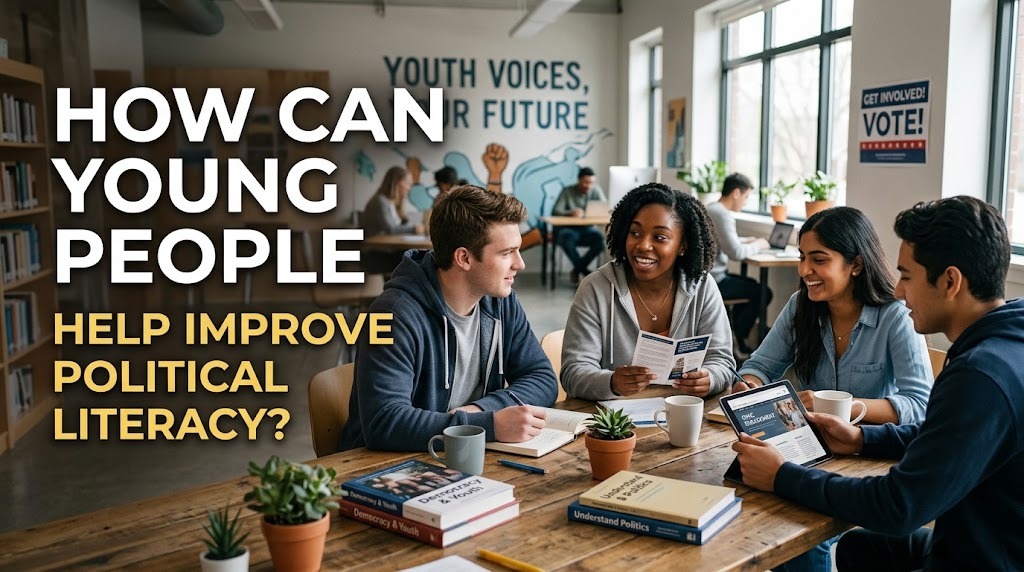
Young people can play a role in improving political literacy by learning about public issues, evaluating information, discussing different perspectives, and participating responsibly in their communities. In the digital era, young people are also among those who frequently encounter political information through social media, websites, videos, and messaging platforms.
Improving political literacy does not mean encouraging young people to support a particular political position. Instead, they can contribute by developing good information habits and helping create an environment where public issues can be discussed based on reliable information and mutual respect.
LEARNING ABOUT POLITICAL AND CIVIC ISSUES
One way young people can help improve political literacy is by developing their own understanding of political and civic issues. They can learn about government institutions, public policies, laws, elections, citizens' rights, and responsibilities.
Learning does not have to begin with complicated political topics. Young people can start by understanding issues that affect their education, communities, environment, employment opportunities, or daily lives.
Developing political knowledge can make it easier to understand information encountered online. It can also help young people ask more relevant questions and recognize when additional information is needed.
VERIFYING INFORMATION BEFORE SHARING IT
Young people can contribute to better political information literacy by checking information before sharing it. Political claims can spread quickly through social media and messaging platforms, and not every claim is supported by reliable evidence.
Before sharing content, users can check the original source, publication date, evidence, and context. Comparing the claim with other credible sources can also provide additional information.
UNESCO emphasizes the importance of media and information literacy in helping people access, evaluate, and use information effectively. These habits can help young people become more responsible participants in the digital information environment.
ENCOURAGING RESPECTFUL POLITICAL DISCUSSIONS
Young people can also contribute to political literacy by creating constructive conversations about public issues. Discussions can take place at school, university, in communities, or through online platforms.
A respectful discussion allows people to explain their views, listen to other perspectives, ask questions, and examine evidence. Disagreement does not necessarily prevent a conversation from being productive when participants communicate respectfully.
The Council of Europe identifies dialogue, respect for diversity, human rights, and peaceful conflict resolution as important elements of democratic culture. These principles can also be applied when young people discuss political issues online.
SHARING EDUCATIONAL AND RELIABLE INFORMATION
Young people can help improve political literacy in society by sharing useful educational information from credible sources. Instead of simply sharing political opinions, they can introduce reliable resources that explain public policies, institutions, civic rights, or democratic processes.
Students and young people can also create educational content through articles, presentations, discussions, or other appropriate digital formats. The content should clearly distinguish factual information from personal opinions.
Sharing useful information can encourage friends and community members to learn more about public issues. However, information should still be checked carefully before being presented or distributed.
PARTICIPATING IN COMMUNITY ACTIVITIES
Another way young people can support civic participation is by becoming involved in appropriate community activities. Depending on age, legal rights, and circumstances, this can include volunteering, student organizations, community projects, educational activities, or discussions about local issues.
These experiences can help young people understand how communities function and how different people contribute to solving shared problems. They can also provide practical opportunities to learn about cooperation, responsibility, and communication.
The goal of participation is not to make everyone think alike. By learning, communicating, and participating responsibly, young people can contribute to a stronger culture of political and civic literacy.
CONCLUSION
Young people can help improve political literacy by learning about civic issues, verifying political information, encouraging respectful discussions, sharing reliable educational content, and participating in suitable community activities.
These actions can support a healthier information environment and help young people develop useful civic skills. Most importantly, political literacy should provide knowledge and critical thinking tools that allow each person to understand public issues and form their own informed views.
Recent Posts

Bagaimana Sistem SKS pada Program Kuliah... 22.11.2026/33 View

How Does Technology Make Daily Evaluation... 21.11.2026/67 View

Apa Strategi Menghadapi Kesenjangan antara Kompetensi... 21.11.2026/67 View

Mengapa Inventaris Aset Penting bagi Kelancaran... 21.11.2026/65 View

When Should Musicians Join a Record... 21.11.2026/66 View
