

How Did Colonialism Change Indonesian Cities?
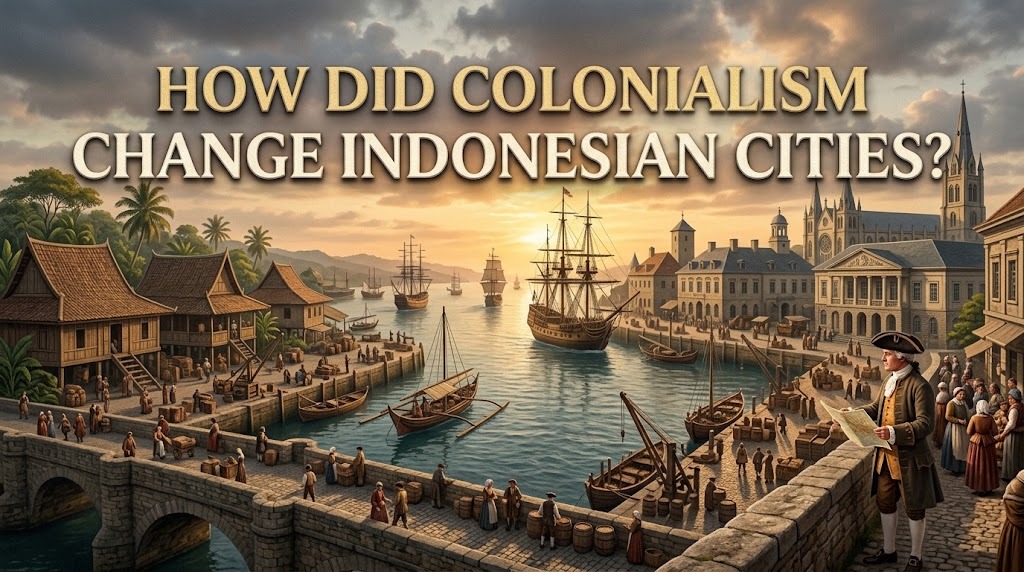
Colonialism significantly influenced the development of Indonesian cities, particularly during the period of Dutch colonial rule. It changed urban planning, architecture, transportation, economic activities, and social organization. Many cities developed into administrative centers, trading ports, and industrial locations that supported colonial economic interests. Although these changes introduced new infrastructure and building styles, they also created social divisions and unequal access to urban resources. Some of their effects remain visible in Indonesian cities today.
THE DEVELOPMENT OF COLONIAL ADMINISTRATIVE CENTERS
During the Dutch colonial period, several Indonesian cities became important centers of government and administration. Batavia, now Jakarta, served as the administrative headquarters of the Dutch East India Company and later the Dutch colonial government. Other cities, including Semarang, Surabaya, and Bandung, also developed important administrative functions.
Colonial authorities constructed government offices, military facilities, courts, and official residences to manage their territories. These buildings influenced the growth and organization of urban areas. As administrative activities expanded, cities attracted officials, traders, workers, and other residents, contributing to changes in population and urban development.
CHANGES IN URBAN PLANNING
Colonial governments introduced urban planning approaches that influenced street layouts, public squares, drainage systems, and designated residential districts. Some areas were organized around administrative buildings, commercial centers, and transportation routes.
However, colonial urban planning was not designed to provide equal benefits to every resident. In many cities, residential areas and public facilities reflected social and legal distinctions between Europeans, Chinese communities, and indigenous Indonesians. These arrangements affected access to housing, sanitation, and other urban services.
THE GROWTH OF TRADE AND PORT CITIES
Trade was a major factor in the transformation of Indonesian cities under colonial rule. Ports such as Batavia, Semarang, and Surabaya became important locations for exporting agricultural commodities and other resources to international markets.
Commercial activities encouraged the development of warehouses, markets, shipping facilities, and business districts. Products such as sugar, coffee, tobacco, and other commodities moved through these trading networks. Although port expansion created employment and commercial opportunities, much of the economic system was organized to support colonial trade and resource extraction.
COLONIAL ARCHITECTURE AND HISTORIC BUILDINGS
Colonial rule introduced architectural styles influenced by European traditions and adapted to tropical conditions. Government offices, railway stations, churches, schools, commercial buildings, and private residences were constructed using different combinations of European and local design elements.
In cities such as Semarang, Jakarta, and Bandung, some colonial-era buildings remain important historical landmarks. The Old Town of Semarang, for example, preserves buildings associated with the city's commercial and administrative history. These structures provide evidence of changing architectural practices and the economic activities that shaped Indonesian urban life.
THE EXPANSION OF TRANSPORTATION NETWORKS
Colonial economic development encouraged the construction of roads, railways, bridges, and port facilities. These networks helped transport agricultural products and raw materials from production areas to ports and markets.
Railway connections also supported the movement of people and commercial goods between cities and surrounding regions. Stations and transportation corridors influenced the location of markets, industrial facilities, and residential areas. Although these networks contributed to regional connectivity, their development was strongly influenced by colonial economic and administrative priorities.
SOCIAL DIVISIONS AND URBAN INEQUALITY
Colonial rule influenced how different communities lived and interacted within Indonesian cities. Residential regulations, differences in legal status, and unequal access to public services contributed to social and spatial divisions.
European residents often occupied designated residential areas with access to particular facilities, while many indigenous residents lived in kampung neighborhoods with varying levels of infrastructure and sanitation. Chinese communities also developed distinctive commercial and residential districts in many urban centers. These patterns differed between cities and changed over time, but they illustrate how colonial policies influenced urban inequality.
EDUCATION AND THE GROWTH OF MODERN INSTITUTIONS
Colonial governments and private organizations established schools, hospitals, and other institutions in several Indonesian cities. Access to these facilities was limited and unequal, but educational opportunities contributed to the development of new professional groups and intellectual movements.
Schools and urban institutions helped some Indonesians gain knowledge and skills that later supported journalism, public administration, and political organization. During the late colonial period, cities became important meeting places for discussions about nationalism, social reform, and independence. Urban institutions therefore influenced both everyday life and the development of Indonesia's independence movement.
THE LEGACY OF COLONIALISM IN MODERN INDONESIAN CITIES
The effects of colonial urban development remain visible in Indonesia today. Historic districts, railway stations, administrative buildings, ports, and road networks continue to influence the appearance and functions of many cities.
Some colonial buildings have been restored and adapted for tourism, museums, offices, and cultural activities. At the same time, historical inequalities and uneven infrastructure development have contributed to urban challenges that require continued planning and investment. Understanding colonial history helps communities preserve architectural heritage while addressing the needs of modern urban populations.
CONCLUSION
Colonialism changed Indonesian cities through administrative expansion, commercial development, urban planning, architecture, transportation, and the creation of modern institutions. These changes connected cities to wider economic networks while also reinforcing social divisions and unequal access to resources. The effects varied across regions and historical periods, but many remain visible in Indonesia's urban landscapes. Studying this history helps explain how colonial policies influenced the cities that Indonesians live in today.
Recent Posts

Bagaimana Sistem SKS pada Program Kuliah... 22.11.2026/50 View

How Does Technology Make Daily Evaluation... 21.11.2026/79 View

Apa Strategi Menghadapi Kesenjangan antara Kompetensi... 21.11.2026/79 View

Mengapa Inventaris Aset Penting bagi Kelancaran... 21.11.2026/75 View

When Should Musicians Join a Record... 21.11.2026/80 View
