

How Did Disasters Reshape Historic Cities?
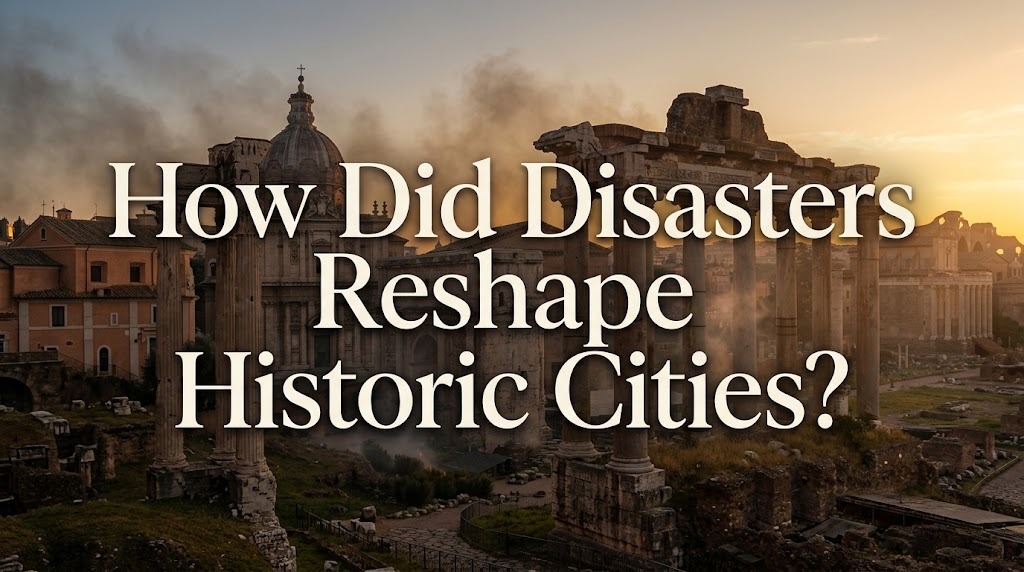
Disasters have played a major role in shaping the history and development of cities around the world. Earthquakes, floods, fires, volcanic eruptions, and epidemics have destroyed buildings, displaced communities, and disrupted economic activities. However, these events have also encouraged new construction methods, improved urban planning, and changes in public policy. By examining how disasters affected historic cities, we can understand how communities adapted to difficult circumstances and transformed their urban environments over time.
THE DESTRUCTION OF HISTORIC BUILDINGS
Natural disasters and human-caused catastrophes have destroyed many historic buildings, monuments, and residential areas. Earthquakes can collapse traditional structures, while fires can spread rapidly through densely populated neighborhoods with wooden buildings. Floods may damage foundations, roads, and public facilities, leaving entire districts difficult to inhabit. The destruction of these structures often changes the physical appearance of a city and removes important evidence of its past.
Despite these losses, some cities have preserved historical records, architectural fragments, and surviving landmarks to maintain connections with their heritage. Reconstruction projects sometimes restore damaged buildings, while others create new structures that reflect contemporary architectural styles. These decisions influence how future generations experience and understand the city's history.
HOW EARTHQUAKES CHANGED URBAN DESIGN
Earthquakes have forced many historic cities to reconsider how buildings are designed and where new development should take place. When traditional structures collapse, governments and architects may introduce stronger construction materials, improved foundations, and building regulations designed to reduce future damage. Wider streets and open public spaces can also provide safer evacuation routes and temporary gathering areas.
The rebuilding of Lisbon after the devastating earthquake of 1755 is a well-known example. Much of the city center was destroyed, leading to a major reconstruction effort that introduced more systematic street layouts and earthquake-resistant building techniques for the period. This transformation demonstrated how a disaster could influence architecture, engineering, and urban planning for generations.
FLOODS AND CHANGES TO CITY INFRASTRUCTURE
Flooding has repeatedly reshaped cities located near rivers, coastlines, and low-lying areas. Heavy rainfall, overflowing rivers, storm surges, and inadequate drainage can damage homes, businesses, bridges, and transportation networks. When floods occur repeatedly, communities may be forced to change how they manage water and organize urban development.
In response, cities may construct levees, canals, drainage systems, retention ponds, and flood barriers. Some authorities also restrict construction in high-risk areas or relocate residents away from vulnerable riverbanks. These measures can improve long-term resilience, although poorly planned infrastructure may create new environmental problems or transfer flood risks to other neighborhoods.
FIRES AND THE REBUILDING OF CITY CENTERS
Large urban fires have historically transformed the design and organization of cities. In older settlements, closely spaced buildings, narrow streets, and limited access to firefighting equipment often allowed flames to spread quickly. A major fire could destroy residential districts, commercial centers, religious buildings, and administrative offices within a short period.
The Great Fire of London in 1666 destroyed a substantial portion of the city's medieval center. Reconstruction created opportunities to improve building regulations, promote the use of brick and stone, and reconsider street layouts. Although London did not adopt every proposed redesign, the disaster contributed to changes in urban construction and fire prevention that influenced later development.
VOLCANIC ERUPTIONS AND ABANDONED SETTLEMENTS
Volcanic eruptions can bury settlements under ash, lava, and other volcanic materials. They may also trigger landslides, destructive mudflows, and long-term agricultural disruption. When homes, farmland, and essential infrastructure become unsafe, residents may abandon their settlements and establish new communities elsewhere.
The ancient Roman city of Pompeii was buried by the eruption of Mount Vesuvius in AD 79. The disaster preserved buildings, streets, artworks, and everyday objects beneath volcanic deposits. Although Pompeii was not rebuilt as a functioning city in its original form, its remains have become an important archaeological site that reveals details about Roman urban life. This example shows how a disaster can end one settlement's development while preserving valuable historical evidence.
EPIDEMICS AND CHANGES IN PUBLIC HEALTH
Disease outbreaks have also reshaped historic cities by exposing weaknesses in sanitation, housing, and public health systems. Epidemics can spread rapidly in crowded neighborhoods where access to clean water and waste management is limited. In severe cases, population decline and economic disruption can change how entire districts are used.
The cholera outbreaks of the nineteenth century, for example, encouraged many cities to improve water supplies, sewer systems, and public sanitation. Urban authorities increasingly recognized that infrastructure and living conditions influenced public health. These developments helped establish modern approaches to municipal sanitation and disease prevention, although improvements occurred at different times and varied between cities.
THE SOCIAL AND ECONOMIC EFFECTS OF DISASTERS
Disasters affect more than buildings and infrastructure. They can destroy livelihoods, interrupt trade, increase housing shortages, and force families to move to safer locations. Small businesses and low-income households often face greater difficulties recovering because they may have limited savings, insurance, or access to financial assistance.
Reconstruction can also change property values and the social composition of neighborhoods. New roads, commercial districts, and modern housing may attract investment, but redevelopment can displace long-established residents. For this reason, successful recovery requires attention to affordable housing, community participation, employment opportunities, and the protection of local cultural traditions.
HOW DISASTERS INFLUENCED HISTORIC PRESERVATION
After a major disaster, governments and communities must decide which historic structures should be restored, reconstructed, or replaced. These decisions can be challenging because preserving original materials may conflict with modern safety requirements. Some damaged buildings can be reinforced, while others may require partial reconstruction or conversion to different uses.
Historic preservation organizations often document buildings before restoration begins and assess their architectural, cultural, and historical value. These efforts help prevent the permanent loss of important heritage. In some cases, disaster recovery also increases public awareness of the importance of protecting historic districts and preparing conservation plans before future emergencies occur.
BUILDING MORE RESILIENT HISTORIC CITIES
Modern cities can learn from historical disasters by combining heritage conservation with risk reduction. Engineers can strengthen vulnerable buildings, improve drainage, reinforce bridges, and develop reliable emergency communication systems. Urban planners can also protect evacuation routes, identify high-risk zones, and ensure that emergency services can reach densely populated neighborhoods.
Resilience does not mean eliminating every possible danger. Instead, it involves reducing potential damage, preparing communities for emergencies, and ensuring that essential services can recover quickly. Historic cities benefit most when preservation experts, local governments, engineers, business owners, and residents work together to develop practical solutions.
CONCLUSION
Disasters have reshaped historic cities by destroying buildings, changing street layouts, influencing public health systems, and transforming social and economic life. Events such as the Lisbon earthquake, the Great Fire of London, and the eruption of Mount Vesuvius demonstrate how catastrophic events can permanently alter urban development. Although disasters often cause significant suffering and cultural loss, the recovery process can encourage safer construction, improved infrastructure, and stronger preservation efforts. Understanding these historical experiences helps modern cities protect their heritage while preparing for future risks.
Recent Posts

Bagaimana Sistem SKS pada Program Kuliah... 22.11.2026/51 View

How Does Technology Make Daily Evaluation... 21.11.2026/81 View

Apa Strategi Menghadapi Kesenjangan antara Kompetensi... 21.11.2026/81 View

Mengapa Inventaris Aset Penting bagi Kelancaran... 21.11.2026/77 View

When Should Musicians Join a Record... 21.11.2026/82 View
