

How Did Early Human Migration Shape Human History?
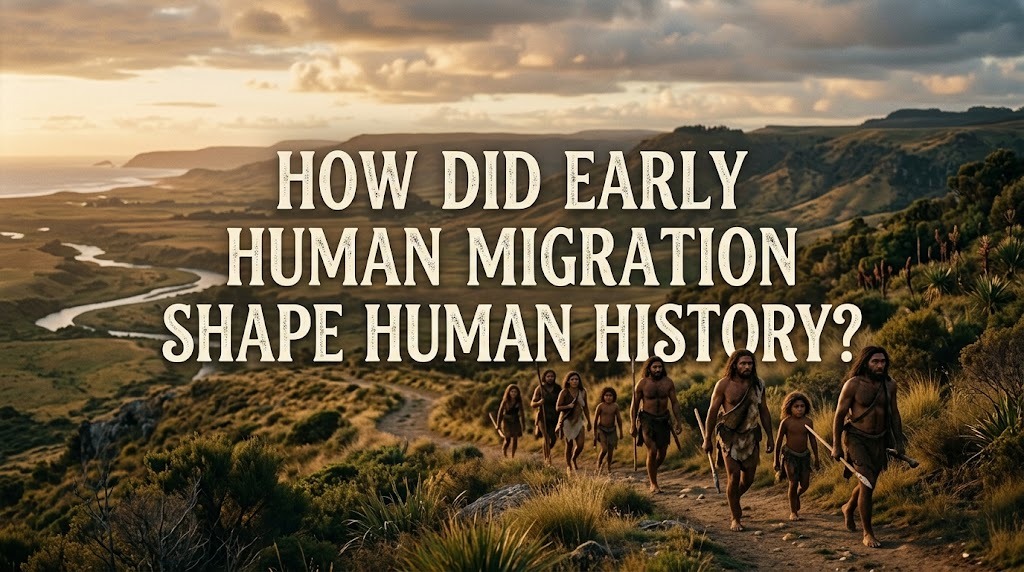
Early human migration played a major role in shaping human history by spreading populations across different regions of the world. Millions of years ago, early human ancestors began moving into new environments in search of food, water, and safer places to live. Over time, these movements influenced human evolution, cultural development, and interactions between different populations. Migration also allowed humans to develop new survival strategies as they encountered different climates, landscapes, and natural resources. Understanding early human migration helps explain how modern humans spread across the world and developed diverse cultures and ways of life.
WHAT WAS EARLY HUMAN MIGRATION?
Early human migration refers to the movement of ancient human ancestors and later human species from one geographical area to another. These movements occurred over millions of years and were influenced by environmental conditions, food availability, population pressures, and opportunities for survival. Migration did not always involve traveling long distances in a single journey. Instead, populations often moved gradually across generations as individuals explored nearby areas and established new communities.
One of the most important developments in human migration was the movement of early members of the genus Homo beyond Africa. Fossils discovered in parts of Asia and Europe provide evidence that some early human species expanded into new regions long before modern humans appeared. Later, Homo sapiens also migrated beyond Africa and eventually reached nearly every major continent. These movements connected distant populations and established the foundations of human settlement around the world.
WHY DID EARLY HUMANS MOVE TO NEW REGIONS?
Food and water were among the most important reasons early humans moved between locations. Changes in rainfall, temperature, and vegetation could reduce the availability of familiar resources, encouraging populations to explore other areas. Seasonal changes also influenced the movement of animals, which provided food for some early human groups. By following available resources, humans increased their chances of finding enough food and surviving difficult conditions.
Other factors also influenced migration, including population growth, competition for resources, and the search for suitable habitats. Some regions offered better access to rivers, coastlines, forests, or grasslands, making them attractive places to settle. As humans developed more advanced tools and learned to control fire, they gained new opportunities to explore unfamiliar environments. Migration therefore reflected a combination of environmental pressures, practical needs, and the ability to adapt to changing circumstances.
THE OUT OF AFRICA MIGRATION
Africa holds a central place in the history of modern human migration because Homo sapiens evolved there approximately 300,000 years ago. Fossil discoveries and genetic research support the conclusion that modern humans originated in Africa before spreading into other parts of the world. Although early movements outside Africa occurred at different times, one major expansion took place roughly 60,000 to 70,000 years ago. These populations gradually established communities across parts of Asia and eventually reached Europe, Australia, and the Americas.
The spread of modern humans was not a single journey completed by one group. Different populations moved along different routes and at different times, responding to environmental conditions and available resources. During these movements, modern humans encountered other human groups, including Neanderthals and Denisovans. Evidence from ancient DNA shows that interbreeding occurred between some of these populations. This history demonstrates that human migration involved both geographical expansion and biological interaction.
HOW MIGRATION INFLUENCED HUMAN EVOLUTION
Migration exposed early humans to different climates, landscapes, food sources, and environmental challenges. Populations that settled in new regions needed to adjust their behavior and sometimes developed inherited characteristics that helped them survive. Through natural selection, genetic variations that improved survival and reproduction under particular conditions could become more common over generations. These processes contributed to biological diversity among human populations.
Migration also brought different human groups into contact with one another. Genetic mixing introduced variations into populations, while the movement of people helped spread useful knowledge and survival strategies. However, human differences cannot be explained by geography alone because genetic variation, population history, and cultural practices all contributed to human diversity. Modern humans remain one species with many shared biological characteristics. Early migration helped shape this diversity without dividing humanity into separate modern species.
THE DEVELOPMENT OF CULTURE AND TECHNOLOGY
Early human migration helped spread cultural knowledge and technological skills between populations. As people moved into new regions, they carried knowledge of toolmaking, food preparation, shelter construction, and other practical activities. These skills could be adapted to local conditions, allowing communities to respond to unfamiliar environments. Over time, different groups developed their own techniques based on the materials and resources available to them.
Migration also encouraged cultural innovation through contact between populations. When groups met, they could exchange tools, ideas, techniques, and information about their surroundings. Archaeological evidence, including stone tools and other artifacts, helps scientists investigate how technologies changed and spread over time. Cultural development did not occur at the same pace everywhere, and some communities developed distinctive traditions because of their particular environments and histories. These processes contributed to the variety of cultural practices found throughout human history.
HOW CLIMATE AND GEOGRAPHY SHAPED MIGRATION ROUTES
Climate and geography strongly influenced where early humans could travel and settle. Rivers, coastlines, grasslands, and other natural features provided routes through which populations could move. In some periods, favorable climates expanded the areas where food and water were available. In other periods, droughts, colder temperatures, or changing vegetation made certain regions more difficult to inhabit.
Changes in sea levels also affected migration routes. During parts of the Ice Age, lower sea levels exposed land that is now underwater, creating connections between some regions. For example, ancient populations eventually entered the Americas through areas connected to northeastern Asia and northwestern North America, although the exact timing and routes remain subjects of scientific research. The settlement of Australia and nearby regions also required early humans to cross stretches of water. These examples show that migration depended on both environmental conditions and human abilities to navigate unfamiliar landscapes.
THE IMPACT OF EARLY MIGRATION ON HUMAN SOCIETIES
Early human migration laid the foundations for the global distribution of human populations. As communities settled in different regions, they developed ways of life suited to their local environments. Some groups relied heavily on hunting and gathering, while others later adopted farming after agriculture emerged independently in several parts of the world. These different economic practices influenced settlement patterns, population growth, and social organization.
Over many generations, migration and contact between communities contributed to the development of languages, traditions, and cultural identities. People exchanged goods and knowledge, and some movements eventually helped establish long-distance trade networks. Migration also influenced how populations responded to environmental challenges and technological changes. Although many of these developments occurred much later than the earliest human migrations, they were part of the longer history of human movement and settlement. The movement of people remains an important force shaping societies today.
HOW SCIENTISTS STUDY EARLY HUMAN MIGRATION
Scientists use fossils, archaeological discoveries, genetic research, and environmental records to reconstruct early human migration. Fossils help researchers identify where different human species lived and estimate when they occupied particular regions. Stone tools and other artifacts provide evidence of human activity, even when human bones have not survived. By examining the ages and locations of these discoveries, scientists can identify possible migration routes and patterns of settlement.
DNA analysis provides additional information about relationships between ancient and modern populations. Researchers compare genetic variations to investigate shared ancestry, population mixing, and the timing of major migrations. Meanwhile, geological studies and ancient climate records help explain which routes may have been accessible during different periods. No single source of evidence can explain the entire history of human migration. By combining several scientific methods, researchers can develop more reliable explanations while acknowledging that some details remain uncertain.
CONCLUSION
Early human migration shaped human history by spreading populations across continents and exposing them to new environments. These movements influenced biological evolution, encouraged the exchange of cultural knowledge, and helped humans develop different strategies for survival. Climate, geography, food availability, and technological abilities all played important roles in determining where people traveled and settled.
Scientific evidence shows that modern humans originated in Africa and gradually spread across the world through multiple migrations. Their journeys created opportunities for adaptation, cultural exchange, and interaction with other human populations. Studying early human migration helps explain the origins of human diversity and reveals how movement and adaptation have influenced the development of human societies throughout history.
Recent Posts

Bagaimana Sistem SKS pada Program Kuliah... 22.11.2026/51 View

How Does Technology Make Daily Evaluation... 21.11.2026/81 View

Apa Strategi Menghadapi Kesenjangan antara Kompetensi... 21.11.2026/81 View

Mengapa Inventaris Aset Penting bagi Kelancaran... 21.11.2026/77 View

When Should Musicians Join a Record... 21.11.2026/82 View
