

How Did Industry Transform Urban Life?
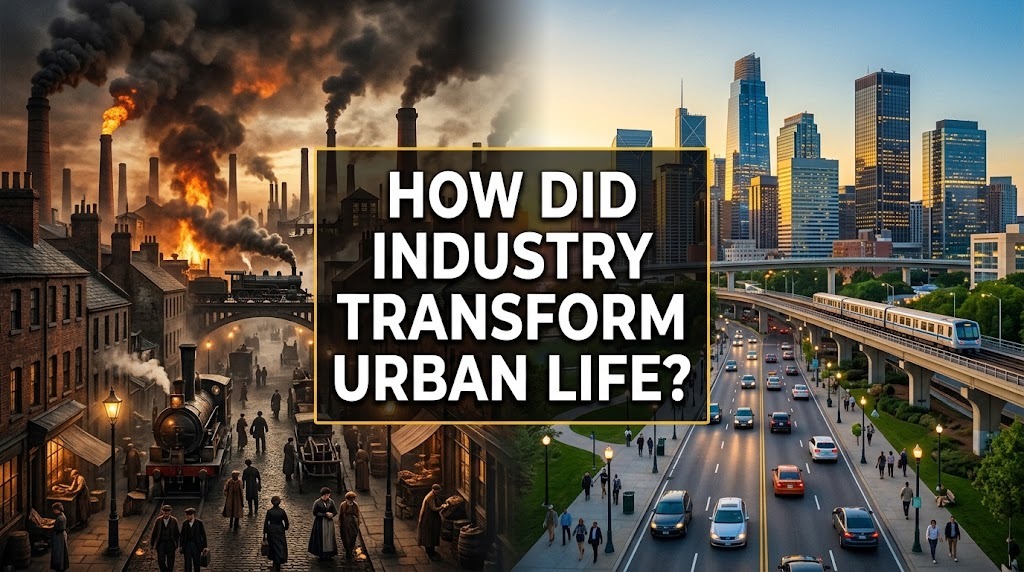
Industry transformed urban life by changing how people worked, where they lived, and how cities developed. During the Industrial Revolution, factories and manufacturing centers attracted workers from rural areas, encouraging rapid urban population growth. Industrial expansion also influenced transportation, housing, public services, and social relationships. While industrialization created new employment opportunities and supported economic development, it also introduced challenges such as pollution, overcrowding, and unequal living conditions. Understanding these changes helps explain how industrial cities developed into the modern urban centers we know today.
INDUSTRIALIZATION CREATED NEW EMPLOYMENT OPPORTUNITIES
The growth of factories and manufacturing industries created new types of employment in urban areas. People who previously depended on agriculture could seek work in textile mills, metalworking facilities, food-processing plants, and other industrial establishments. These jobs attracted workers seeking regular wages and opportunities to improve their economic circumstances. Industrial businesses also generated demand for transportation workers, shopkeepers, construction workers, and other service providers. As employment opportunities expanded, cities became major centers of production and economic activity.
RURAL MIGRATION INCREASED CITY POPULATIONS
Industrial development encouraged large numbers of people to move from rural communities into cities. Many migrants hoped to find better wages, more reliable employment, and improved access to education and public services. As workers arrived, urban populations increased rapidly, and existing settlements expanded into surrounding areas. This growth encouraged the development of new residential neighborhoods, commercial districts, and public facilities. However, migration sometimes occurred faster than city governments could provide sufficient housing and infrastructure.
FACTORIES CHANGED WORKING CONDITIONS
Industrialization transformed traditional working patterns by concentrating workers in factories and establishing more structured production schedules. Instead of producing goods mainly in small workshops or homes, many workers operated machinery and performed specialized tasks within larger industrial systems. Factory employment could provide regular income, but working conditions were often difficult during the early stages of industrialization. Long hours, workplace accidents, low wages, and limited labor protections affected many industrial workers. Over time, labor organizations, workplace regulations, and social reforms helped improve conditions in many industrial communities.
HOUSING AND URBAN NEIGHBORHOODS EXPANDED
The arrival of industrial workers increased demand for affordable housing near factories and transportation routes. In many cities, landlords constructed dense residential buildings to accommodate growing populations. Some neighborhoods developed with limited ventilation, sanitation, and access to clean water because construction could not keep pace with demand. Wealthier residents sometimes moved away from heavily industrialized areas, creating differences in residential conditions between social groups. These patterns influenced urban planning and encouraged later efforts to improve housing standards and neighborhood infrastructure.
TRANSPORTATION SYSTEMS DEVELOPED RAPIDLY
Industrial growth increased the need to move raw materials, finished products, and workers efficiently. Railways, roads, canals, ports, and later urban public transportation systems connected factories with suppliers, markets, and residential areas. Improved transportation made it easier for businesses to distribute goods and for people to travel between different parts of a city. Railway stations and industrial transport hubs often attracted warehouses, shops, and new commercial districts. These networks helped cities expand beyond their original boundaries and strengthened connections between urban and rural economies.
INDUSTRY INFLUENCED PUBLIC INFRASTRUCTURE
Rapid industrialization placed greater pressure on water supplies, sanitation systems, roads, schools, and healthcare facilities. Growing cities needed infrastructure capable of supporting large populations and intensive economic activity. In response, many governments gradually invested in public water systems, drainage, waste collection, street improvements, and other essential services. Industrial growth also encouraged the development of schools and technical institutions to train workers for specialized occupations. These improvements helped shape modern urban administration and public-service systems.
POLLUTION BECAME A MAJOR URBAN CHALLENGE
Industrial production introduced environmental problems that affected the health and quality of life of urban residents. Factories burned coal and other fuels, releasing smoke and pollutants into the atmosphere. Industrial waste and untreated wastewater sometimes contaminated rivers and nearby land. Dense housing and inadequate sanitation could further contribute to unhealthy living conditions. These problems encouraged public-health reforms, environmental regulations, and the development of cleaner industrial technologies in later periods.
INDUSTRIALIZATION CHANGED SOCIAL RELATIONSHIPS
The growth of industry changed the social structure of cities by creating new occupational groups and expanding the urban working class. Factory owners, managers, engineers, skilled workers, and laborers developed different roles within the industrial economy. Workers increasingly formed associations and labor unions to negotiate wages, working hours, and workplace safety. At the same time, urban residents gained access to new forms of entertainment, education, shopping, and community activities. These developments contributed to changing social expectations and the emergence of modern urban lifestyles.
INDUSTRIAL DEVELOPMENT IN INDONESIAN CITIES
Industrialization also influenced urban development in Indonesia, particularly during the colonial period and after independence. In Java, factories, plantations, ports, and railway networks connected production areas with commercial centers. Cities such as Semarang and Surabaya developed important roles in trade, transportation, and industrial activity. After independence, manufacturing and industrial estates contributed further to employment opportunities and urban expansion. These changes attracted workers from surrounding regions and increased demand for housing, transportation, and public services.
MODERN INDUSTRY AND THE FUTURE OF CITIES
Modern industries continue to shape urban life through automation, digital technology, advanced manufacturing, and service-based employment. Industrial areas increasingly rely on specialized infrastructure, efficient logistics, and skilled workers. Some older manufacturing districts have been redeveloped into residential, commercial, or cultural spaces as industries relocate or adopt new production methods. Cities must also address environmental sustainability, worker protection, and access to affordable housing. Effective urban planning can help ensure that industrial development supports economic opportunity while maintaining residents' quality of life.
CONCLUSION
Industry transformed urban life by creating employment opportunities, encouraging migration, expanding transportation networks, and changing social relationships. Industrial development helped cities grow into major economic centers, but it also created challenges involving housing, pollution, and working conditions. Over time, public infrastructure, labor protections, and urban planning evolved in response to these problems. The relationship between industry and urban life continues to influence how modern cities develop and adapt to changing economic needs.
Recent Posts

Bagaimana Sistem SKS pada Program Kuliah... 22.11.2026/50 View

How Does Technology Make Daily Evaluation... 21.11.2026/80 View

Apa Strategi Menghadapi Kesenjangan antara Kompetensi... 21.11.2026/79 View

Mengapa Inventaris Aset Penting bagi Kelancaran... 21.11.2026/75 View

When Should Musicians Join a Record... 21.11.2026/80 View
