

How Did Migration Shape Urban Communities?
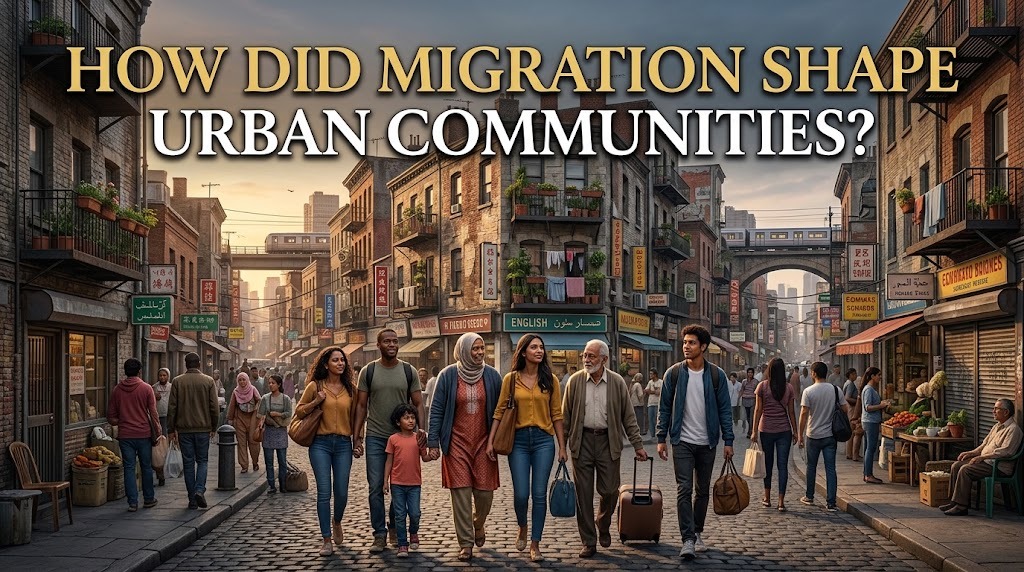
Migration has played a major role in shaping urban communities throughout history. As people moved from rural areas, smaller towns, and other countries into cities, they brought different skills, traditions, languages, and economic activities. These movements influenced population growth, employment opportunities, housing patterns, and cultural diversity. Migration also encouraged cities to expand their infrastructure and develop new neighborhoods to accommodate growing populations. Understanding how migration shaped urban communities helps explain why modern cities are socially diverse and constantly changing.
MIGRATION INCREASED URBAN POPULATION
Migration contributed significantly to the growth of cities by bringing new residents into urban areas. Many people moved from villages to cities in search of better employment, education, healthcare, and living conditions. As the number of residents increased, cities expanded beyond their original boundaries and developed new residential districts. This population growth also increased demand for public transportation, schools, hospitals, and other essential services. Over time, migration helped transform small settlements into larger and more complex urban communities.
ECONOMIC OPPORTUNITIES ATTRACTED NEW RESIDENTS
Employment opportunities were among the main reasons people migrated to cities. Industrial development, commercial activities, construction projects, and service industries created demand for workers with different skills and experience. Migrants contributed to urban economies by working in factories, offices, markets, restaurants, transportation, and small businesses. Some also established their own enterprises, creating additional jobs for local residents. Through these activities, migration supported economic growth and helped cities become important centers of production and commerce.
MIGRATION CREATED CULTURAL DIVERSITY
People who migrated to cities brought their cultural traditions, languages, cuisines, religious practices, and artistic expressions. These influences often became part of everyday urban life through food markets, cultural festivals, places of worship, and community organizations. Interactions between residents from different backgrounds encouraged the exchange of ideas and the development of new cultural practices. In many cities, this diversity became an important part of local identity. However, successful integration also depends on mutual respect and equal opportunities for people from different communities.
NEW NEIGHBORHOODS DEVELOPED THROUGH MIGRATION
As migrants arrived, residential areas developed to accommodate different population groups. Some newcomers settled near workplaces, transportation routes, markets, or relatives who could provide support. Others formed communities based on shared regional, linguistic, or cultural backgrounds. These neighborhoods often developed distinctive businesses, social networks, and community traditions. While such areas can provide belonging and practical assistance, unequal access to housing may also contribute to overcrowding or residential segregation.
MIGRATION INFLUENCED URBAN INFRASTRUCTURE
Growing urban populations placed greater demands on housing, roads, public transportation, sanitation, water supplies, schools, and healthcare facilities. City governments and private developers responded by expanding infrastructure and constructing new residential and commercial areas. Migration could also encourage improvements in public services when authorities recognized the needs of expanding communities. However, infrastructure development did not always keep pace with population growth. In some cities, rapid migration contributed to housing shortages, traffic congestion, and pressure on public facilities.
SOCIAL NETWORKS HELPED MIGRANTS ADAPT
Social networks played an important role in helping migrants adjust to urban life. Relatives, friends, and people from the same hometown often provided temporary accommodation, job information, financial assistance, and emotional support. These relationships reduced the difficulties associated with moving to an unfamiliar environment. Community organizations and local associations also helped newcomers access services and maintain connections with their cultural backgrounds. Over time, these networks encouraged migrants to participate in the wider urban community.
MIGRATION CREATED SOCIAL AND ECONOMIC CHALLENGES
Although migration can strengthen cities, it may also create challenges when urban planning and public services cannot meet growing demand. Competition for affordable housing and employment can increase, particularly for residents with limited financial resources. Some migrants experience discrimination, insecure work, or difficulties accessing education and healthcare. Rapid population growth can also contribute to informal settlements when suitable housing is unavailable. Addressing these problems requires inclusive urban planning, fair employment practices, accessible public services, and policies that protect the rights of all residents.
MIGRATION SHAPED INDONESIAN CITIES
Migration has influenced the development of many Indonesian cities. People have moved from rural regions to urban centers such as Jakarta, Surabaya, Semarang, and Bandung to pursue education, employment, and business opportunities. Interregional migration has contributed to diverse communities where different languages, foods, customs, and traditions interact. In cities with major ports and commercial centers, historical trade and population movement have also influenced local culture. These processes continue to shape urban neighborhoods, economic activities, and patterns of social interaction throughout Indonesia.
CONCLUSION
Migration shaped urban communities by increasing population, supporting economic development, creating cultural diversity, and encouraging the expansion of neighborhoods and infrastructure. Migrants contributed labor, knowledge, businesses, and traditions that helped cities develop into dynamic centers of activity. At the same time, rapid population growth sometimes created challenges involving housing, public services, and social inequality. With inclusive planning and effective public policies, cities can manage these challenges and ensure that migration benefits both newcomers and long-term residents.
Recent Posts

Bagaimana Sistem SKS pada Program Kuliah... 22.11.2026/50 View

How Does Technology Make Daily Evaluation... 21.11.2026/80 View

Apa Strategi Menghadapi Kesenjangan antara Kompetensi... 21.11.2026/79 View

Mengapa Inventaris Aset Penting bagi Kelancaran... 21.11.2026/75 View

When Should Musicians Join a Record... 21.11.2026/80 View
