

How Did Railways Influence Urban Growth?
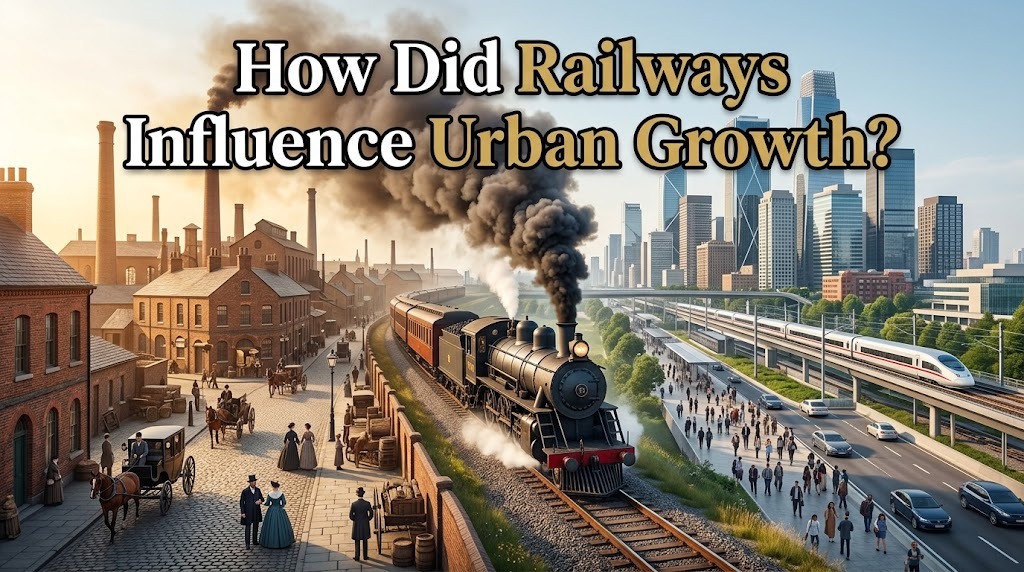
Railways played a major role in urban growth by improving transportation, connecting markets, and encouraging the expansion of cities. Since the nineteenth century, railway networks have helped people travel more efficiently and allowed goods to move between industrial centers, ports, and rural communities. Railway stations often became important hubs for commerce, employment, and residential development. As cities expanded around these transportation networks, their economic activities and physical layouts changed significantly. Understanding the influence of railways helps explain how modern urban areas developed and why many historic districts grew near railway stations.
RAILWAYS IMPROVED TRANSPORTATION AND CONNECTIVITY
Railways made transportation faster and more efficient than many traditional methods of land travel. Before railway networks expanded, moving people and heavy goods over long distances could be expensive and time-consuming. Trains connected towns, industrial centers, ports, and agricultural regions, making travel more predictable. Better connectivity allowed workers to reach employment opportunities and enabled businesses to access wider markets. These improvements encouraged economic interaction between cities and supported the expansion of urban communities.
RAILWAY STATIONS CREATED NEW URBAN CENTERS
Railway stations often became focal points for urban development. Merchants, travelers, workers, and businesses gathered near stations because these locations provided convenient access to transportation. Hotels, restaurants, shops, warehouses, and offices gradually appeared in surrounding areas. In some towns, railway stations helped establish new commercial districts outside the original city center. Over time, these areas developed into important urban hubs that supported daily activities and regional trade.
INDUSTRIAL DEVELOPMENT EXPANDED CITIES
Railways supported industrial growth by transporting raw materials to factories and distributing finished products to consumers. Industries such as mining, manufacturing, and food processing benefited from reliable connections to suppliers and markets. Factories and warehouses often developed near railway lines to reduce transportation costs and improve the movement of goods. These industrial activities attracted workers and encouraged the construction of housing, shops, and public facilities. As employment opportunities increased, many industrial towns expanded into larger cities.
RAILWAYS ENCOURAGED MIGRATION AND POPULATION GROWTH
Improved railway connections made it easier for people to move between rural and urban areas. Many individuals migrated to cities to find jobs in factories, offices, transportation services, and commercial businesses. Railway networks also allowed students, traders, and families to travel more conveniently between regions. As populations increased, demand for housing, education, healthcare, and public transportation grew. This demand encouraged the expansion of residential neighborhoods and the development of new urban infrastructure.
RAILWAYS INFLUENCED URBAN PLANNING
Railway infrastructure influenced how cities were organized and expanded. Roads, markets, factories, and residential areas frequently developed along routes connecting stations with established urban centers. Some cities expanded outward from railway corridors, while others developed distinct districts around major terminals. Railway tracks could also divide neighborhoods when crossings and pedestrian connections were limited. Modern urban planners therefore consider railway accessibility, station locations, and surrounding land use when designing connected and efficient cities.
RAILWAYS STRENGTHENED TRADE AND REGIONAL ECONOMIES
Railways helped cities become important centers of trade by connecting local producers with regional and national markets. Agricultural products, manufactured goods, and industrial materials could reach consumers more efficiently. Businesses benefited from access to larger customer bases, while markets near stations attracted merchants from surrounding communities. Improved freight transportation also supported the growth of distribution centers and commercial warehouses. These activities strengthened the economic relationships between urban centers and their surrounding regions.
COLONIAL RAILWAYS SHAPED INDONESIAN CITIES
In Indonesia, railway development during the colonial period influenced the growth of several cities and industrial regions. Railways connected agricultural production areas, plantations, factories, ports, and urban markets, helping transport commodities across Java and other served regions. Railway stations in cities such as Semarang and Surabaya became important transportation points that supported commercial activity and urban expansion. However, many colonial railway systems were designed primarily to serve administrative and economic interests, including the movement of export commodities. Their routes and infrastructure left lasting effects on urban layouts and regional connectivity.
MODERN RAILWAYS SUPPORT SUSTAINABLE URBAN GROWTH
Modern railway systems continue to influence urban development through commuter trains, metro systems, and intercity services. Reliable public transportation can reduce dependence on private vehicles and improve access to employment, education, and public services. Areas near well-connected stations may attract housing, offices, retail businesses, and public facilities. Transit-oriented development encourages communities to build compact neighborhoods around stations, making daily travel more convenient. However, successful development also requires affordable housing, safe pedestrian routes, and effective connections with other forms of transportation.
CHALLENGES OF RAILWAY-BASED URBAN DEVELOPMENT
Although railways provide many benefits, they can also create challenges for growing cities. Railway corridors may divide neighborhoods, generate noise, and require substantial land and maintenance investment. Development around major stations can increase property prices and potentially displace lower-income residents. Poorly integrated railway systems may also leave some communities without convenient access to public transportation. Careful planning, inclusive housing policies, and safe station connections can help cities manage these problems while gaining the benefits of railway infrastructure.
CONCLUSION
Railways influenced urban growth by improving transportation, supporting industrial development, encouraging migration, and connecting cities with wider markets. Railway stations often became centers of commercial and residential activity, shaping the physical structure of urban areas. In Indonesia and many other countries, railway networks also left lasting marks on historic districts and regional economies. Today, railways remain important tools for managing urban expansion and supporting more accessible, efficient, and sustainable cities.
Recent Posts

Bagaimana Sistem SKS pada Program Kuliah... 22.11.2026/50 View

How Does Technology Make Daily Evaluation... 21.11.2026/80 View

Apa Strategi Menghadapi Kesenjangan antara Kompetensi... 21.11.2026/79 View

Mengapa Inventaris Aset Penting bagi Kelancaran... 21.11.2026/75 View

When Should Musicians Join a Record... 21.11.2026/80 View
