

How Did the Chernobyl Disaster Change Our View of Nuclear Radiation?
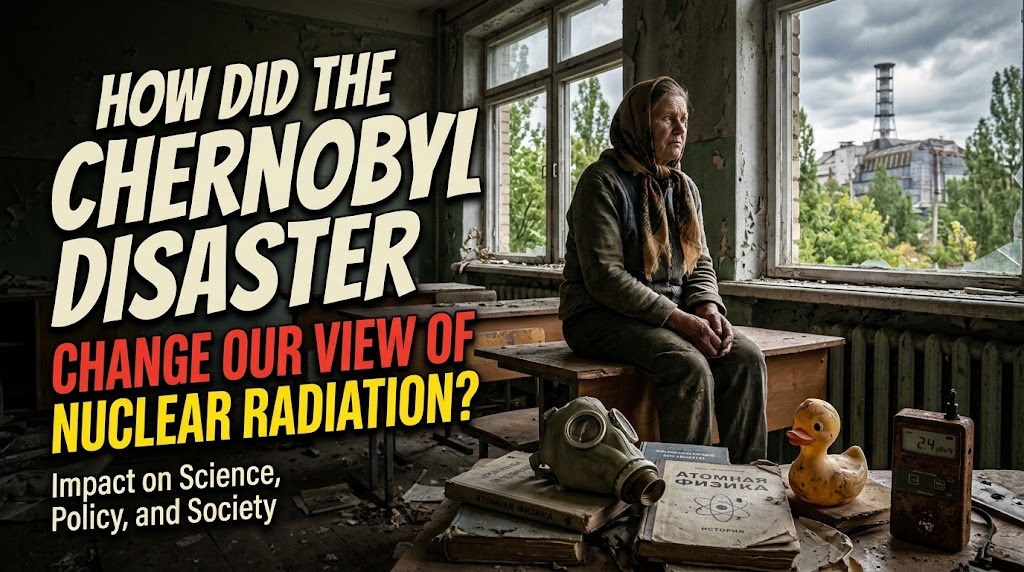
The Chernobyl nuclear power plant accident in April 1986 stands as the most severe nuclear power plant accident in history. A flawed reactor design combined with serious operator errors during a safety test led to a massive steam explosion and fire.
This disaster released an unprecedented amount of radioactive material into the atmosphere, contaminating vast regions of Europe and exposing millions of people to radioactive fallout. The sheer scale of the accident shattered global assumptions about the absolute safety of atomic energy.
REVEALING THE TRUE DANGER OF IONIZING RADIATION
Before Chernobyl, many people viewed nuclear energy as an abstract technological wonder with manageable risks. The disaster provided a harsh, real-world lesson on the destructive power of uncontrolled ionizing radiation.
First responders and nearby residents suffered immediate, severe effects from Acute Radiation Syndrome (ARS), demonstrating how high-dose radiation destroys bone marrow, internal organs, and skin tissues. Furthermore, long-term studies following the disaster revealed how radioactive isotopes like iodine-131 and cesium-137 could persist in the environment, contaminating food chains and increasing thyroid cancer rates in children decades later.
REFORMING GLOBAL NUCLEAR SAFETY STANDARDS
The international community realized that a nuclear accident anywhere could cross borders and threaten global health. This realization forced a massive overhaul of international nuclear safety protocols and engineering standards.
- Mandatory Safety Upgrades: Older reactors worldwide were retrofitted with upgraded emergency shutdown systems and containment structures.
- International Cooperation: Governments established tighter collaborations through the International Atomic Energy Agency (IAEA) to share safety data and conduct peer reviews.
- Operator Training: Training programs shifted toward rigorous simulation testing and strict adherence to protocol rather than pushing systems past safe operating limits.
SHIFTING PUBLIC PERCEPTION AND TRANSPARENCY
Beyond the technical and medical lessons, Chernobyl fundamentally changed how the public and governments viewed transparency and risk communication. In the immediate aftermath, Soviet authorities attempted to conceal the severity of the accident, delaying evacuations and creating deep public distrust.
This secrecy proved that public safety relies just as heavily on honest communication as it does on engineering safeguards. Today, public skepticism regarding nuclear energy remains closely tied to the memory of Chernobyl, prompting governments and energy companies to prioritize openness, independent oversight, and community engagement.
CONCLUSION
In conclusion, the Chernobyl disaster permanently changed our view of nuclear radiation by exposing the devastating consequences of severe radioactive contamination and systemic failure. It forced the global nuclear industry to adopt stricter safety standards, enhanced containment designs, and international cooperation.
While modern nuclear energy operates under entirely different safety protocols than 1986 Soviet reactors, the legacy of Chernobyl serves as an enduring reminder of the responsibility required in harnessing atomic power.
Recent Posts

Bagaimana Sistem SKS pada Program Kuliah... 22.11.2026/53 View

How Does Technology Make Daily Evaluation... 21.11.2026/82 View

Apa Strategi Menghadapi Kesenjangan antara Kompetensi... 21.11.2026/81 View

Mengapa Inventaris Aset Penting bagi Kelancaran... 21.11.2026/77 View

When Should Musicians Join a Record... 21.11.2026/82 View
