

How Did the Discovery of Fire Transform Early Human Life?
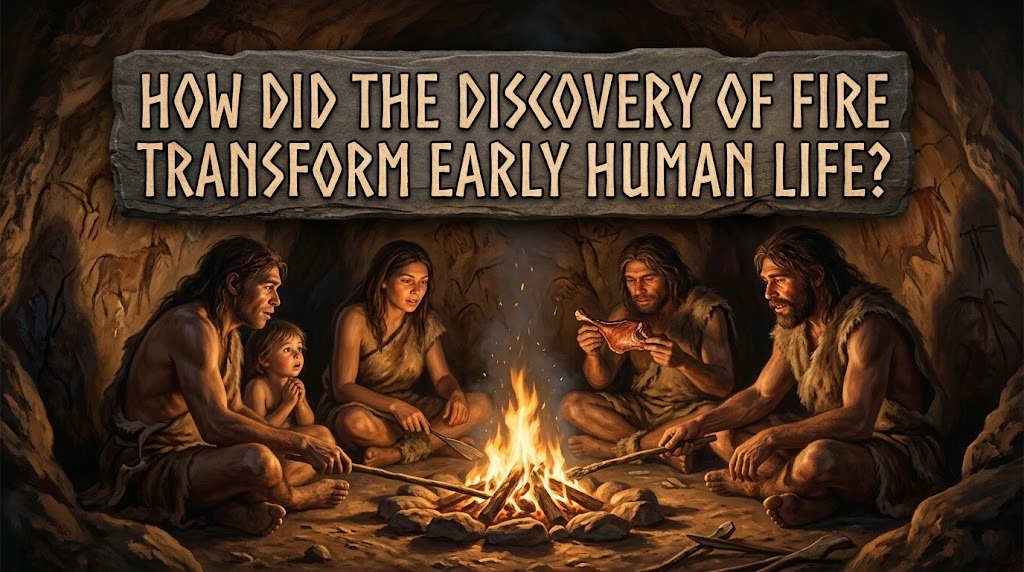
The discovery and use of fire transformed early human life by providing warmth, protection, cooked food, and opportunities for social interaction. Fire became one of the most important developments in human evolution because it helped early humans adapt to different environments and improve their chances of survival. Although scientists continue to investigate when humans first controlled fire regularly, archaeological evidence shows that fire use became increasingly important during human prehistory. Its benefits extended beyond basic survival, influencing diet, daily activities, and the development of human communities. Understanding how fire changed early human life helps explain how our ancestors adapted and eventually developed more complex societies.
HOW FIRE PROVIDED WARMTH AND PROTECTION
Before fire became a regular part of daily life, early humans depended heavily on natural sources of warmth and shelter. Fire allowed them to stay warm during cold nights and survive in environments with lower temperatures. This made it easier for some human populations to occupy regions that would otherwise have been difficult to inhabit. Fire also provided light after sunset, extending the time available for social activities and other tasks. These advantages helped early humans become more adaptable to changing environmental conditions.
Fire may also have offered protection against some predators. The light, smoke, and heat of a controlled fire could discourage certain animals from approaching sleeping areas. However, fire did not eliminate the dangers of living in the wild, and its protective effects depended on the circumstances. Early humans still needed to remain alert and use suitable shelters. Even with these limitations, fire became a valuable resource that improved safety and supported group survival.
HOW COOKING FOOD CHANGED HUMAN DIET
One of the most significant effects of fire was the ability to cook food. Cooking makes many foods softer and easier to chew, while heat can reduce harmful microorganisms and parasites in food when it is cooked properly. It can also improve the digestibility of certain nutrients by breaking down some complex structures. These changes helped early humans obtain energy and nutrients from a wider range of foods. Cooking therefore contributed to changes in how humans gathered, prepared, and consumed food.
Researchers have proposed that cooking played an important role in human biological evolution. Compared with many raw foods, cooked foods can be easier to digest, allowing the body to access energy more efficiently from certain meals. This may have influenced the evolution of human eating patterns and digestive physiology over time. However, scientists continue to debate exactly when habitual cooking began and how strongly it influenced brain expansion. Cooking should therefore be understood as an important factor in human evolution rather than the only explanation for changes in human anatomy.
HOW FIRE HELPED EARLY HUMANS SURVIVE IN DIFFERENT ENVIRONMENTS
The ability to control fire gave early humans greater flexibility when adapting to different environments. In colder regions, fire provided warmth and helped people maintain comfortable conditions during periods of low temperatures. In open landscapes, it could also support activities such as preparing food and gathering around a shared source of heat. These benefits may have helped human groups explore and occupy new areas. Fire became particularly valuable when natural resources and weather conditions changed.
Fire also influenced how early humans used their surroundings. With reliable heat and light, people could remain active after dark and carry out certain tasks that would otherwise be difficult. Depending on the environment, fire may have helped them process materials, manage vegetation, or prepare animal products. These uses varied across places and periods, and not every early human group had the same level of fire-control ability. Nevertheless, fire provided an important advantage for groups that could maintain and use it effectively.
HOW FIRE SUPPORTED SOCIAL INTERACTION AND COMMUNICATION
Fire created a shared gathering place where early humans could spend time together. People sitting near a fire could exchange information, observe one another, and strengthen social relationships. These interactions may have supported cooperation and helped individuals learn important skills from more experienced group members. Children could also benefit from observing how adults prepared food, used tools, and responded to their environment. In this way, fire may have contributed to the development of stronger social connections.
Gathering around fire may also have created opportunities for more complex communication. When people spent time together in the evening, they could share experiences, coordinate future activities, and pass knowledge between generations. Some researchers suggest that these shared settings may have supported the development of language and storytelling. However, direct evidence connecting fire use to the origins of language remains limited. What can be said with greater confidence is that fire created additional opportunities for social learning and group interaction.
HOW FIRE CONTRIBUTED TO TOOLMAKING AND TECHNOLOGY
Fire eventually became useful for more than cooking and warmth. In some periods and regions, early humans used heat to modify materials and improve the production of tools. Controlled heating could make certain stones easier to shape, while fire also helped people process wood and other natural resources. These practices required knowledge of materials, careful observation, and an ability to control temperature. Such skills contributed to the broader development of prehistoric technology.
Much later, humans learned to use fire in more advanced activities, including pottery production and metalworking. These developments did not occur immediately after the earliest evidence of fire use; they emerged through many generations of experimentation. The ability to produce high temperatures made it possible to transform clay into durable objects and extract or shape metals. These technologies eventually supported agriculture, trade, construction, and more complex societies. Fire therefore became a foundation for many technological advances throughout human history.
WHEN DID EARLY HUMANS FIRST CONTROL FIRE
Scientists have found evidence suggesting that fire was used by early human relatives hundreds of thousands to more than a million years ago, although the earliest evidence is debated. Some archaeological sites contain burned materials that may indicate early fire use, but natural wildfires can create similar traces. Researchers must therefore examine the location, condition, and context of burned remains before concluding that humans controlled a fire. Evidence of repeated burning in a particular area can provide stronger support for deliberate use.
A widely discussed example comes from Wonderwerk Cave in South Africa, where researchers identified evidence of burning dating to approximately one million years ago. Other archaeological sites provide evidence of fire use during later periods, helping scientists investigate how the practice became more widespread. It is important to distinguish between encountering natural fire, using fire opportunistically, and maintaining a controlled fire regularly. These abilities may have developed at different times in different human populations. As new discoveries emerge, scientists continue to refine their understanding of when and how fire became a regular part of human life.
CONCLUSION
The discovery and control of fire transformed early human life by providing warmth, protection, cooked food, and opportunities for social interaction. It helped human groups adapt to different environments, improve food preparation, and develop practical skills. Fire may also have supported communication and cooperation by creating shared spaces for learning and social activities. Over time, its use expanded into toolmaking, pottery, metalworking, and other technological practices. Although the exact timeline of early fire control remains uncertain, fire was clearly one of the most influential developments in human history.
Recent Posts

Bagaimana Sistem SKS pada Program Kuliah... 22.11.2026/51 View

How Does Technology Make Daily Evaluation... 21.11.2026/81 View

Apa Strategi Menghadapi Kesenjangan antara Kompetensi... 21.11.2026/81 View

Mengapa Inventaris Aset Penting bagi Kelancaran... 21.11.2026/77 View

When Should Musicians Join a Record... 21.11.2026/82 View
