

How Did the Industrial Revolution Change Human Life in the Modern Era?
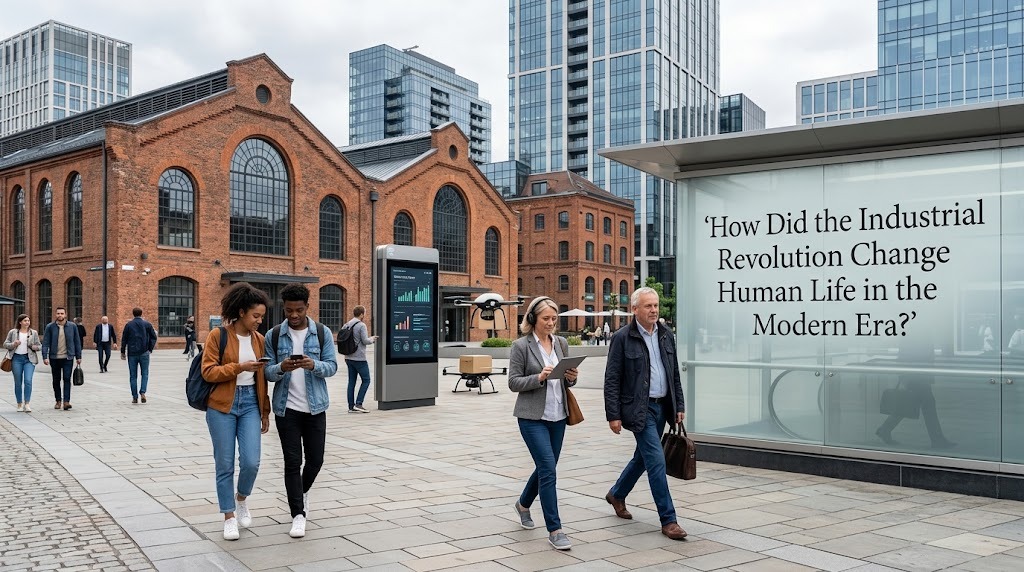
The Industrial Revolution was one of the most significant turning points in human history. It transformed how people worked, produced goods, traveled, communicated, and lived their daily lives. Before industrialization, many people depended on agriculture and manual labor, while most products were made by hand. Over time, the development of machines, electricity, computers, and digital technology changed these traditional activities into faster and more efficient processes. Today, the effects of the Industrial Revolution can be seen in almost every aspect of modern life, from education and healthcare to transportation and business. Although these changes have created many opportunities, they have also introduced challenges that society must address.
THE TRANSFORMATION OF WORK AND INDUSTRY
The Industrial Revolution changed the way people worked by introducing machines and factory production. During the First Industrial Revolution, which began in Britain in the eighteenth century, steam engines and mechanical equipment helped manufacturers produce goods in larger quantities. As factories expanded, many people moved from rural areas to cities to find employment. This shift gradually changed societies from primarily agricultural economies into industrial economies.
Later developments introduced electricity, assembly lines, computers, and automated systems. These innovations made production faster, improved product consistency, and reduced the need for certain types of manual labor. In the modern era, Industry 4.0 has connected machines, software, and data through technologies such as artificial intelligence and the Internet of Things. As a result, workers increasingly need technical knowledge, problem-solving abilities, and digital skills to remain competitive in the changing labor market.
CHANGES IN DAILY LIFE AND LIVING STANDARDS
The Industrial Revolution significantly changed people's daily activities and living standards. Mass production made many goods, including clothing, household equipment, and other essential products, more widely available. Improvements in manufacturing and distribution helped increase access to products that were once expensive or difficult to obtain. Over time, industrial development also supported the growth of modern housing, public infrastructure, and consumer services.
Technology has made everyday activities more convenient. Household appliances reduce the time needed for domestic work, while smartphones and internet connections allow people to communicate and access information almost instantly. Digital payments, online shopping, and delivery services have also changed how people purchase goods and manage their daily responsibilities. However, these benefits are not distributed equally, as some communities still experience limited access to reliable electricity, internet services, and modern infrastructure.
REVOLUTIONARY CHANGES IN TRANSPORTATION AND COMMUNICATION
Transportation and communication have experienced major improvements because of industrial and technological development. During the early Industrial Revolution, steam-powered trains and ships enabled people and goods to travel farther and more efficiently than many earlier methods. The invention and development of automobiles, aircraft, and modern road networks later expanded mobility and supported international trade. Today, advanced transportation systems connect cities and countries, making business activities and personal travel more accessible.
Communication has changed just as dramatically. The development of the telegraph, telephone, radio, television, and internet has made it possible to exchange information over increasingly long distances. Modern communication technologies allow people to participate in online meetings, study remotely, and collaborate with colleagues across different countries. Digital communication has also accelerated the exchange of knowledge and ideas. Nevertheless, misinformation, online privacy risks, and unequal digital access remain important concerns in an increasingly connected world.
THE IMPACT ON EDUCATION AND HEALTHCARE
The Industrial Revolution helped create conditions for improvements in education by supporting economic growth, expanding urban communities, and increasing demand for skilled workers. As industries became more complex, education and vocational training grew in importance. In the modern era, digital learning platforms, online courses, and educational applications allow students to access learning materials beyond traditional classrooms. Teachers can use interactive resources and digital tools to explain difficult concepts, while students can develop skills that are relevant to modern employment.
Healthcare has also benefited from industrial and technological progress. Advances in manufacturing have supported the production of medical equipment, medicines, and diagnostic tools. Modern hospitals use technologies such as medical imaging, electronic health records, and robotic assistance in selected procedures. Artificial intelligence can help healthcare professionals analyze medical information and support certain clinical decisions, although human expertise remains essential. Despite these advances, high costs, shortages of medical professionals, and unequal access to healthcare technology continue to affect many communities.
ECONOMIC OPPORTUNITIES AND SOCIAL CHALLENGES
Industrial development has created economic growth, new industries, and employment opportunities. Factories, transportation networks, digital businesses, and technology companies have contributed to productivity and international trade. In Indonesia, industrialization and digital transformation have supported sectors such as manufacturing, logistics, telecommunications, and online commerce. Small businesses can also reach wider markets through e-commerce platforms and digital payment systems. These developments provide opportunities for entrepreneurs and workers who can adapt to changing consumer needs.
However, the Industrial Revolution has also created significant social and environmental challenges. Automation can replace certain repetitive jobs, requiring affected workers to learn new skills or move into different occupations. Rapid urbanization may increase pressure on housing, transportation, and public services. Industrial activities can also contribute to air pollution, excessive resource consumption, and greenhouse gas emissions when production relies heavily on fossil fuels. To address these issues, governments, businesses, and communities need to invest in education, worker training, environmental protection, and inclusive economic policies. The goal should be to ensure that technological progress improves people's lives without leaving vulnerable groups behind.
KESIMPULAN
The Industrial Revolution has fundamentally changed human life by transforming work, daily activities, transportation, communication, education, healthcare, and economic development. From steam-powered machinery to artificial intelligence, each stage of industrial progress has introduced new opportunities and reshaped how societies function. Modern technology can improve productivity, expand access to information, and support better living standards. However, challenges such as job displacement, digital inequality, and environmental damage must also be addressed. By strengthening education, developing digital skills, and promoting responsible innovation, society can maximize the benefits of industrial development while reducing its negative effects.iety.
Recent Posts

Bagaimana Sistem SKS pada Program Kuliah... 22.11.2026/50 View

How Does Technology Make Daily Evaluation... 21.11.2026/79 View

Apa Strategi Menghadapi Kesenjangan antara Kompetensi... 21.11.2026/79 View

Mengapa Inventaris Aset Penting bagi Kelancaran... 21.11.2026/75 View

When Should Musicians Join a Record... 21.11.2026/80 View
