

How Do Archaeologists Determine The Age Of Ancient Objects?
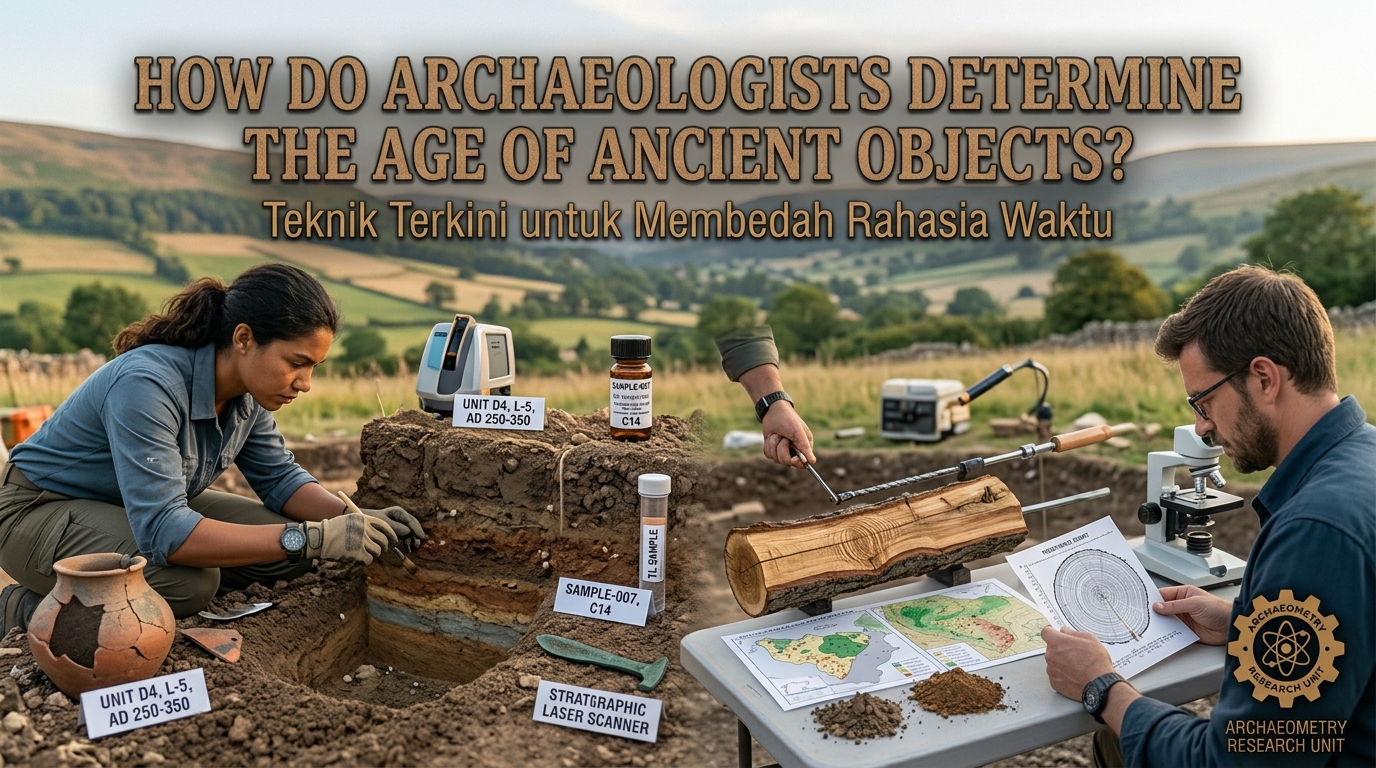
Archaeologists study ancient objects to understand how people lived, worked, and developed civilizations in the past. However, discovering an artifact is only the beginning of the investigation. Researchers also need to determine how old the object is and when it was used or deposited at a site. To answer these questions, they combine scientific testing, observations, and evidence from the surrounding archaeological context. Archaeological dating methods help researchers build timelines, compare discoveries, and reconstruct important events in human history.
RELATIVE DATING: COMPARING OBJECTS AND LAYERS
Relative dating helps archaeologists determine whether an object is older or younger than other objects or archaeological layers. One common technique is stratigraphy, which examines the layers of soil and material accumulated over time. In an undisturbed site, lower layers are generally older than the layers above them. If a pottery fragment is discovered beneath a layer containing a more recent object, researchers can use this relationship to establish a likely sequence. However, disturbances such as digging, erosion, or animal activity can change the original position of materials.
Another relative dating technique is seriation, which arranges artifacts according to changes in their styles, shapes, or designs. For example, archaeologists may compare pottery patterns from several sites to identify how a particular style developed over time. They can then use these patterns to estimate the relative age of similar objects found elsewhere. Relative dating does not usually provide an exact calendar year, but it helps researchers establish the order of past events. When combined with scientific dating methods, it creates a stronger foundation for understanding archaeological timelines.
RADIOCARBON DATING: MEASURING CARBON IN ORGANIC MATERIALS
Radiocarbon dating is a scientific method used to estimate the age of suitable materials that once belonged to living organisms. These materials include charcoal, wood, seeds, and some types of bone. Living organisms absorb carbon, including a small amount of radioactive carbon-14, while they are alive. After an organism dies, its carbon-14 gradually decreases at a predictable rate. By measuring the remaining carbon-14, scientists can estimate how long ago the organism died.
Radiocarbon dating is especially useful for investigating prehistoric settlements and ancient human activities. However, it dates the death of the organism rather than automatically revealing when an artifact was manufactured or used. For example, charcoal found near a building may come from an earlier fire or older material reused during construction. Scientists also account for changes in atmospheric carbon levels by calibrating radiocarbon results against other dating evidence. Radiocarbon dating provides age estimates, not always exact dates, and its reliability depends on sample quality, context, and proper laboratory procedures.
DENDROCHRONOLOGY: DATING OBJECTS THROUGH TREE RINGS
Dendrochronology, also known as tree-ring dating, uses annual growth rings in trees to establish dates. In many tree species, each growing season produces a ring whose width reflects environmental conditions such as rainfall and temperature. Researchers compare ring patterns from wooden objects with established regional tree-ring records. When the patterns match, they may determine the calendar years in which the tree grew. This method can provide very precise dates for suitable wood samples.
Tree-ring dating is particularly useful for wooden buildings, furniture, tools, and other objects made from preserved timber. The outermost ring can sometimes indicate when a tree was cut down, especially if the bark or outer wood remains intact. However, the date of tree growth does not always equal the date an object was made or used. Wood may have been stored, reused, or incorporated into a structure years after the tree was cut. Dendrochronology works best when suitable wood and reliable reference records are available.
THERMOLUMINESCENCE DATING: ANALYZING HEATED MATERIALS
Thermoluminescence dating helps researchers estimate when certain minerals were last exposed to intense heat or, in some cases, when sediment containing suitable minerals was last exposed to light using related luminescence techniques. It is commonly used to study pottery, fired clay, bricks, and other materials that have been heated. Minerals can accumulate energy from natural background radiation over time. When a sample is heated in a laboratory, it releases some of this stored energy as light. Scientists measure the light and use it, together with estimates of the radiation received by the sample, to calculate an approximate age.
This technique is valuable when an object cannot be dated using radiocarbon methods because it contains no suitable organic material. For example, thermoluminescence can help estimate when a clay pot was last fired. However, the method requires careful sampling and reliable information about the sample's radiation environment. Results can be affected by later heating, exposure conditions, and uncertainties in the surrounding soil. Thermoluminescence provides an independent way to date certain artifacts, particularly when other methods are unsuitable.
POTASSIUM ARGON DATING: STUDYING ANCIENT VOLCANIC MATERIALS
Potassium argon dating is used mainly to determine the age of volcanic rocks and minerals. It measures the radioactive decay of potassium-40 into argon-40, which accumulates in suitable materials after they cool. Scientists analyze the amounts of these isotopes to estimate when the rock formed or cooled. This method is particularly important for archaeological research in regions with ancient volcanic deposits. It can help researchers establish the age of geological layers associated with early human remains or stone tools.
Unlike radiocarbon dating, potassium argon dating is generally suited to much older geological materials. It does not usually provide the direct age of a stone tool or fossil found nearby. Instead, researchers use dated volcanic layers above or below archaeological evidence to establish an age range. The interpretation depends on whether the geological layers remain in their original position and whether the dated material formed at the relevant time. Dating volcanic rocks can help establish the timeline of early human evolution when suitable geological evidence is available.
ARCHAEOLOGICAL CONTEXT AND SCIENTIFIC ANALYSIS
The location where an object is discovered is essential for determining its age. Archaeologists record the object's depth, surrounding materials, soil layers, and relationship to nearby structures. These details are known as its archaeological context, and they help researchers understand whether an object was deposited during the period when the surrounding layer formed. An artifact found in a disturbed layer may have moved from its original location, making its age more difficult to interpret. Careful excavation and documentation help reduce these uncertainties.
Researchers often combine several dating methods to check whether their conclusions are consistent. For example, pottery styles may provide a relative date, while radiocarbon dating of seeds from the same secure context may offer a scientific age estimate. Laboratory analysis can also identify the composition and origin of materials, providing additional clues about an object's history. No single dating method is suitable for every artifact, so archaeologists select techniques based on the material, its condition, and the research question. Comparing independent evidence generally produces a more reliable interpretation than relying on one result alone.
WHY ACCURATE ARCHAEOLOGICAL DATING MATTERS
Determining the age of ancient objects helps researchers reconstruct the development of human societies. Dating can reveal when people first settled in an area, adopted new technologies, or began exchanging goods with distant communities. It also helps archaeologists compare developments across different regions and investigate whether changes occurred gradually or rapidly. Accurate dating places archaeological discoveries within a meaningful historical timeline. Without reliable dates, it becomes much harder to explain how civilizations developed and interacted.
Dating also supports the preservation and interpretation of cultural heritage. Museums and researchers use chronological information to explain the significance of artifacts and their relationships to historical events. Reliable dating can help distinguish objects from different periods and identify whether a discovery challenges existing interpretations. However, scientists must communicate uncertainty honestly because dating results often have margins of error. By combining scientific evidence, careful excavation, and critical analysis, archaeologists can develop stronger explanations of the past.
CONCLUSION
Archaeologists determine the age of ancient objects by combining relative dating, scientific testing, and careful examination of archaeological context. Methods such as radiocarbon dating, dendrochronology, thermoluminescence, and potassium argon dating are suited to different materials and time periods. Each technique has strengths and limitations, so researchers often compare several forms of evidence before reaching a conclusion. The position of an object and the condition of its surrounding layers are also essential for interpreting dating results correctly. Through these methods, archaeologists can establish more reliable timelines and uncover the history of ancient civilizations.
Recent Posts

Bagaimana Sistem SKS pada Program Kuliah... 22.11.2026/49 View

How Does Technology Make Daily Evaluation... 21.11.2026/79 View

Apa Strategi Menghadapi Kesenjangan antara Kompetensi... 21.11.2026/79 View

Mengapa Inventaris Aset Penting bagi Kelancaran... 21.11.2026/75 View

When Should Musicians Join a Record... 21.11.2026/80 View
