

How Do Archaeologists Discover Ancient Civilizations?
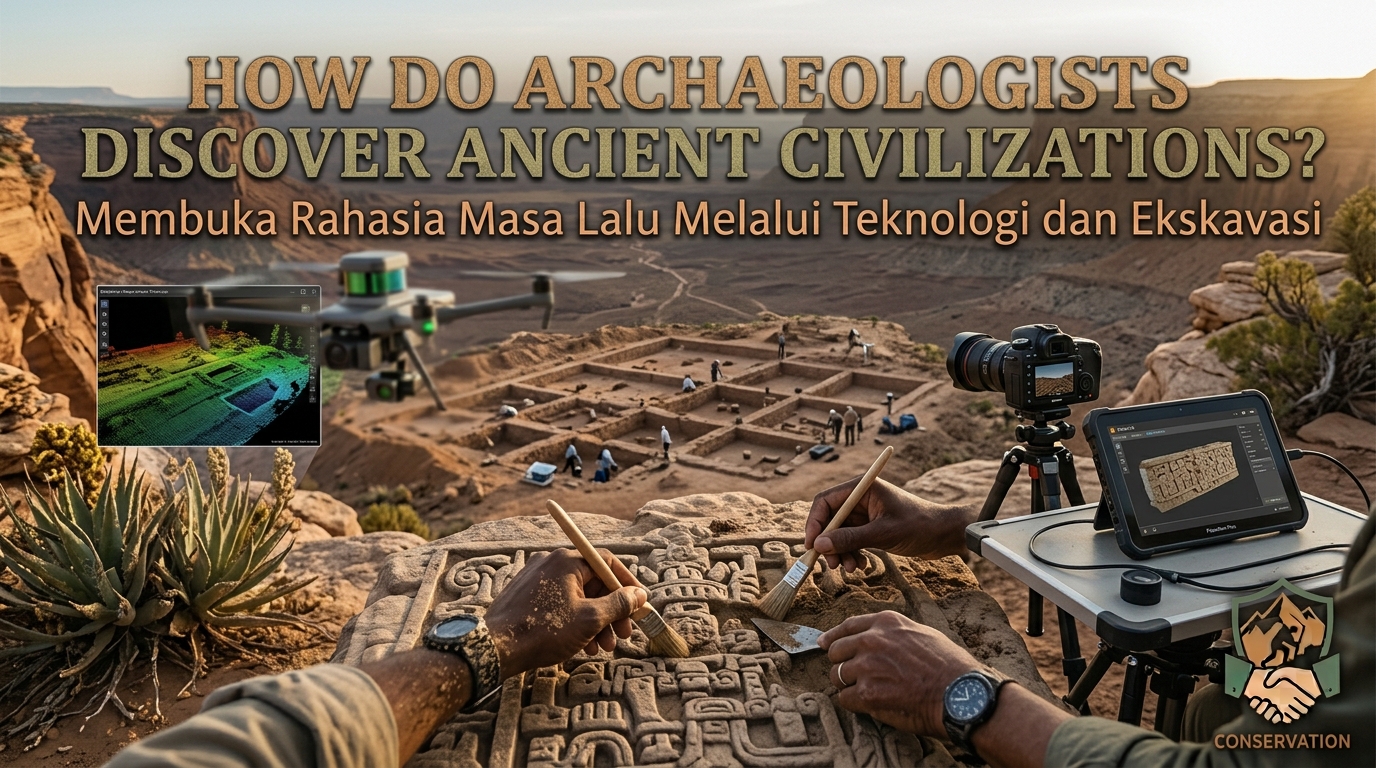
Archaeologists discover ancient civilizations by studying physical evidence left behind by people in the past. These discoveries can include ancient buildings, pottery, tools, human remains, inscriptions, and traces of settlements buried beneath the ground. Through careful investigation, researchers can learn how ancient communities lived, traded, developed technologies, and interacted with their surroundings. The process often requires years of research, fieldwork, and scientific analysis. Archaeological discoveries help reconstruct human history and reveal civilizations that may have been forgotten or remain largely unknown.
SEARCHING FOR ANCIENT SITES
The first step in discovering ancient civilizations is identifying locations that may contain historical remains. Archaeologists study historical documents, old maps, local traditions, and previous research to identify promising areas. They may also examine geographical features because ancient communities often settled near rivers, fertile land, coastlines, or important trade routes. These clues help researchers decide where further investigation should take place.
Modern technology makes this process more efficient. Satellite imagery, aerial photography, and geographic information systems (GIS) can reveal unusual patterns in the landscape that may indicate buried structures or ancient settlements. However, these signs do not automatically confirm the presence of an archaeological site. Researchers must verify their observations through field surveys and other scientific methods.
USING SURVEYS TO FIND HIDDEN EVIDENCE
After identifying a possible location, archaeologists often conduct a field survey to examine the area systematically. They walk across the landscape, record visible artifacts, map surface features, and document the condition of the surrounding environment. The distribution of pottery fragments, stone tools, or building materials can provide clues about past human activity. Surveys help researchers understand the size and possible purpose of a settlement before deciding whether excavation is necessary.
Some sites are hidden beneath forests, farmland, deserts, or modern buildings. In these situations, archaeologists may use remote sensing methods such as ground-penetrating radar, magnetometry, or aerial laser scanning known as LiDAR. These techniques can detect certain underground features or reveal shapes hidden by vegetation without immediately disturbing the ground. Combining field surveys with modern technology helps researchers locate potential sites while reducing unnecessary excavation.
EXCAVATING ANCIENT SETTLEMENTS
When a site requires closer investigation, archaeologists may carry out an excavation. They remove soil carefully in controlled stages and record the position, depth, and relationship of every significant discovery. This process is important because objects found together may provide evidence about how a place was used. Archaeological context often reveals more information than an artifact considered on its own.
Excavation requires patience because even small objects can hold important clues. Pottery fragments may indicate manufacturing techniques or trade connections, while foundations can reveal the layout of houses, temples, or public buildings. Researchers also collect samples of soil, seeds, charcoal, and animal bones for further analysis. Since excavation permanently changes the original deposit, detailed recording and documentation are essential throughout the process.
ANALYZING ARTIFACTS AND SCIENTIFIC EVIDENCE
After excavation, archaeologists examine the recovered materials to understand their age, function, and cultural significance. They study an artifact's shape, material, manufacturing technique, and similarities to objects found at other sites. For example, pottery styles can sometimes help researchers identify cultural connections or establish a relative chronology. Scientific analysis allows archaeologists to develop interpretations based on evidence rather than guesswork.
Different methods answer different research questions. Radiocarbon dating can estimate the age of suitable organic materials, such as charcoal or bone, while stratigraphy helps establish the sequence of archaeological layers. Chemical analysis may identify the origin of raw materials, and the study of plant and animal remains can reveal ancient diets and farming practices. By combining these findings, researchers can build a clearer picture of when a civilization developed and how its people lived.
USING ANCIENT BUILDINGS AND INSCRIPTIONS AS CLUES
Ancient buildings provide important evidence about the organization and achievements of past civilizations. The remains of houses, temples, roads, defensive walls, and water systems can reveal construction methods, settlement planning, and the use of local resources. Large public structures may suggest coordinated labor and organized leadership, although their precise purpose must be established through evidence. Researchers compare architectural features across different locations to identify cultural similarities and changes over time.
Inscriptions, coins, and written records can provide additional historical information. They may contain names, dates, religious beliefs, political events, or details about trade and administration. However, written sources do not always represent every group in society, and some inscriptions may reflect the viewpoint of rulers or powerful institutions. Comparing written records with archaeological evidence helps researchers develop a more balanced understanding of ancient civilizations.
RECONSTRUCTING DAILY LIFE IN ANCIENT CIVILIZATIONS
Archaeologists do more than identify monuments and valuable objects. They also investigate ordinary remains to understand how people prepared food, made clothing, raised animals, and organized their households. Plant remains, animal bones, cooking vessels, and household tools can reveal everyday activities that were rarely recorded in written documents. These findings help explain how ancient communities adapted to their environments and supported their populations.
Researchers can also study human remains, when appropriate and ethically permitted, to investigate health, diet, mobility, and population relationships. Evidence of imported goods may indicate long-distance trade, while changes in settlement patterns can suggest migration or shifts in economic activity. Reconstructing daily life helps historians understand ancient civilizations as living communities rather than simply collections of monuments. These details also reveal differences between social groups and changes across generations.
HOW TECHNOLOGY HELPS ARCHAEOLOGICAL DISCOVERIES
Modern technology has transformed the way archaeologists investigate ancient civilizations. LiDAR, satellite imagery, and remote sensing can help locate features that are difficult to see from the ground. Three-dimensional scanning and digital modeling allow researchers to record structures in detail and create visual reconstructions of damaged or partially buried sites. Digital databases also make it easier to compare discoveries and share research findings with other specialists.
Laboratory technologies provide further insight into ancient materials and environments. Microscopic analysis can reveal traces of manufacturing or use, while chemical methods may identify the composition and possible origin of artifacts. Computer-based mapping helps researchers connect discoveries across large geographical areas. Nevertheless, technology supports rather than replaces archaeological expertise because results must still be interpreted carefully and checked against reliable evidence.
CHALLENGES IN DISCOVERING ANCIENT CIVILIZATIONS
Discovering ancient civilizations is not always straightforward. Many sites have been damaged by erosion, flooding, construction, agriculture, or illegal excavation. Others remain buried beneath modern cities or lie in remote areas where fieldwork is expensive and difficult. Incomplete evidence can also make it challenging to determine the age, purpose, or cultural identity of a settlement.
Archaeologists must avoid drawing conclusions from a single discovery without considering other evidence. An object may have been traded, reused, or moved from its original location, which can complicate interpretation. Researchers therefore compare findings, evaluate alternative explanations, and communicate uncertainty when evidence is limited. Careful research, ethical practices, and collaboration with local communities are essential for protecting sites and producing reliable historical knowledge.
CONCLUSION
Archaeologists discover ancient civilizations through a combination of historical research, field surveys, excavation, scientific testing, and technological tools. Each method contributes different information about the people who built settlements, developed technologies, traded goods, and created cultural traditions. By studying artifacts, buildings, inscriptions, and environmental remains, researchers can reconstruct how ancient communities lived and changed over time. Archaeology connects physical evidence with human history, helping us understand the achievements and challenges of past civilizations while preserving their heritage for future generations.
Recent Posts

Bagaimana Sistem SKS pada Program Kuliah... 22.11.2026/49 View

How Does Technology Make Daily Evaluation... 21.11.2026/79 View

Apa Strategi Menghadapi Kesenjangan antara Kompetensi... 21.11.2026/79 View

Mengapa Inventaris Aset Penting bagi Kelancaran... 21.11.2026/75 View

When Should Musicians Join a Record... 21.11.2026/80 View
