

How Do Artifacts Reveal The Daily Lives Of Ancient People?
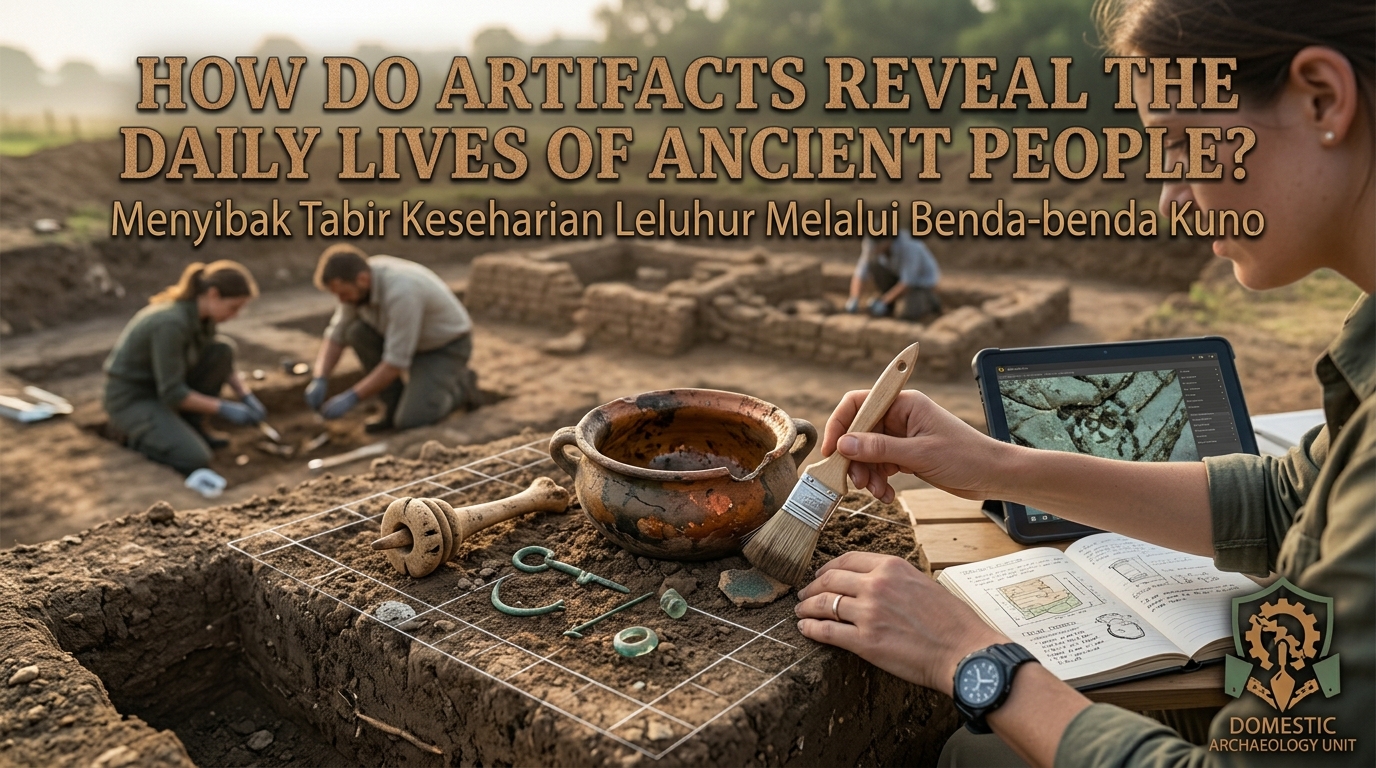
Artifacts reveal the daily lives of ancient people by providing physical evidence of how they worked, ate, dressed, traded, and interacted with others. These objects include pottery, stone tools, jewelry, cooking equipment, coins, and household items left behind by past communities. Unlike written records, artifacts can provide information about people who lived in societies where writing was uncommon or did not exist. By examining their materials, shapes, decorations, and locations, archaeologists can uncover details about everyday activities and cultural traditions. The careful study of artifacts helps reconstruct ordinary life in the past and explains how ancient societies developed over time.
WHAT ARE ARCHAEOLOGICAL ARTIFACTS?
Archaeological artifacts are objects made, modified, or used by humans in the past. Common examples include tools, pottery, weapons, ornaments, coins, and farming equipment. Each object can provide clues about the technology, resources, and skills available to the people who created or used it. Even a small fragment of pottery may reveal information about manufacturing techniques, food preparation, or cultural practices.
Archaeologists do not study artifacts in isolation. They also examine where objects were discovered, the soil layers surrounding them, and their relationships with other remains. An artifact's archaeological context helps researchers understand how it was used and when it became part of the site. Without this information, the object may lose much of its historical value.
TOOLS REVEAL WORK AND DAILY ACTIVITIES
Ancient tools provide important evidence of how people completed everyday tasks. Stone blades, axes, needles, and grinding stones can reveal activities such as cutting, building, sewing, and preparing food. Agricultural tools may indicate how communities cultivated crops, while fishing equipment can provide evidence of food-gathering practices near rivers or coastal areas. The materials and designs of these tools also show how people adapted their technology to local environments.
Wear marks and damage on tools can offer further clues about their use. Researchers may examine microscopic scratches or residue to identify the materials that came into contact with an object. Tool analysis helps explain ancient technology and labor while showing how practical skills changed over generations. These findings can also reveal differences between communities that relied on farming, hunting, fishing, or specialized crafts.
POTTERY AND COOKING OBJECTS EXPLAIN FOOD HABITS
Pottery is one of the most useful artifact types for understanding ancient diets and household activities. Cooking pots, bowls, storage jars, and serving vessels can reveal how people prepared, stored, and consumed food. Their shapes and sizes may suggest different functions, while decorations and manufacturing techniques can provide clues about cultural traditions. Pottery discovered in kitchens, storage areas, or communal spaces can help researchers understand how domestic activities were organized.
Scientific analysis can reveal additional information that is not visible to the naked eye. Residue inside a vessel may preserve traces of foods or other substances, although such evidence requires careful testing and interpretation. Seeds, animal bones, and plant remains found nearby can help identify ingredients and dietary patterns. Pottery and food remains together provide a clearer picture of ancient eating habits, including how communities used available resources and preserved supplies.
CLOTHING AND JEWELRY SHOW CULTURAL IDENTITY
Artifacts related to clothing and personal appearance can reveal how ancient people expressed identity and followed cultural traditions. Needles, buttons, belt fittings, beads, and jewelry provide evidence of clothing production and personal decoration. Materials such as shells, stone, bronze, gold, or imported glass may indicate access to particular resources and manufacturing skills. Their designs can also reflect local artistic traditions and connections with other communities.
Personal ornaments sometimes provide clues about social differences, but researchers must avoid assuming that expensive materials always represented wealth or status. Their meaning could also relate to religion, age, family identity, or ceremonial practices. Jewelry and clothing-related artifacts help explain cultural expression and the ways people presented themselves within their communities. When studied alongside burial evidence and other objects, they can reveal patterns of identity and social life.
COINS AND TRADE GOODS REVEAL ECONOMIC RELATIONSHIPS
Coins, weights, seals, and imported goods can provide evidence of economic activity in ancient societies. Coins may help researchers investigate monetary systems, political authority, and the movement of people and goods. Weighing equipment and trade-related objects can suggest how products were measured, exchanged, or distributed. These discoveries help explain how local economies operated and how communities obtained materials unavailable in their immediate surroundings.
Imported pottery, beads, metals, and other goods may indicate contact with distant regions. However, finding an object from another area does not automatically prove direct trade between the two places because goods could pass through several intermediaries. Trade artifacts reveal connections between ancient communities and help researchers reconstruct commercial networks. They can also show how cultural ideas, technologies, and artistic styles spread across regions.
HOUSES AND HOUSEHOLD OBJECTS SHOW FAMILY LIFE
Household artifacts provide valuable clues about how ancient people organized their homes and daily routines. Grinding stones, storage containers, lamps, cooking vessels, and furniture fragments can help identify activities that took place in different parts of a settlement. Their distribution may reveal areas used for cooking, sleeping, storage, or craft production. When archaeologists study these objects alongside building remains, they can develop a better understanding of domestic life.
The size and arrangement of houses may also offer information about living conditions and household organization. Differences in construction materials, storage capacity, and access to resources can suggest variations between households. However, house size alone cannot determine family structure or social status with certainty. Household artifacts help reconstruct everyday life by connecting ordinary objects with the spaces and activities in which people used them.
RELIGIOUS OBJECTS REVEAL BELIEFS AND TRADITIONS
Some artifacts provide evidence of religious beliefs, ceremonies, and spiritual practices. Figurines, ritual vessels, amulets, decorated objects, and offerings may be associated with temples, graves, or other special locations. Their designs and materials can help researchers investigate symbolic meanings and cultural traditions. When these objects are found alongside inscriptions or architectural remains, they may provide additional clues about religious activities.
Interpreting religious artifacts requires caution because an object's original purpose may not always be clear. A figurine, for example, could have served a ritual, decorative, educational, or practical function depending on its context. Researchers compare similar discoveries and examine their archaeological settings before suggesting possible meanings. Religious artifacts help explore ancient worldviews, but reliable interpretations must be supported by multiple forms of evidence.
HOW ARCHAEOLOGISTS ANALYZE ARTIFACTS
Archaeologists use several methods to understand what artifacts reveal about daily life. They begin by documenting an object's location, dimensions, material, condition, and relationship to nearby discoveries. Comparative analysis helps researchers identify similarities with objects from other places or periods. Laboratory techniques can then provide information about material composition, manufacturing methods, and possible use.
Scientific dating may help establish when an artifact or its archaeological context originated. Radiocarbon dating can estimate the age of suitable organic materials associated with a discovery, while stratigraphy helps establish the sequence of archaeological deposits. Microscopic examination and chemical analysis may reveal wear patterns or traces of substances that once touched an object. Combining archaeological context with scientific analysis allows researchers to draw stronger conclusions while recognizing the limits of the available evidence.
CONCLUSION
Artifacts reveal the daily lives of ancient people by providing evidence of their work, food, clothing, homes, trade, and beliefs. Tools explain practical skills, pottery offers clues about cooking and storage, jewelry reflects cultural expression, and trade goods reveal connections between communities. Household objects and religious items provide further insights into social routines and spiritual traditions. However, artifacts become most informative when archaeologists study their materials, locations, and relationships with other evidence. By analyzing artifacts carefully, archaeologists can reconstruct everyday life in ancient societies and preserve valuable knowledge about human history.
Recent Posts

Bagaimana Sistem SKS pada Program Kuliah... 22.11.2026/49 View

How Does Technology Make Daily Evaluation... 21.11.2026/79 View

Apa Strategi Menghadapi Kesenjangan antara Kompetensi... 21.11.2026/79 View

Mengapa Inventaris Aset Penting bagi Kelancaran... 21.11.2026/75 View

When Should Musicians Join a Record... 21.11.2026/80 View
