

How Do Campus Buses Help Reduce Traffic Congestion Around Universities?
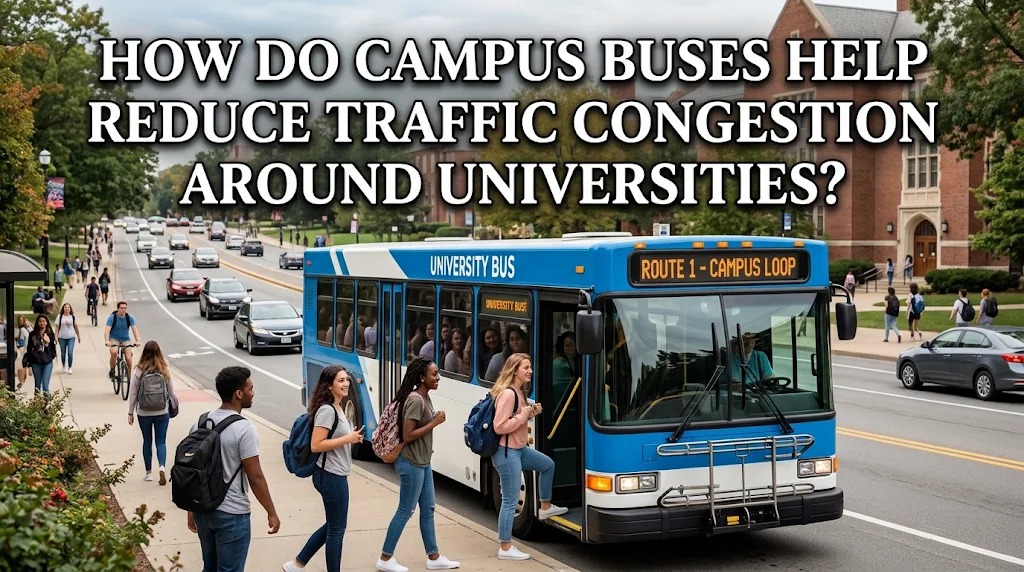
Traffic congestion around universities is a common problem, especially during busy hours when students, lecturers, employees, and visitors arrive or leave campus at the same time. A large number of motorcycles and private cars can create crowded roads, limited parking spaces, and longer travel times. These conditions can affect students' punctuality and make the campus environment less comfortable.
Campus buses offer a practical solution by providing shared transportation for students and university staff. Instead of using individual vehicles, several people can travel together in one bus. This approach can reduce the number of vehicles entering campus areas and help universities manage daily traffic more effectively.
REDUCING THE NUMBER OF PRIVATE VEHICLES
One of the main ways campus buses reduce traffic congestion is by decreasing the number of private vehicles used by students and university employees. Without shared transportation, many students may choose motorcycles or cars to travel between their homes, campus buildings, and other university facilities. When hundreds or thousands of people use individual vehicles, roads around universities can become crowded, particularly during class schedules. Campus buses provide an alternative that allows multiple passengers to travel together.
By encouraging students to use campus buses, universities can reduce the number of vehicles moving around campus. For example, one bus can carry many students who would otherwise travel separately using motorcycles or cars. This can reduce traffic volume and make roads easier to navigate. However, the actual impact depends on passenger capacity, route coverage, service frequency, and how many people switch from private vehicles to buses.
REDUCING PARKING DEMAND AROUND CAMPUS
Limited parking spaces are another major cause of traffic problems around universities. Students who bring private vehicles often spend time searching for available parking areas, especially during peak hours. Some may even park in unauthorized locations, making campus roads narrower and creating additional obstacles for other road users. These situations can increase congestion and disrupt transportation activities.
Campus buses help address this problem by reducing the number of private vehicles that need parking spaces. Students who use shared transportation can arrive at designated bus stops without bringing their own vehicles into campus areas. As a result, universities can manage parking facilities more efficiently and reduce unnecessary vehicle movement. The available space can also be used for pedestrian pathways, bicycle parking, and other campus facilities.
IMPROVING TRAFFIC FLOW DURING PEAK HOURS
Universities usually experience heavy traffic during certain periods, such as before morning classes, lunchtime, and after lectures finish. When many students arrive or leave at similar times, roads near campus entrances can become crowded. Vehicles may move slowly, while long queues can develop at intersections and parking entrances. Campus buses can help manage these conditions by transporting groups of students through planned routes and designated stops.
A well-organized campus bus system can make transportation more predictable. Universities can arrange departure schedules according to class timetables and adjust bus frequency during busy periods. Designated pickup and drop-off points can also prevent vehicles from stopping randomly along campus roads. With proper traffic coordination, campus buses can support smoother movement and reduce unnecessary delays.
ENCOURAGING SUSTAINABLE TRANSPORTATION HABITS
Campus buses also encourage students to choose shared transportation instead of relying entirely on private vehicles. This change can help create a more organized and environmentally responsible university environment. When more people share transportation, the number of vehicles needed for daily travel can decrease. This may also reduce fuel consumption and vehicle emissions, depending on the type of buses used and the transportation alternatives they replace.
Universities can strengthen this habit by providing comfortable buses, affordable services, clear schedules, and convenient routes. Electric or low-emission buses can offer additional environmental benefits. Universities can also combine bus services with walking and cycling facilities to create a more sustainable transportation system. These efforts help students understand that transportation choices can influence traffic conditions and environmental quality.
CONCLUSION
Campus buses help reduce traffic congestion around universities by decreasing the number of private vehicles, reducing parking demand, and improving traffic flow during peak hours. They also encourage sustainable transportation habits and can contribute to lower fuel consumption and vehicle emissions.
To achieve these benefits, universities need to provide reliable schedules, sufficient bus capacity, convenient routes, and safe bus stops. When campus bus services are managed effectively, they can make university areas less crowded, more accessible, and more comfortable for students, employees, and visitors.
Recent Posts

Bagaimana Sistem SKS pada Program Kuliah... 22.11.2026/31 View

How Does Technology Make Daily Evaluation... 21.11.2026/67 View

Apa Strategi Menghadapi Kesenjangan antara Kompetensi... 21.11.2026/66 View

Mengapa Inventaris Aset Penting bagi Kelancaran... 21.11.2026/64 View

When Should Musicians Join a Record... 21.11.2026/65 View
