

How Do Campus Buses Support Environmentally Friendly Transportation?
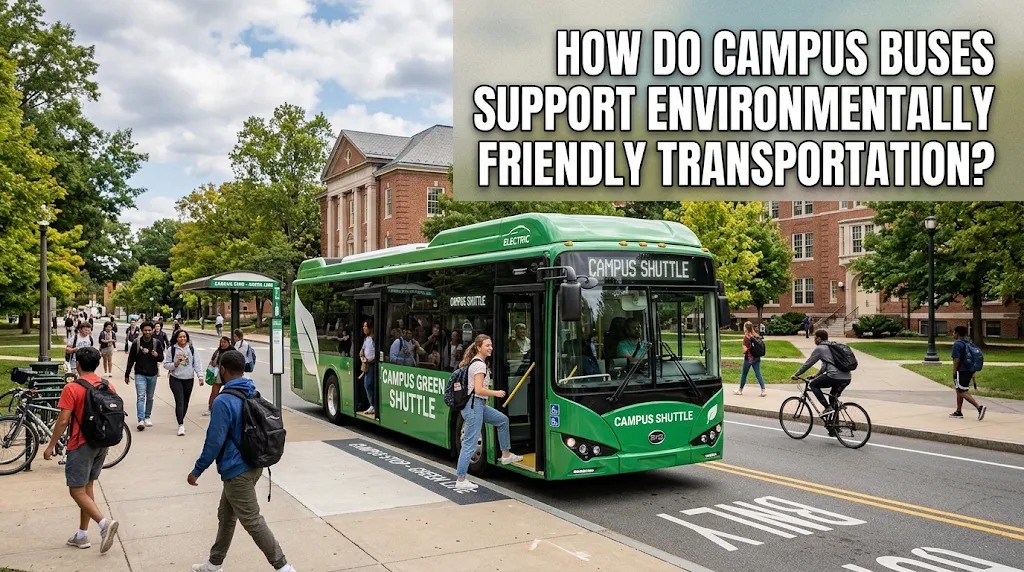
Environmentally friendly transportation has become an important part of creating sustainable university environments. As the number of students and university employees increases, transportation needs can also grow. Many people rely on private cars and motorcycles to travel to campus, which can contribute to air pollution, fuel consumption, and traffic congestion.
Campus buses offer a more sustainable transportation alternative by allowing multiple passengers to travel together in one vehicle. When properly managed, these services can reduce the number of private vehicles used around universities and help minimize environmental impacts. In addition, campus buses encourage students to develop more responsible transportation habits.
REDUCING VEHICLE EMISSIONS
One of the main ways campus buses support environmentally friendly transportation is by reducing vehicle emissions. When students use separate motorcycles or cars, each vehicle produces emissions from fuel combustion. These emissions can contribute to air pollution and increase greenhouse gas concentrations in the atmosphere. Campus buses allow many students to share one vehicle, potentially reducing the total number of vehicles needed for daily transportation.
The environmental benefits depend on the type of bus, fuel efficiency, passenger capacity, and number of passengers. A bus carrying only a few people may not provide the same environmental advantages as a fully occupied bus. Therefore, universities should organize transportation services to maintain efficient passenger numbers and avoid unnecessary trips. By improving these factors, campus buses can help reduce the environmental impact of student transportation.
REDUCING FUEL CONSUMPTION
Campus buses can also help universities reduce overall fuel consumption. When several students travel together, fewer individual vehicles are needed to transport the same number of passengers. This can decrease the total amount of gasoline or diesel consumed for campus transportation. Lower fuel consumption can also reduce transportation expenses and dependence on fossil fuels.
Universities can improve fuel efficiency by selecting appropriate bus routes, maintaining vehicles regularly, and arranging schedules according to student demand. Drivers should also follow efficient driving practices, such as avoiding unnecessary acceleration and keeping engines properly maintained. These measures can prevent fuel waste and improve transportation performance. As a result, campus bus services can become a more efficient alternative to individual vehicle use.
ENCOURAGING THE USE OF SHARED TRANSPORTATION
Campus buses encourage students and university employees to choose shared transportation instead of relying entirely on private vehicles. This change is important because individual transportation can increase the number of vehicles moving around campus every day. When more people use buses, traffic density may decrease, and the campus environment can become more organized.
Universities can encourage this habit by providing affordable fares, convenient routes, comfortable seating, and reliable departure schedules. Bus stops should also be located near important buildings, student housing areas, and campus entrances. Clear information about routes and operating hours can make students more confident about using public transportation. These improvements can gradually build a culture of sustainable mobility within the university community.
SUPPORTING THE DEVELOPMENT OF GREEN CAMPUSES
Campus buses are also part of broader efforts to create green campuses. A green campus focuses on reducing environmental impacts through sustainable facilities, energy efficiency, waste management, and responsible transportation. By providing shared transportation, universities can reduce dependence on private vehicles and use campus space more efficiently. This can create more opportunities for pedestrian areas, bicycle facilities, and green open spaces.
Universities can strengthen these initiatives by introducing electric buses or other low-emission vehicles. Electric buses do not produce exhaust emissions while operating, although their overall environmental impact also depends on how the electricity is generated and how the vehicles are manufactured. Combining cleaner vehicles with renewable energy and efficient transportation planning can provide greater environmental benefits. These actions demonstrate how universities can contribute to sustainability through practical daily services.
CONCLUSION
Campus buses support environmentally friendly transportation by reducing vehicle emissions, lowering fuel consumption, encouraging shared mobility, and supporting green campus development. They provide students with a practical transportation option while helping universities manage their environmental impact.
To maximize these benefits, universities should provide reliable bus services, maintain vehicles properly, improve route efficiency, and consider adopting electric buses. With effective planning and student participation, campus buses can help create cleaner, more sustainable, and comfortable university environments.
Recent Posts

Bagaimana Sistem SKS pada Program Kuliah... 22.11.2026/31 View

How Does Technology Make Daily Evaluation... 21.11.2026/67 View

Apa Strategi Menghadapi Kesenjangan antara Kompetensi... 21.11.2026/66 View

Mengapa Inventaris Aset Penting bagi Kelancaran... 21.11.2026/64 View

When Should Musicians Join a Record... 21.11.2026/65 View
