

How Do Changing Times Influence the Way Modern Society Lives?
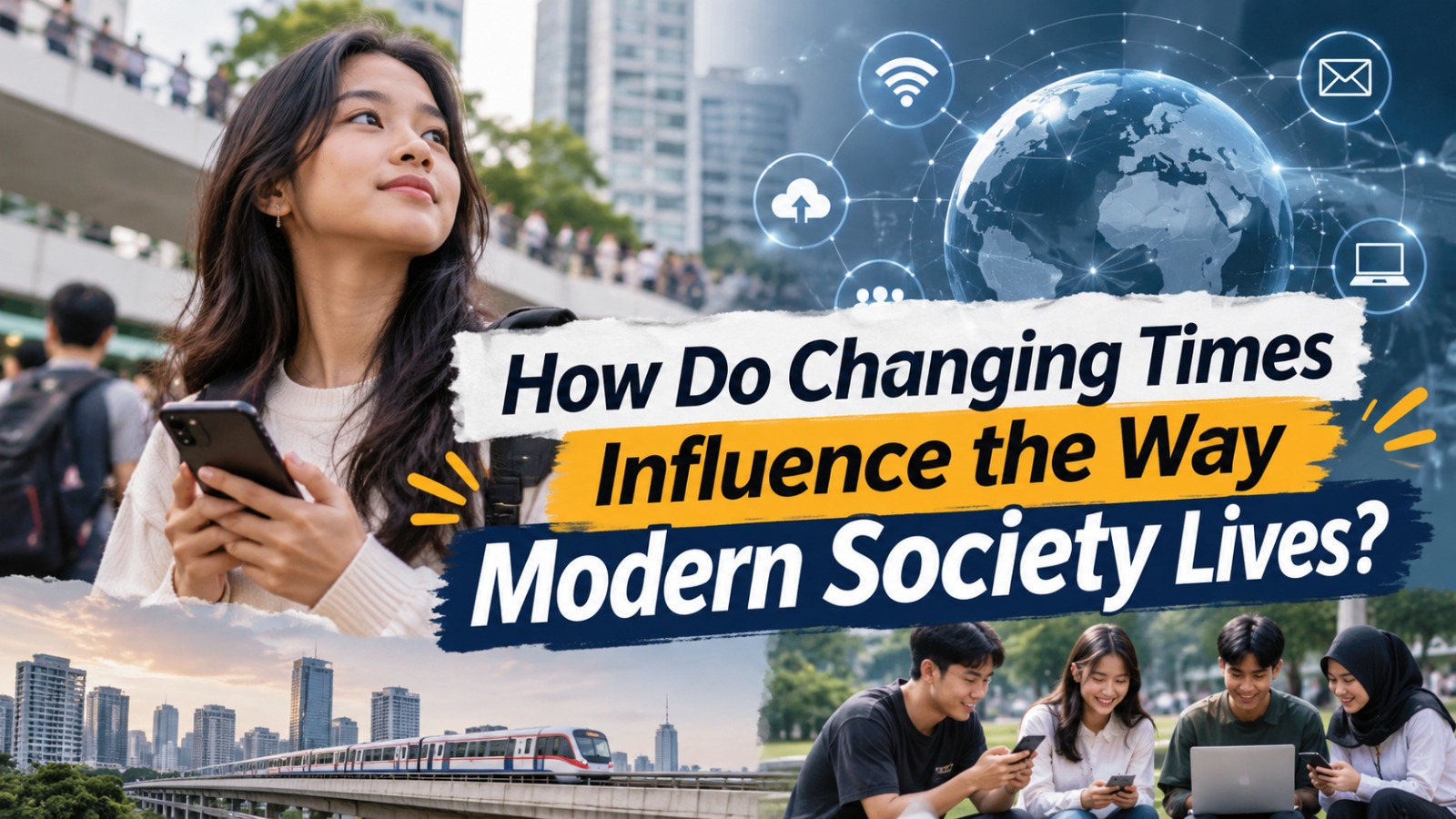
Changing times have a significant influence on how modern society lives, thinks, works, and interacts with others. Social development, technological innovation, economic growth, and cultural changes continuously shape human lifestyles. Activities that once required considerable time and effort can now be completed more easily through digital technology. These developments also influence people's habits, expectations, and ways of making decisions. Understanding how changing times affect modern society is important so individuals can adapt to new situations while maintaining positive values in everyday life.
THE INFLUENCE OF CHANGING TIMES ON MODERN LIFESTYLES
Changing times have transformed the way people organize their daily activities. Modern society increasingly depends on technology and digital services to complete various tasks, including shopping, studying, working, and communicating. People can access information and services without always having to visit physical locations. This convenience allows individuals to manage their time more efficiently and complete multiple activities.
However, modern lifestyles also create new challenges. The increasing use of digital devices can reduce direct social interactions and encourage people to spend more time online. Some individuals may also experience pressure to follow modern trends and maintain certain lifestyles. Therefore, people need to balance technological convenience with healthy habits, personal responsibilities, and meaningful social relationships.
TECHNOLOGICAL DEVELOPMENT AND CHANGES IN HUMAN ACTIVITIES
Technology is one of the most important factors influencing modern society. The development of smartphones, the internet, artificial intelligence, and digital platforms has changed how people communicate and access information. Tasks that previously required face-to-face interactions can now be completed through online services. These developments make everyday activities faster, more practical, and more accessible to different groups of people.
In addition, technology has created new opportunities in various sectors, including education, healthcare, transportation, and business. For example, students can attend online classes, patients can access certain healthcare services remotely, and business owners can promote their products through digital platforms. Nevertheless, technological development also requires people to understand digital literacy and responsible technology use. Without sufficient knowledge, individuals may become vulnerable to misinformation, online fraud, and privacy violations.
CHANGES IN EDUCATION AND EMPLOYMENT OPPORTUNITIES
Changing times have significantly influenced education and employment systems. Modern education increasingly incorporates digital learning platforms, interactive materials, and online resources. Students are no longer limited to information provided by teachers or printed textbooks because they can explore different learning materials through the internet. This development provides greater flexibility and encourages students to become more independent learners.
The employment sector has also experienced major transformations. Many companies now require workers to understand digital technology, communicate effectively, and solve problems independently. Furthermore, new professions have emerged in areas such as digital marketing, software development, content creation, and data analysis. Although these changes create wider career opportunities, competition is also becoming more demanding. Therefore, individuals need to develop relevant skills, practical experience, and continuous learning habits to remain competitive.
SOCIAL RELATIONSHIPS AND CULTURAL CHANGES IN MODERN SOCIETY
Modern society experiences changes not only in technology and employment but also in social relationships and cultural values. Social media allows people to communicate with friends, relatives, and communities across different geographical locations. Individuals can exchange ideas, share experiences, and build professional relationships more easily. However, excessive dependence on digital communication may reduce opportunities for meaningful face-to-face conversations.
Cultural changes also influence how people understand traditions, lifestyles, and social responsibilities. Younger generations are increasingly exposed to different cultures through the internet, entertainment, and international communication. This exposure can encourage openness and broader perspectives, but it may also weaken interest in certain traditional practices. Society should therefore maintain a balance between modern development and cultural preservation. Respecting local traditions while accepting positive changes can help create a society that remains progressive without losing its identity.
CHALLENGES AND OPPORTUNITIES IN A RAPIDLY CHANGING WORLD
Changing times provide various opportunities, but they also introduce challenges that individuals must understand. One major challenge is the need to continuously adjust to new technologies, social expectations, and economic conditions. People who are unwilling to learn new things may experience difficulties when their existing knowledge and abilities become less relevant. This situation makes adaptability and critical thinking increasingly important in modern life.
Another challenge is maintaining a healthy balance between professional responsibilities and personal well-being. The convenience of digital communication sometimes makes people feel that they must always be available for work or social interactions. On the positive side, technological development creates opportunities for entrepreneurship, remote employment, creative industries, and international collaboration. Individuals who recognize these opportunities can use their knowledge and abilities to build better futures. Developing self-confidence, creativity, and problem-solving skills can help people respond more effectively to changes.
THE IMPORTANCE OF ADAPTING TO CHANGING TIMES
Adapting to changing times is essential because society will continue to develop in different directions. Individuals need to remain open to new ideas, improve their abilities, and understand developments that may influence their personal and professional lives. Adaptability does not mean abandoning every traditional value or following every modern trend. Instead, it means identifying positive changes and applying them wisely according to personal needs and social conditions.
Education, lifelong learning, and positive social environments can support individuals throughout this process. Families, schools, workplaces, and communities also have important responsibilities in preparing people to face new challenges. By encouraging innovation while maintaining responsibility, honesty, and respect for others, society can achieve meaningful development. Ultimately, the ability to adapt, learn, and make responsible decisions will help individuals take advantage of opportunities and face uncertainties in the future.
CONCLUSION
Changing times influence almost every aspect of modern society, including lifestyles, education, employment, technology, social relationships, and cultural values. These developments provide many benefits, such as easier communication, wider access to information, and new professional opportunities. However, they also create challenges related to digital dependence, social interaction, competition, and cultural preservation.
People should respond to these changes through continuous learning, adaptability, and responsible decision-making. Modern progress should not eliminate important traditional values but should encourage society to develop in a balanced way. By understanding the opportunities and challenges of changing times, individuals can prepare themselves to live more confidently and contribute positively to modern society.
Recent Posts

How Does Technology Make Daily Evaluation... 21.11.2026/57 View

Apa Strategi Menghadapi Kesenjangan antara Kompetensi... 21.11.2026/59 View

Mengapa Inventaris Aset Penting bagi Kelancaran... 21.11.2026/55 View

When Should Musicians Join a Record... 21.11.2026/54 View

Daily Evaluation or Daily Planning Which... 21.11.2026/61 View
