

How Do Children Learn Regional Accents From Their Surroundings?
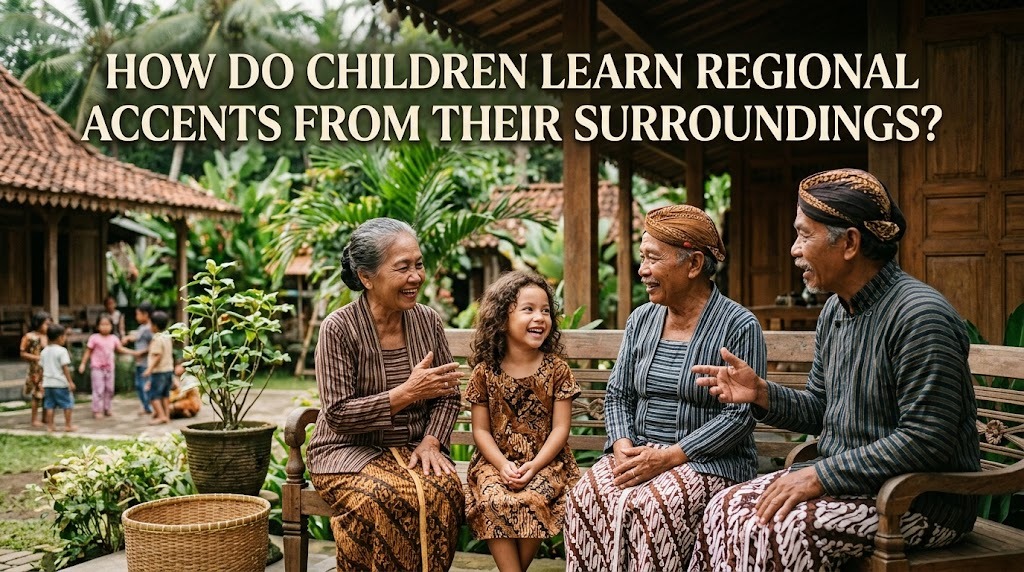
Children learn regional accents naturally by listening to and interacting with the people around them. From an early age, they notice how parents, family members, caregivers, and friends pronounce words, use intonation, and organize speech. These everyday experiences gradually shape the way children speak and influence the accents they develop. The surrounding environment plays an important role because children often imitate the speech patterns they hear most frequently. Understanding this process helps explain why children from different regions can develop different accents, even when they learn the same language.
HOW CHILDREN DEVELOP ACCENTS FROM AN EARLY AGE
Children begin learning the sounds of language during infancy, long before they can speak clearly. They listen to voices, recognize familiar sound patterns, and gradually learn to distinguish the sounds used by people in their environment. As they grow, they begin producing sounds, repeating syllables, and forming their first words. Through these experiences, children become familiar with the pronunciation patterns commonly used by their families and communities. Over time, these patterns contribute to the development of their regional accents.
Accent development happens gradually rather than through a single learning stage. Young children often imitate the sounds and rhythms they hear during everyday conversations. They may not consciously recognize that their pronunciation is regional, but repeated exposure helps them develop similar speech habits. As their vocabulary expands, they continue adjusting how they pronounce words and form sentences. This process shows how early language exposure provides the foundation for the accents children use later in life.
THE INFLUENCE OF PARENTS AND FAMILY MEMBERS
Parents and family members are among the first people who influence a child's accent. Children spend considerable time listening to conversations at home, including discussions during meals, storytelling, and everyday activities. They gradually become familiar with the pronunciation, rhythm, and intonation used by their relatives. When family members consistently use a particular regional accent, children are likely to develop similar speech characteristics. The home environment therefore provides an important foundation for regional speech patterns.
However, children's accents do not always match those of their parents exactly. They may also be influenced by grandparents, siblings, caregivers, and other people who regularly interact with them. In multilingual families, children may encounter several languages or regional accents from an early age. Their speech can reflect a combination of these influences, depending on how frequently they hear and use each language. This explains why children within the same family can sometimes develop slightly different pronunciation patterns.
HOW LOCAL COMMUNITIES SHAPE CHILDREN'S ACCENTS
The community where children grow up can strongly influence the way they speak. Neighbors, relatives, shopkeepers, and other community members provide regular examples of local pronunciation and speaking styles. When children interact with people who share similar speech patterns, they become increasingly familiar with the accent used in their surroundings. Repeated exposure helps them recognize and reproduce the sounds they hear during everyday communication. As a result, children who grow up in different communities may develop different accents even when they speak the same language.
Local traditions and community activities can also reinforce these speech patterns. Conversations during celebrations, cultural events, religious gatherings, and neighborhood activities expose children to familiar expressions and ways of speaking. In regions where local languages are widely used, children may learn pronunciation features from those languages while also learning the national language. These influences can create distinctive regional characteristics in their speech. Community interaction therefore helps connect language development with local cultural identity.
THE ROLE OF SCHOOL AND FRIENDSHIPS
Schools introduce children to new speakers and communication styles beyond their homes. Teachers may speak with a regional accent that differs from the accents children hear from their families. Classmates can also influence pronunciation because children frequently imitate and adapt to the speech patterns of their friends. Through classroom discussions, group activities, and informal conversations, children encounter a wider range of language features. These experiences may strengthen their existing accents or introduce new pronunciation patterns.
Friendships become particularly influential as children spend more time interacting with their peers. Children may adopt familiar expressions or adjust their pronunciation to feel more connected to their social groups. In schools with students from different regions, they may become familiar with several accents and ways of speaking. Some children retain their original accent, while others gradually develop a mixture of speech characteristics. These differences demonstrate that accent development continues as children's social environments expand.
HOW REGIONAL LANGUAGES INFLUENCE CHILDREN'S ACCENTS
Regional languages can influence how children pronounce words when speaking another language. For example, in Indonesia, children who regularly hear Javanese, Sundanese, Balinese, or other regional languages may carry some of their pronunciation patterns into Indonesian. This influence can affect vowel sounds, consonant production, intonation, and speaking rhythm. Children learn these patterns through ordinary communication rather than necessarily receiving formal instruction about pronunciation. The result may be an accent that reflects the languages spoken in their family and community.
Children who grow up with more than one language may develop different speech patterns depending on the language they use. They can learn to adjust their pronunciation when speaking with family members, classmates, or people from other regions. The degree of regional influence varies according to their exposure, language use, and individual development. It is also possible for children to understand a regional language without speaking it fluently. Therefore, a child's accent reflects their language experiences but does not always reveal every language they know.
THE INFLUENCE OF MEDIA AND DIGITAL TECHNOLOGY
Modern children encounter accents through television programs, online videos, music, films, games, and social media. These sources expose them to speakers from different cities, regions, and countries. Children may imitate words, pronunciation patterns, or intonation from people they watch regularly, especially when the speech is entertaining or familiar. Digital media can therefore introduce accent features that are not commonly heard in their immediate surroundings. This influence has become increasingly relevant as children spend more time using online platforms.
Nevertheless, exposure to media does not automatically change a child's regional accent. The influence depends on factors such as age, frequency of exposure, personal interest, and opportunities to practice the speech patterns they hear. Children who mainly interact with local speakers may continue using their community's accent despite regularly watching international content. Others may develop a broader range of pronunciation patterns through frequent contact with different speakers. In most cases, digital media adds to the influences children receive from family, school, and the wider community.
WHY CHILDREN SOMETIMES DEVELOP DIFFERENT ACCENTS
Children who live in the same area do not always develop identical accents. Their speech can differ because they have different family backgrounds, social networks, and language experiences. One child may spend most of their time with relatives who speak a regional language, while another may interact more frequently with classmates who use standard Indonesian. Differences in exposure can gradually influence their pronunciation and speaking rhythm. Individual learning experiences also contribute to variation in the way children speak.
Moving to another region can introduce further changes. A child who relocates may begin using features of the local accent after regularly interacting with new classmates and neighbors. Some children adapt quickly, while others maintain many characteristics of their original speech. It is also common for speakers to use different speech styles in different situations. These variations show that regional accents are influenced by both early experiences and continuing social interaction.
HOW PARENTS AND TEACHERS CAN SUPPORT LANGUAGE DEVELOPMENT
Parents and teachers can support children's language development by providing rich opportunities for conversation. Reading stories aloud, discussing daily activities, singing songs, and encouraging children to express their thoughts can help them become familiar with different speech patterns. Families can also introduce children to regional languages and traditional stories to strengthen their connection with local culture. Children benefit from hearing clear, natural speech in meaningful contexts rather than being pressured to imitate an accent perfectly. These activities support communication skills while allowing regional speech patterns to develop naturally.
It is equally important to teach children to respect different accents. Parents and teachers should avoid making fun of pronunciation differences or suggesting that one regional accent is inherently superior to another. Children should understand that accents reflect varied linguistic experiences and do not determine intelligence or ability. They can learn to adjust their speech when necessary for clear communication without feeling ashamed of their regional background. This approach encourages confidence, cultural appreciation, and effective communication across different communities.
CONCLUSION
Children learn regional accents through repeated exposure to the people and languages in their surroundings. Parents, family members, friends, teachers, local communities, and digital media all contribute to the pronunciation patterns children develop. Regional languages and cultural traditions can also influence how children speak, particularly in multilingual environments. However, each child's accent may develop differently because language experiences and social interactions vary. By encouraging communication and respecting linguistic diversity, families and educators can help children develop strong language skills while appreciating their regional identity.
Recent Posts

Bagaimana Sistem SKS pada Program Kuliah... 22.11.2026/54 View

How Does Technology Make Daily Evaluation... 21.11.2026/83 View

Apa Strategi Menghadapi Kesenjangan antara Kompetensi... 21.11.2026/82 View

Mengapa Inventaris Aset Penting bagi Kelancaran... 21.11.2026/78 View

When Should Musicians Join a Record... 21.11.2026/84 View
