

How Do Concentration Problems Affect Academic Performance?
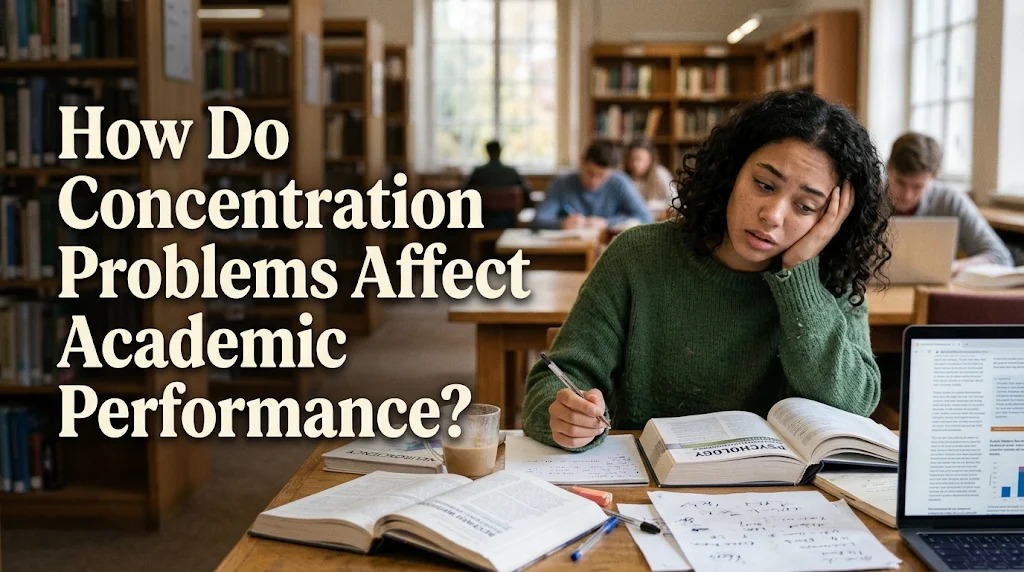
Concentration plays an important role in academic success because students need to focus when listening to lessons, understanding information, completing assignments, and preparing for examinations. When students experience concentration problems, these activities can become more difficult and time-consuming. They may struggle to follow explanations, remember important information, or finish schoolwork within the expected time.
Academic performance is influenced by several factors, including learning habits, motivation, emotional conditions, and the learning environment. However, difficulties maintaining attention can create additional challenges that affect students' progress and confidence. Understanding these effects can help students, parents, and teachers find effective ways to improve learning outcomes.
DIFFICULTY UNDERSTANDING LESSONS
Concentration problems can make it difficult for students to understand information presented by teachers. When students frequently lose focus during classroom activities, they may miss important explanations, instructions, or examples. As a result, they might struggle to understand the main topics being discussed.
Students who cannot maintain attention may also find it difficult to connect new information with previously learned material. This can create gaps in their understanding, especially when lessons involve complex subjects such as mathematics, science, or languages. They may need additional time to review materials or ask teachers to explain certain topics again.
Over time, these difficulties can affect classroom participation and learning progress. Maintaining attention during lessons helps students understand information more effectively and develop stronger academic knowledge.
LOWER TEST SCORES AND ACADEMIC RESULTS
Concentration problems can influence students' examination results because tests require attention, careful thinking, and accurate answers. Students who struggle to focus may misunderstand questions, overlook important details, or make avoidable mistakes. Even when they understand the subject, poor concentration can prevent them from demonstrating their actual knowledge.
During examinations, distractions and difficulty maintaining attention can also make students spend too much time on individual questions. This may leave them with insufficient time to complete the remaining sections. In addition, students who have difficulty remembering information may struggle to recall important concepts under examination conditions.
However, low test scores do not always indicate a lack of intelligence or ability. Students may simply need better study strategies, a more supportive learning environment, or additional assistance to manage concentration difficulties.
REDUCED PRODUCTIVITY WHEN COMPLETING ASSIGNMENTS
Students need concentration to organize their work, understand instructions, and complete assignments efficiently. When attention is easily interrupted, even simple academic tasks can take longer than expected. Students may repeatedly stop working, forget what they were doing, or move between different activities without finishing any of them.
These habits can lead to unfinished assignments, missed deadlines, and difficulties managing school responsibilities. Students who frequently postpone their work may also experience increasing pressure when several tasks need to be completed at the same time.
Developing a structured study schedule can help students manage their responsibilities more effectively. Dividing large assignments into smaller tasks and taking planned breaks can also make learning activities easier to complete.
DECREASED LEARNING MOTIVATION AND SELF-CONFIDENCE
Repeated concentration difficulties can affect students' motivation and confidence. When students struggle to understand lessons or receive disappointing academic results, they may begin to doubt their abilities. Some may believe they are not intelligent enough, even though their difficulties are related to attention rather than a lack of potential.
These experiences can gradually reduce their interest in learning. Students may become reluctant to participate in classroom discussions, avoid challenging subjects, or lose motivation to complete assignments. In some situations, repeated academic difficulties can also create stress, frustration, and anxiety.
Parents and teachers can help by recognizing students' efforts and providing constructive encouragement. Setting realistic learning goals and appreciating gradual progress can help students rebuild confidence and develop a more positive attitude toward education.
DIFFICULTY PARTICIPATING IN CLASSROOM ACTIVITIES
Classroom participation requires students to listen carefully, understand instructions, respond to questions, and interact with teachers and classmates. Concentration problems can interfere with these activities because students may miss important information or struggle to follow ongoing discussions.
For example, a student who frequently loses focus may hesitate to answer questions because they do not fully understand the topic. They may also find group assignments challenging when they have difficulty following conversations or remembering their responsibilities. This can reduce their involvement in classroom activities and limit opportunities to develop communication and teamwork skills.
Creating an engaging and supportive classroom environment can help students participate more actively. Teachers can provide clear instructions, encourage questions, and use different teaching methods to support students with different learning needs.
CONCLUSION
Concentration problems can affect academic performance in several ways, including difficulty understanding lessons, lower examination results, reduced productivity, decreased motivation, and limited classroom participation. These challenges can make learning more difficult even for students who have the ability and potential to achieve good academic results.
Improving concentration requires consistent habits and appropriate support. Students can benefit from organized study schedules, sufficient sleep, reduced distractions, and regular learning breaks. Parents and teachers also play an important role in creating supportive environments that encourage academic development. When concentration difficulties persist and significantly interfere with learning, professional evaluation can help identify the underlying causes and appropriate solutions.
Recent Posts

Bagaimana Sistem SKS pada Program Kuliah... 22.11.2026/4 View

How Does Technology Make Daily Evaluation... 21.11.2026/63 View

Apa Strategi Menghadapi Kesenjangan antara Kompetensi... 21.11.2026/64 View

Mengapa Inventaris Aset Penting bagi Kelancaran... 21.11.2026/61 View

When Should Musicians Join a Record... 21.11.2026/59 View
