

How Do Creative Writing Competitions Improve Language Skills?
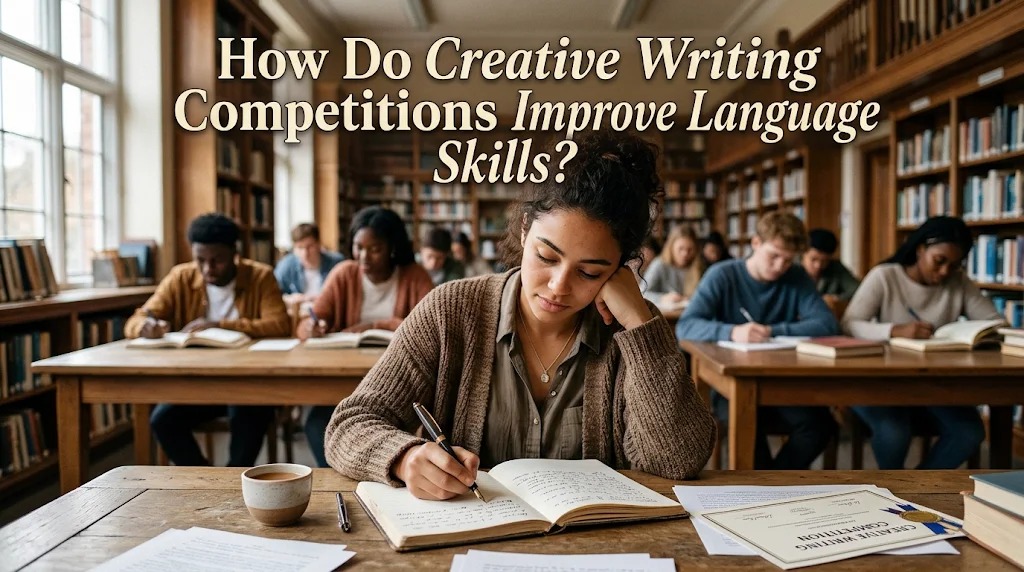
Creative writing competitions are valuable activities that help students develop their language skills through imagination, practice, and self-expression. These competitions encourage participants to create stories, poems, essays, and other written works using their own ideas and creativity. Through the writing process, students learn how to choose appropriate vocabulary, construct sentences, organize paragraphs, and communicate messages effectively.
Beyond competing for awards, creative writing activities provide opportunities to improve language abilities in an enjoyable way. Participants also learn to express their thoughts, develop original ideas, and become more confident in their writing. These skills are useful for academic activities, everyday communication, and future professional opportunities.
EXPANDING VOCABULARY AND WORD CHOICE
Creative writing competitions encourage participants to explore new vocabulary and use words more effectively. When writing stories, poems, or essays, students need to select words that match the topic, atmosphere, and intended message. This process helps them understand different word meanings and learn how to use expressions in appropriate contexts.
Participants also become more familiar with synonyms, descriptive language, and different sentence structures. Instead of repeatedly using simple words, they can experiment with more varied expressions to make their writing interesting. Regular writing practice helps students build a stronger vocabulary and communicate their ideas more clearly.
IMPROVING GRAMMAR AND SENTENCE STRUCTURE
Grammar is an important part of effective writing because it helps readers understand the intended meaning. Creative writing competitions encourage students to pay attention to sentence structure, punctuation, verb forms, and the relationship between words. Participants must arrange their sentences properly so that their stories and arguments are easy to follow.
Through drafting and revising their work, students can identify grammatical mistakes and learn how to correct them. They also become more aware of how different sentence patterns affect the flow of a written text. Over time, this process helps participants produce more accurate, organized, and understandable writing.
DEVELOPING CREATIVITY AND IMAGINATION
One of the main benefits of creative writing competitions is the opportunity to develop imagination. Participants are encouraged to create original characters, explore interesting situations, and develop stories based on their own ideas. This freedom allows students to experiment with different writing styles and discover new ways to express their thoughts.
Creativity also helps participants communicate messages in more engaging ways. For example, they can use descriptions, dialogue, and storytelling techniques to make their writing more interesting. By developing original ideas, students learn that language is not only a tool for sharing information but also a way to express emotions, experiences, and perspectives.
STRENGTHENING READING AND WRITING COMPREHENSION
Good writing skills are closely connected to reading comprehension. To prepare for creative writing competitions, participants often read stories, articles, poems, and other written materials. These activities help them understand how writers develop ideas, organize information, and use language to communicate different messages.
Reading also introduces students to various writing styles and narrative techniques. They can learn how to create interesting introductions, develop meaningful discussions, and write satisfying conclusions. By combining reading and writing practice, participants gradually improve their ability to understand and produce well-structured texts.
BUILDING CONFIDENCE AND ACCEPTING FEEDBACK
Creative writing competitions help students become more confident in expressing their ideas through written language. Sharing their work with judges, teachers, or other participants allows them to receive different opinions and recognize their strengths. This experience can encourage students to continue writing and improve their abilities.
Feedback also teaches participants how to identify weaknesses in their writing. They may learn to improve unclear sentences, correct grammatical errors, or develop stronger storylines. Rather than viewing criticism as a failure, students can use constructive suggestions as guidance for producing better written work in the future.
CONCLUSION
Creative writing competitions improve language skills by helping students expand their vocabulary, understand grammar, develop creativity, and strengthen reading and writing abilities. These activities also provide opportunities to practice self-expression, receive feedback, and build confidence.
Although winning is an achievement, the learning process is equally important. By participating regularly and continuing to practice, students can become more skilled writers and more effective language users in academic, social, and professional environments.
Recent Posts

How Does Technology Make Daily Evaluation... 21.11.2026/62 View

Apa Strategi Menghadapi Kesenjangan antara Kompetensi... 21.11.2026/63 View

Mengapa Inventaris Aset Penting bagi Kelancaran... 21.11.2026/59 View

When Should Musicians Join a Record... 21.11.2026/58 View

Daily Evaluation or Daily Planning Which... 21.11.2026/66 View
