

How Do Creator Communities Deal with Competition in the Digital Content Industry?
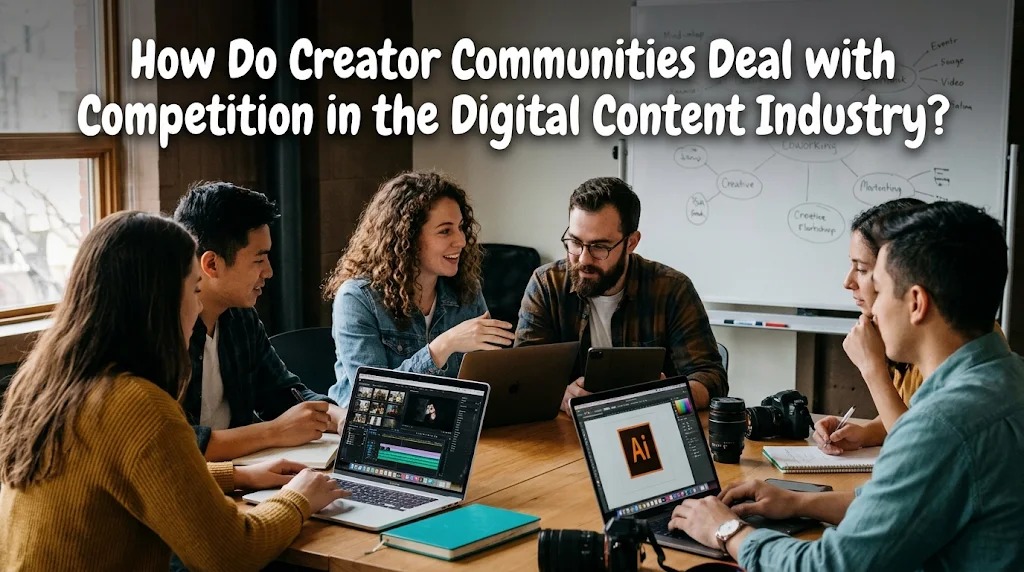
The digital content industry continues to grow as more individuals and businesses use online platforms to share information, promote products, and communicate with audiences. This development creates many opportunities for content creators, but it also increases competition. Creators must continuously improve their skills, develop original ideas, and understand audience preferences to remain relevant in an increasingly crowded digital environment.
One way to face these challenges is through creator communities. These communities bring together individuals with different creative abilities and professional experiences. Instead of viewing other creators only as competitors, members can build supportive relationships, exchange knowledge, and discover opportunities to grow together.
Creator communities can also help their members understand industry developments, improve content quality, and develop effective strategies. Through collaboration and mutual support, creators can face competition more positively while building sustainable careers in the digital industry.
UNDERSTANDING COMPETITION IN THE DIGITAL CONTENT INDUSTRY
Competition in the digital content industry occurs when creators compete for audience attention, engagement, brand partnerships, and monetization opportunities. The increasing number of content producers makes it more challenging for individuals to establish recognizable identities. Creators must therefore offer something valuable to attract and maintain audience interest.
Digital platforms also introduce changing algorithms, content formats, and audience preferences. A strategy that works well today may become less effective when platform policies or user behavior change. This situation requires creators to remain adaptable and continuously evaluate their content strategies.
However, competition does not always have negative effects. It can encourage creators to improve their abilities, explore new ideas, and produce more valuable content. Understanding the nature of digital competition helps community members develop realistic goals and find ways to distinguish their work. Healthy competition can become a motivation for continuous improvement rather than a source of conflict.
ENCOURAGING COLLABORATION INSTEAD OF UNHEALTHY COMPETITION
One of the most effective ways creator communities deal with competition is by encouraging collaboration among members. People with different skills can work together to produce content that combines various creative perspectives. This approach allows creators to achieve shared goals while introducing their work to new audiences.
For example, a video creator can collaborate with a graphic designer and content writer to develop an educational campaign. Each member contributes specific abilities, making the final content more diverse and engaging. Through this process, creators can learn from one another and discover new methods of producing quality work.
Collaboration also helps reduce unnecessary rivalry because members begin to recognize the value of shared success. Instead of focusing only on individual achievements, they can support projects that benefit the entire community. Creative collaboration creates opportunities for mutual growth and helps members build stronger professional relationships.
SHARING KNOWLEDGE AND DEVELOPING CREATIVE SKILLS
Knowledge sharing is another important strategy for dealing with competition in the digital content industry. Creator communities provide spaces where members can exchange information about content production, editing techniques, digital marketing, and audience engagement. This exchange helps individuals understand different approaches and improve their creative abilities.
Experienced creators can share practical advice with beginners, while newer members may introduce fresh ideas and perspectives. For instance, a professional video editor can explain how to improve visual storytelling, while a social media specialist can discuss strategies for reaching specific audiences. These interactions make learning more accessible and encourage continuous development.
Communities can also organize workshops, webinars, creative challenges, and mentoring programs. Such activities provide opportunities for members to practice their skills and receive constructive feedback. By improving their knowledge and abilities, creators can produce more competitive content without relying on copying the work of others. Continuous skill development is essential for maintaining relevance in a rapidly changing industry.
DEVELOPING UNIQUE CONTENT AND STRONG PERSONAL BRANDING
In a competitive digital environment, having a recognizable identity can help creators stand out from similar content producers. Creator communities can support members in identifying their strengths, interests, and areas of expertise. These qualities can become the foundation for developing unique content and personal branding.
For example, two creators may discuss the same educational topic but use different storytelling styles, visual approaches, and communication methods. Their content can attract different audiences because each creator offers a distinct perspective. This demonstrates that originality does not always require completely new topics but can also come from unique ways of presenting information.
Community members can provide feedback about content concepts, presentation styles, and audience responses. They can also help one another maintain consistency across social media platforms. By developing an authentic identity and delivering valuable information, creators can establish stronger audience connections. Personal branding and originality help members build recognition without depending entirely on popular trends.
USING DIGITAL TECHNOLOGY AND INDUSTRY TRENDS EFFECTIVELY
Technology plays an important role in helping creators respond to competition. New applications, editing software, artificial intelligence tools, and content analytics platforms provide different ways to improve production processes. Creator communities can help members understand these technologies and use them effectively.
For instance, members can share experiences using artificial intelligence to generate content ideas, organize research, improve editing workflows, or develop visual concepts. However, technology should support human creativity rather than replace critical thinking and originality. Creators must also check the accuracy of information and respect copyright when using digital tools.
Understanding industry trends is equally important. Communities can discuss changes in audience behavior, emerging content formats, platform developments, and new marketing strategies. This knowledge helps members identify relevant opportunities and adjust their approaches when necessary. Through technology adoption and trend awareness, creators can become more adaptable and productive.
BUILDING MUTUAL SUPPORT AND SUSTAINABLE CREATIVE OPPORTUNITIES
Mutual support is essential for maintaining a strong creator community amid increasing digital competition. Members who encourage one another can create an environment where individuals feel motivated to continue developing their work. This support may include sharing useful information, recommending professional services, providing feedback, or participating in collaborative projects.
Creator communities can also help members discover opportunities beyond social media popularity. These may include freelance assignments, brand partnerships, digital product development, creative services, and professional networking. By sharing relevant opportunities, members can help one another develop more sustainable career paths.
Furthermore, community organizers should establish clear guidelines that promote fairness, respect, and professional behavior. Members should avoid plagiarism, misleading promotions, and unfair practices that damage trust. They should also recognize one another's achievements and respect different creative approaches. A supportive environment allows individuals to pursue their goals while contributing to the growth of the wider creative economy.
CONCLUSION
Creator communities deal with competition in the digital content industry by encouraging collaboration, sharing knowledge, developing unique content, and adopting relevant technologies. These strategies help members improve their abilities while creating opportunities to reach wider audiences and strengthen their professional identities.
Competition should not always be viewed as a reason to compete against one another. Through mutual support, constructive feedback, and professional collaboration, creators can develop their potential and achieve shared progress. A strong creator community turns competition into motivation and creates an environment where members can grow together in the evolving digital industry.
Recent Posts

Bagaimana Sistem SKS pada Program Kuliah... 22.11.2026/35 View

How Does Technology Make Daily Evaluation... 21.11.2026/69 View

Apa Strategi Menghadapi Kesenjangan antara Kompetensi... 21.11.2026/70 View

Mengapa Inventaris Aset Penting bagi Kelancaran... 21.11.2026/67 View

When Should Musicians Join a Record... 21.11.2026/69 View
