

How Do Culture and Traditions Influence Personality Formation?
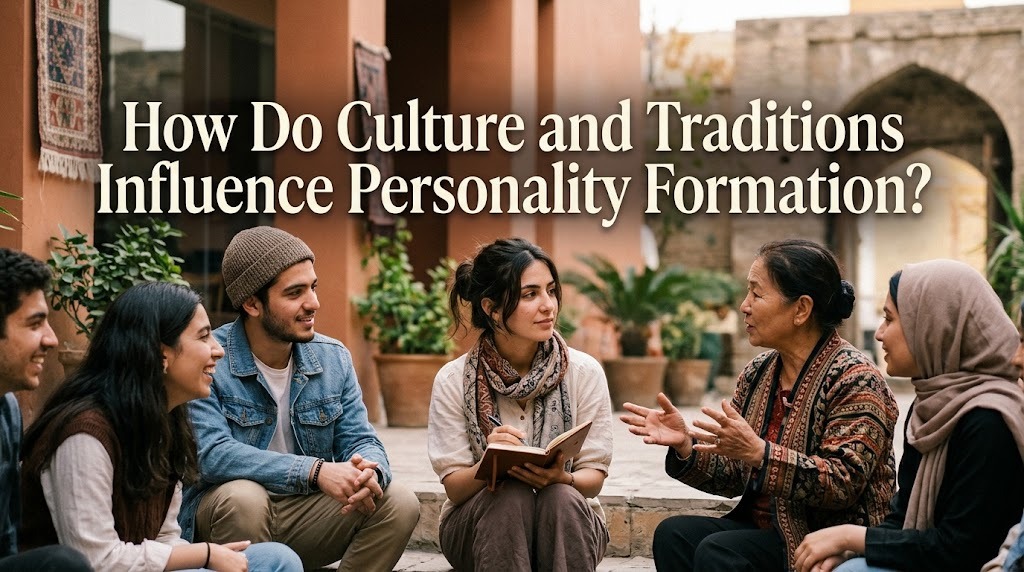
Culture and traditions play an important role in personality formation because they influence how individuals think, behave, communicate, and interact with other people. Every society has its own values, beliefs, customs, and social expectations that guide people's daily activities. Individuals usually learn these cultural practices from their families, communities, schools, and social environments from an early age.
Personality does not develop independently of society. The cultural environment in which someone grows up can influence their attitudes toward family, education, responsibility, communication, and relationships. For example, individuals raised in communities that emphasize cooperation may become accustomed to working with others, while those exposed to cultures that encourage independence may develop stronger individual decision-making habits. Understanding the relationship between culture, traditions, and personality helps explain why people from different backgrounds may have different characteristics and perspectives.
UNDERSTANDING THE RELATIONSHIP BETWEEN CULTURE AND PERSONALITY
Culture refers to the shared values, beliefs, knowledge, customs, and behaviors of a particular community or society. It provides guidelines that help individuals understand what is considered appropriate or inappropriate in their social environment. From childhood, people learn cultural expectations through everyday interactions with parents, relatives, teachers, and community members.
These cultural influences gradually contribute to personality development. For example, children who grow up in environments that emphasize politeness may become accustomed to speaking respectfully and considering other people's feelings. Meanwhile, communities that encourage open discussion may help individuals become more comfortable expressing their opinions. Although culture influences behavior, individuals can interpret cultural values differently based on their personal experiences and choices.
TRADITIONS SHAPE ATTITUDES AND DAILY BEHAVIOR
Traditions are customs and practices passed down from one generation to another. They may include religious celebrations, family gatherings, traditional ceremonies, community activities, and particular ways of showing respect. Through these activities, individuals learn the values and behavioral expectations that are important within their communities.
Regular participation in traditions can strengthen characteristics such as respect, discipline, cooperation, and responsibility. For example, children who participate in family gatherings may learn the importance of maintaining relationships and showing appreciation for relatives. Traditional community activities can also teach people how to cooperate and support one another. These repeated experiences help shape behavioral habits that may become part of an individual's personality.
FAMILY VALUES TRANSMIT CULTURAL INFLUENCES
Families are among the first environments where individuals learn about culture and traditions. Parents and older family members introduce children to values such as honesty, respect, responsibility, independence, and kindness. These values are often taught through daily conversations, household responsibilities, family rules, and examples of adult behavior.
The way families apply cultural values can influence how children develop their personalities. For example, families that encourage children to respect older people may help them develop polite communication habits. Meanwhile, families that emphasize responsibility may encourage children to become more disciplined and independent. Although family values can provide a strong foundation, individuals may develop different attitudes as they encounter new experiences outside their households.
SOCIAL NORMS INFLUENCE PERSONALITY AND INTERACTIONS
Social norms are shared expectations about how individuals should behave within a particular society. They influence everyday interactions, including communication styles, expressions of emotion, manners, and relationships with other people. Individuals often learn these expectations by observing others and receiving feedback from their communities.
For example, some cultures encourage people to communicate directly and express their opinions openly, while others place greater importance on indirect communication and maintaining social harmony. These differences may influence how individuals express disagreement, make decisions, and build relationships. Understanding social norms can help individuals adapt to different situations while maintaining respect for people with different backgrounds.
CULTURAL VALUES SHAPE COMMUNICATION STYLES
Communication is one of the aspects of personality that can be influenced by cultural background. Different societies have different expectations regarding how people should speak, listen, express emotions, and interact with others. Some communities encourage open conversations and direct expressions, while others emphasize careful language, politeness, and respect for social positions.
These communication patterns can influence whether individuals feel comfortable speaking in public, expressing disagreement, or discussing personal matters. For example, someone raised in an environment that encourages respectful listening may become more attentive during conversations. Meanwhile, individuals who regularly participate in open discussions may develop confidence in expressing their ideas. However, communication styles also depend on personal experiences and individual characteristics, not culture alone.
RELIGION AND MORAL BELIEFS CONTRIBUTE TO CHARACTER DEVELOPMENT
Religion and moral beliefs can influence personality by providing guidance about values, responsibilities, and relationships with others. Religious teachings and moral principles may encourage individuals to practice honesty, patience, compassion, discipline, and generosity. These values can become part of daily behavior when individuals apply them consistently in their lives.
Religious and moral activities can also create opportunities for social interaction and community involvement. Participating in charitable activities, community gatherings, or religious celebrations may strengthen empathy and a sense of responsibility toward others. However, individuals from the same religious or cultural background do not always have identical personalities. Personal interpretation, family influences, education, and life experiences also contribute to individual differences.
CULTURAL DIVERSITY EXPANDS PERSPECTIVES AND PERSONALITY
Exposure to different cultures can help individuals develop broader perspectives and become more open-minded. When people interact with individuals from different backgrounds, they have opportunities to learn about new customs, values, languages, and ways of thinking. These interactions can encourage curiosity, tolerance, empathy, and respect for differences.
For example, students who participate in cultural exchange programs may become more comfortable communicating with people from different countries. They may also learn to understand different perspectives without immediately judging them based on their own cultural standards. These experiences can strengthen adaptability and social awareness, which are useful characteristics in an increasingly connected world.
GLOBALIZATION AND MODERN TECHNOLOGY CHANGE CULTURAL INFLUENCES
Globalization and modern technology have made cultural exchange easier than ever before. Through social media, digital platforms, international education, and global communication, individuals can learn about traditions and lifestyles from different parts of the world. These influences may introduce new ideas that gradually affect personal preferences, attitudes, and behavior.
However, exposure to different cultures can also create challenges. Some individuals may experience confusion when traditional expectations differ from modern lifestyles or international trends. For example, young people may try to balance family traditions with new ideas about independence and personal expression. Developing the ability to appreciate cultural heritage while adapting to positive changes can help individuals build a balanced identity.
THE IMPORTANCE OF MAINTAINING CULTURAL IDENTITY IN PERSONALITY FORMATION
Cultural identity refers to an individual's sense of belonging to a particular cultural group or community. It is influenced by shared traditions, language, values, history, and social experiences. Having a strong cultural identity can help individuals understand their background, recognize their roots, and develop a sense of belonging.
Maintaining cultural identity does not mean rejecting other cultures or refusing to accept new ideas. Instead, individuals can preserve meaningful traditions while learning from different communities. For example, someone can continue practicing family traditions while developing modern communication skills and independent thinking. This balance can support confidence, adaptability, and respect for cultural diversity.
CONCLUSION
Culture and traditions influence personality formation by shaping the values, attitudes, communication styles, and behaviors that individuals develop throughout their lives. Family values, social norms, religious beliefs, traditional activities, and cultural diversity all contribute to how people understand themselves and interact with others.
However, culture does not determine personality completely. Genetic characteristics, personal experiences, education, and individual choices also play important roles in personality development. By understanding and appreciating cultural influences, individuals can maintain their cultural identity, respect differences, and continue developing positive characteristics in an increasingly diverse society.
Recent Posts

Bagaimana Sistem SKS pada Program Kuliah... 22.11.2026/45 View

How Does Technology Make Daily Evaluation... 21.11.2026/73 View

Apa Strategi Menghadapi Kesenjangan antara Kompetensi... 21.11.2026/75 View

Mengapa Inventaris Aset Penting bagi Kelancaran... 21.11.2026/71 View

When Should Musicians Join a Record... 21.11.2026/75 View
