

How Do Digital Libraries Help Students Find Reliable References?
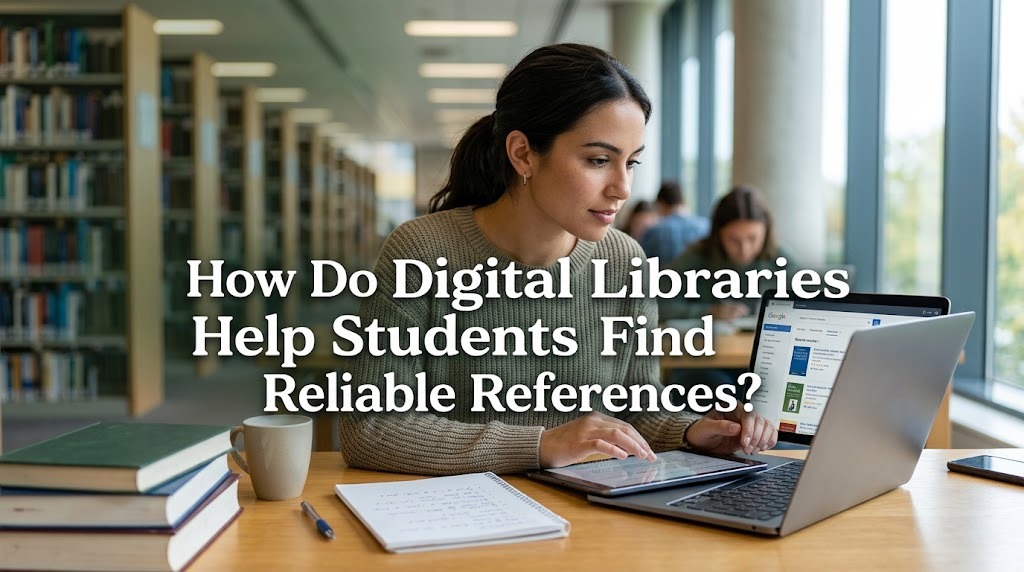
Finding reliable references is an important part of academic learning. Students need trustworthy sources when writing assignments, preparing presentations, conducting research, or developing academic projects. Searching for information on the internet can sometimes be difficult because not every website provides accurate or well supported information. Digital libraries can help solve this problem by providing organized collections of books, journals, research papers, and other academic materials. With appropriate search and evaluation skills, students can use digital libraries to find references that are more suitable for academic purposes.
PROVIDING ACCESS TO ACADEMIC SOURCES
Digital libraries give students access to various types of academic resources in digital formats. Depending on the collection and access provided by an institution, students may find electronic books, scholarly journals, conference publications, research papers, and other educational materials. These resources can be useful for understanding concepts and supporting arguments in academic writing. Instead of relying only on general search engines, students can explore collections specifically designed for educational and research purposes.
The availability of different sources also allows students to compare information from multiple publications. For example, a student researching an educational topic can examine several journal articles before deciding which information is most relevant. Comparing sources can help students understand different perspectives and avoid depending too heavily on a single reference. This approach can contribute to more balanced and well supported academic work.
USING SEARCH FEATURES TO FIND RELEVANT INFORMATION
Another important advantage of digital libraries is their advanced search functionality. Students can generally search for materials using keywords, titles, authors, subjects, or other available categories. Some platforms also provide filters that can narrow results according to publication date, document type, or subject area. These features make it easier to locate materials that are closely related to a specific research topic.
Effective searching requires students to choose appropriate keywords. Using specific and meaningful terms can produce more relevant results than using very broad phrases. Students can also try alternative keywords or related terms when the initial search does not produce useful sources. By learning how to search systematically, students can save time while improving the quality of the references they find.
HELPING STUDENTS EVALUATE SOURCE QUALITY
Access to digital resources does not automatically mean that every source is reliable. Students still need to evaluate source quality and credibility before using information in their assignments. They can examine the author's qualifications, publication details, research methodology when applicable, and the reputation of the publisher or journal. The date of publication can also be important, particularly when researching topics that change rapidly.
Students should also compare claims with information from other credible sources. If several trustworthy publications provide similar evidence, confidence in the information may increase. On the other hand, unsupported claims or sources with unclear authorship should be treated carefully. Developing these evaluation skills helps students avoid using inaccurate or misleading information in academic work.
SUPPORTING SCHOLARLY RESEARCH
Digital libraries can make the research process more organized by bringing academic materials together in searchable collections. Students can use these resources to understand previous studies, identify important concepts, and discover discussions related to their research questions. Scholarly references can provide stronger support for academic arguments than unsupported information found on random websites.
Digital libraries can also help students explore related publications. When a student finds a useful article, information about its author, subject, publication, or related materials may lead to additional references. This can help students expand their research gradually. However, students should continue to evaluate every source individually rather than assuming that all materials in a digital collection are equally appropriate for every assignment.
DEVELOPING INFORMATION LITERACY
Using digital libraries regularly can help students develop information literacy skills. These skills include knowing how to search for information, evaluate sources, identify relevant evidence, and use information responsibly. Such abilities are increasingly important because students encounter enormous amounts of information through digital platforms every day. Knowing where to find information is useful, but knowing how to judge that information is equally important.
Information literacy also involves understanding proper citation and responsible use of academic materials. Students should record the details of sources they use and follow the citation style required by their institution or instructor. They should avoid presenting another person's ideas or research as their own. By practicing responsible research habits, students can improve both the credibility and academic integrity of their work.
CONCLUSION
Digital libraries help students find reliable references by providing organized academic collections, effective search tools, and access to scholarly resources. They make it easier for students to discover books, journals, research papers, and other materials relevant to their academic needs. However, students should not assume that every available source is automatically suitable for their work. Careful evaluation remains necessary to determine whether information is accurate, relevant, current, and credible.
The effective use of digital libraries can also strengthen students' research and information literacy skills. Students who know how to search strategically, compare sources, evaluate evidence, and cite references correctly are better prepared to complete academic tasks. When used responsibly, digital libraries can become valuable tools for producing more reliable, well supported, and academically credible work.
Recent Posts

Bagaimana Sistem SKS pada Program Kuliah... 22.11.2026/35 View

How Does Technology Make Daily Evaluation... 21.11.2026/69 View

Apa Strategi Menghadapi Kesenjangan antara Kompetensi... 21.11.2026/70 View

Mengapa Inventaris Aset Penting bagi Kelancaran... 21.11.2026/67 View

When Should Musicians Join a Record... 21.11.2026/69 View
