

How Do Digital Libraries Support Flexible Learning?
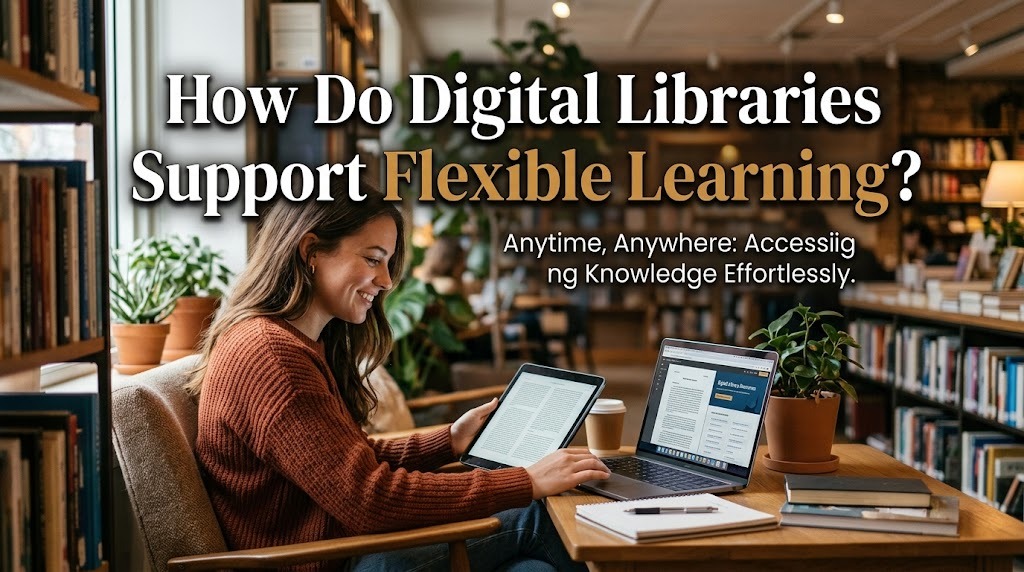
Digital libraries have changed the way students access and use educational information. Instead of depending only on physical books and traditional library visits, students can use digital books, academic journals, research papers, and other online resources through digital platforms. This development is particularly useful for students who need flexible study options. Digital libraries allow learning materials to be accessed from different locations and at different times. As education becomes increasingly connected to technology, digital libraries play an important role in supporting more flexible learning experiences.
PROVIDING ACCESS ANYTIME AND ANYWHERE
One of the biggest advantages of digital libraries is the ability to access learning materials anytime and anywhere. Students can search for books, articles, journals, and other academic resources using computers, tablets, or smartphones. They do not always need to travel to a physical library to find information for their assignments. This is particularly helpful for students who live far from campus or have limited time between academic activities. With a suitable internet connection and authorized access, educational resources can be available beyond traditional library hours.
This accessibility also supports students with different daily schedules. A student can study in the morning before class, review research materials in the afternoon, or read academic articles at home in the evening. Such flexibility gives students more control over when and where they study. As a result, learning can become easier to integrate with other academic and personal responsibilities.
SUPPORTING DIFFERENT LEARNING SCHEDULES
Every student has a different learning routine and preferred study time. Some students understand information better when studying early in the morning, while others prefer studying at night. Digital libraries allow students to access resources according to their individual learning schedules. They are not completely dependent on the opening hours of a physical library when searching for digital materials.
Flexible access is also valuable for students who participate in organizations, internships, part time work, or other activities. Instead of postponing their studies because they cannot visit the library during regular hours, they can search for resources whenever they have available time. This makes digital libraries a practical solution for managing academic responsibilities alongside other activities.
SUPPORTING ONLINE AND REMOTE EDUCATION
Digital libraries are highly relevant to online and remote education because students may not always be able to visit campus. Online classes often require students to read additional materials, complete assignments, and conduct independent research outside virtual classrooms. Digital libraries can provide access to resources that support these activities. Students can search for references while attending courses remotely and continue their academic work from different locations.
For distance learners, access to digital resources can reduce dependence on physical materials. Students can use electronic books and academic publications to expand their understanding of course topics. Teachers can also encourage students to use reliable digital library collections as part of their learning activities. When properly integrated into online education, digital libraries can help create a more complete and accessible learning environment.
MAKING SELF DIRECTED LEARNING EASIER
Digital libraries can encourage students to become more independent learners. Instead of waiting for teachers to provide every reference, students can search for additional information based on their own interests and academic needs. Search features allow them to explore different topics, authors, publications, and related subjects. This encourages curiosity and gives students greater responsibility for their learning process.
Self directed learning also helps students develop important academic habits. They can compare different sources, identify useful information, and decide which materials are most relevant to their assignments. However, students should not rely on every resource they find online. They need to evaluate the credibility, relevance, publication date, and academic quality of each source before using it.
IMPROVING LEARNING EFFICIENCY AND CONVENIENCE
Digital libraries can make learning more efficient by helping students find information quickly. Instead of manually searching through shelves, students can use keywords, filters, categories, and digital catalogs to locate relevant resources. Some platforms also provide information about authors, subjects, publication details, and related materials. These tools can reduce the time required to find references and allow students to spend more time reading and analyzing information.
Convenience can also improve the overall learning experience. Students can organize useful resources digitally and return to them when needed, depending on the features and access rights provided by the platform. This is especially useful when students are working on long term assignments or research projects. Nevertheless, convenience should be balanced with critical thinking because fast access to information does not automatically mean that the information is accurate.
CONCLUSION
Digital libraries support flexible learning by providing accessible, convenient, and diverse educational resources. Students can use digital materials according to their schedules and learning environments without depending entirely on physical library visits. This flexibility is particularly valuable for online learners, busy students, and those who need to study from different locations.
Beyond providing resources, digital libraries can encourage self directed learning, efficient research, and better information management. Students should use these platforms responsibly by selecting reliable sources and evaluating information carefully. When used effectively, digital libraries can become an essential part of a flexible learning environment that supports students throughout their academic journey.
Recent Posts

Bagaimana Sistem SKS pada Program Kuliah... 22.11.2026/35 View

How Does Technology Make Daily Evaluation... 21.11.2026/69 View

Apa Strategi Menghadapi Kesenjangan antara Kompetensi... 21.11.2026/70 View

Mengapa Inventaris Aset Penting bagi Kelancaran... 21.11.2026/67 View

When Should Musicians Join a Record... 21.11.2026/69 View
