

How Do Early Warning Systems Protect Communities from Tsunamis?
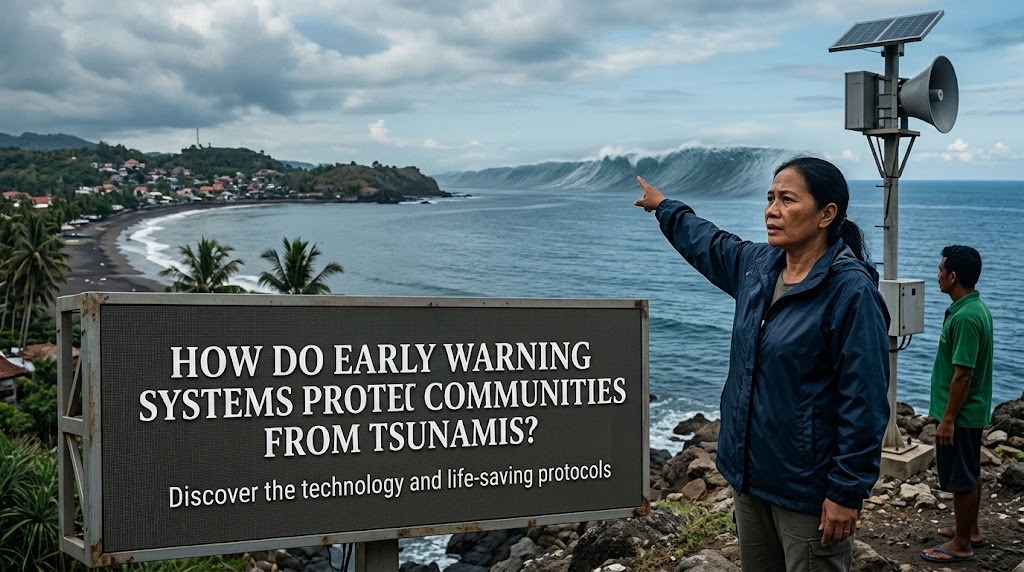
Tsunamis are powerful ocean waves that can cause severe damage to coastal communities. They are often triggered by underwater earthquakes, volcanic eruptions, or landslides that suddenly displace large amounts of water. Because tsunami waves can travel quickly across the ocean, communities need reliable warning systems to prepare before the waves reach the shore.
Tsunami early warning systems help reduce casualties by detecting potential tsunami events, assessing their risks, and delivering alerts to people in affected areas. These systems combine scientific instruments, communication networks, government coordination, and community preparedness to support faster evacuation.
HOW TSUNAMI EARLY WARNING SYSTEMS WORK
A tsunami warning system begins by monitoring seismic activity and changes in ocean conditions. When a strong earthquake occurs near or beneath the ocean, monitoring centers analyze its location, magnitude, depth, and other characteristics to determine whether it could generate a tsunami.
If a potential threat is identified, specialists use ocean monitoring data to assess the possibility of dangerous waves. Warning centers then issue alerts for coastal areas that may be affected. This process helps authorities communicate risks and organize emergency responses.
THE ROLE OF SEISMIC MONITORING STATIONS
Seismic monitoring stations detect earthquakes by measuring ground vibrations. Their data helps experts identify the location, strength, and depth of an earthquake, which are important factors when evaluating tsunami risks.
However, not every underwater earthquake produces a tsunami. Experts must examine additional information, including ocean conditions and the characteristics of the earthquake. Accurate analysis helps reduce unnecessary alerts while ensuring that potential threats receive attention.
HOW OCEAN SENSORS DETECT TSUNAMI WAVES
Ocean monitoring instruments provide information about unusual changes in sea level and water pressure. These may include coastal tide gauges and deep-ocean pressure sensors that can detect tsunami-related changes in the water column.
Some deep-ocean systems transmit measurements to monitoring centers through communication networks. The information helps specialists confirm whether a tsunami has formed and estimate its possible impact on coastal locations.
THE IMPORTANCE OF FAST WARNING COMMUNICATION
A warning is useful only when people receive and understand it in time. Early warning systems distribute alerts through multiple communication channels, including mobile phone notifications, sirens, radio broadcasts, television, and official online platforms.
Using several channels is important because electricity, internet connections, and mobile networks may fail during emergencies. Repeated and consistent messages also help residents understand the seriousness of the threat and follow evacuation instructions.
SUPPORTING QUICK AND SAFE EVACUATION
One of the main purposes of tsunami warnings is to give communities time to move away from dangerous coastal areas. Authorities can use warning information to activate evacuation procedures and direct residents toward higher ground or designated evacuation buildings.
Clear evacuation routes and accessible shelters are essential for reducing confusion. Communities should also know which areas are vulnerable and where they can find safety. When a strong or long earthquake occurs near the coast, people should not wait for an official warning before moving to higher ground if they recognize the natural signs of a possible tsunami.
COORDINATION BETWEEN GOVERNMENT AGENCIES
Tsunami preparedness requires cooperation between monitoring centers, disaster management agencies, local governments, emergency services, and communication providers. Each organization has a different responsibility, from analyzing scientific information to distributing alerts and assisting residents during evacuation.
Effective coordination helps prevent delays and conflicting instructions. Local authorities can also close dangerous coastal areas, arrange transportation for vulnerable residents, and provide updates as the situation develops.
COMMUNITY EDUCATION AND DISASTER DRILLS
Technology alone cannot protect communities if residents do not understand how to respond to warnings. Public education helps people recognize tsunami signs, understand alert messages, and identify the nearest evacuation locations.
Regular disaster drills allow residents to practice evacuation procedures before an actual emergency occurs. Schools, workplaces, and neighborhood organizations can participate in these activities to improve awareness and readiness.
CHALLENGES IN TSUNAMI EARLY WARNING SYSTEMS
Although early warning technology has improved, several challenges can affect its effectiveness. Remote coastal communities may have limited access to communication networks, while damaged infrastructure can interrupt the delivery of emergency information.
Another challenge is the limited time available when a tsunami is generated close to the coastline. In some situations, waves may arrive before an official alert can reach every resident. Equipment maintenance, accurate data analysis, public awareness, and reliable communication are therefore essential.
HOW TECHNOLOGY IMPROVES TSUNAMI PREPAREDNESS
Modern technology helps monitoring centers process information more efficiently. Satellite communication, digital monitoring platforms, computer models, and automated alert systems support the collection and distribution of important data.
Geographic Information Systems (GIS) can also help authorities identify vulnerable coastal areas, map evacuation routes, and determine suitable shelter locations. When combined with local knowledge and updated disaster plans, these technologies support more organized emergency management.
CONCLUSION
Tsunami early warning systems protect communities by detecting potential threats, analyzing ocean conditions, and delivering alerts that support timely evacuation. Their effectiveness depends on accurate monitoring, reliable communication, strong coordination, and public awareness.
Communities should understand evacuation routes, participate in disaster drills, and respond immediately to natural warning signs. By combining technology with preparedness and cooperation, coastal areas can reduce tsunami risks and protect more lives.
Recent Posts

Bagaimana Sistem SKS pada Program Kuliah... 22.11.2026/37 View

How Does Technology Make Daily Evaluation... 21.11.2026/70 View

Apa Strategi Menghadapi Kesenjangan antara Kompetensi... 21.11.2026/73 View

Mengapa Inventaris Aset Penting bagi Kelancaran... 21.11.2026/68 View

When Should Musicians Join a Record... 21.11.2026/71 View
