

How Do Flag Ceremonies Teach Leadership Skills to Students?
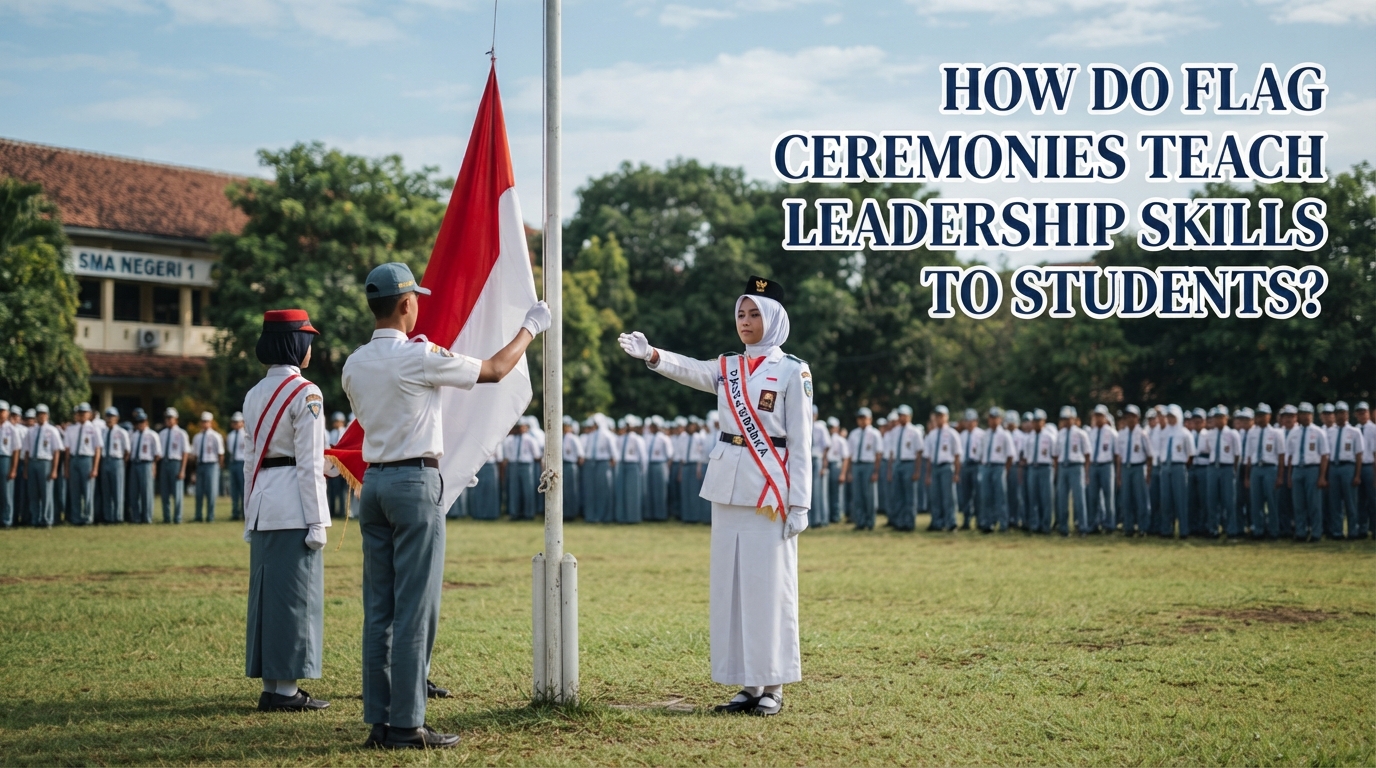
Flag ceremonies are not only formal school activities but also valuable opportunities for students to develop leadership skills, discipline, confidence, and responsibility. During these activities, students are given opportunities to take different roles, organize participants, follow instructions, and work together to achieve a common goal. These experiences help them understand that leadership involves more than giving orders; it also requires commitment, cooperation, and the ability to set a good example.
In Indonesian schools, flag ceremonies are commonly held on Monday mornings and during national commemorative events. Students may serve as ceremony leaders, flag raisers, text readers, prayer leaders, or members of the organizing team. Each position provides different learning experiences that can strengthen their ability to lead and work with others. Through regular participation, students can develop leadership qualities that are useful in academic activities, student organizations, and their future careers.
DEVELOPING CONFIDENCE THROUGH LEADERSHIP RESPONSIBILITIES
One way flag ceremonies teach leadership skills is by giving students opportunities to perform responsibilities in front of many people. For example, a student appointed as a ceremony leader must give instructions clearly and guide participants through each stage of the activity. This experience encourages students to overcome nervousness and become more confident when speaking in public.
Students who initially feel uncomfortable appearing in front of others can gradually improve through regular practice. They learn how to control their voices, maintain appropriate body language, and communicate instructions effectively. These experiences develop self-confidence and public speaking skills, which are essential qualities for effective leadership.
TEACHING RESPONSIBILITY AND DISCIPLINE
Leadership requires individuals to understand their responsibilities and complete assigned tasks properly. During a flag ceremony, every officer has a specific duty that contributes to the success of the activity. For instance, flag raisers must coordinate their movements, while text readers must prepare and deliver their assigned readings accurately.
Students learn that their actions can affect the performance of the entire team. Arriving late, ignoring instructions, or failing to prepare can disrupt the ceremony. Therefore, they are encouraged to develop discipline, punctuality, and accountability. These habits help students become more dependable leaders who understand the importance of fulfilling their commitments.
IMPROVING TEAMWORK AND COOPERATION
A successful flag ceremony depends on cooperation among all officers and participants. Each student must understand their role and coordinate with other team members to ensure that the activities run smoothly. For example, the ceremony leader must communicate with the flag-raising team, while other officers must follow the established sequence of activities.
Through this process, students learn that leadership is not about working independently or controlling others. Effective leaders must listen to their teammates, respect different opinions, and support everyone in achieving shared objectives. This experience develops teamwork, mutual respect, and collaborative problem-solving skills that are valuable in school projects and future workplaces.
STRENGTHENING COMMUNICATION SKILLS
Good communication is an important part of effective leadership. During flag ceremonies, students must deliver instructions, coordinate activities, and communicate with teachers and other officers. They need to use clear language, an appropriate speaking volume, and polite expressions so that everyone understands their responsibilities.
Students also learn the importance of listening carefully to instructions and responding appropriately. When problems occur during preparation, they must communicate with other team members to find suitable solutions. These activities help develop effective communication and active listening skills, allowing students to become better at expressing ideas and understanding other people's needs.
DEVELOPING DECISION-MAKING AND PROBLEM-SOLVING ABILITIES
Flag ceremonies can provide students with opportunities to practice making decisions when unexpected situations arise. For example, an officer may need to respond when a microphone stops working, a team member is absent, or the preparation does not follow the planned schedule. Under teacher supervision, students can learn to identify problems and consider appropriate solutions.
These experiences teach students to remain calm and think carefully before taking action. They also understand that good decisions should consider the needs of the entire team rather than personal interests. By practicing these abilities, students can develop critical thinking, problem-solving, and decision-making skills that support their growth as future leaders.
BUILDING A POSITIVE ATTITUDE AND LEADING BY EXAMPLE
A good leader should demonstrate positive behavior instead of simply expecting others to follow instructions. Flag ceremony officers are expected to show discipline, respect, punctuality, and seriousness throughout the activity. Their behavior can influence other students and encourage them to participate responsibly.
Students also learn that leadership involves honesty, consistency, and respect for others. For example, an officer who arrives on time and follows the ceremony rules demonstrates the importance of discipline through personal actions. This experience helps students understand the principle of leading by example, which is an essential foundation of responsible leadership.
ENCOURAGING INITIATIVE AND INDEPENDENCE
Participating in flag ceremonies can encourage students to become more independent and willing to take initiative. Officers must prepare their equipment, practice their assigned movements, and remember their responsibilities without constantly waiting for instructions. These activities teach them to manage tasks and recognize what needs to be done.
Students can also learn to offer assistance when other team members experience difficulties. Instead of ignoring problems, they are encouraged to take appropriate action while respecting the guidance of teachers or supervisors. Developing initiative and independence helps students become more proactive and prepared to handle responsibilities in different situations.
PREPARING STUDENTS TO BECOME FUTURE LEADERS
The leadership experiences gained through flag ceremonies can provide a useful foundation for students' future development. Skills such as communication, teamwork, discipline, and decision-making are important in student organizations, higher education, and professional environments. Students who practice these abilities at school may become better prepared to handle responsibilities in more complex situations.
However, leadership development does not happen automatically through participation alone. Students need guidance, consistent practice, constructive feedback, and opportunities to improve their performance. Teachers can support this process by assigning different roles and encouraging students to learn from their experiences. In this way, flag ceremonies can become meaningful activities for developing responsible, confident, and adaptable future leaders.
CONCLUSION
Flag ceremonies teach leadership skills to students by providing practical opportunities to take responsibility, communicate effectively, cooperate with others, and make decisions. Through different officer positions, students can develop confidence, discipline, independence, and the ability to lead by example.
Therefore, flag ceremonies should not be viewed only as formal school traditions. When organized meaningfully, they can become valuable learning experiences that help students build leadership character and essential life skills for their future.
Recent Posts

How Does Technology Make Daily Evaluation... 21.11.2026/58 View

Apa Strategi Menghadapi Kesenjangan antara Kompetensi... 21.11.2026/60 View

Mengapa Inventaris Aset Penting bagi Kelancaran... 21.11.2026/56 View

When Should Musicians Join a Record... 21.11.2026/55 View

Daily Evaluation or Daily Planning Which... 21.11.2026/63 View
