

How Do Government Subsidies Affect the Prices of Basic Goods?
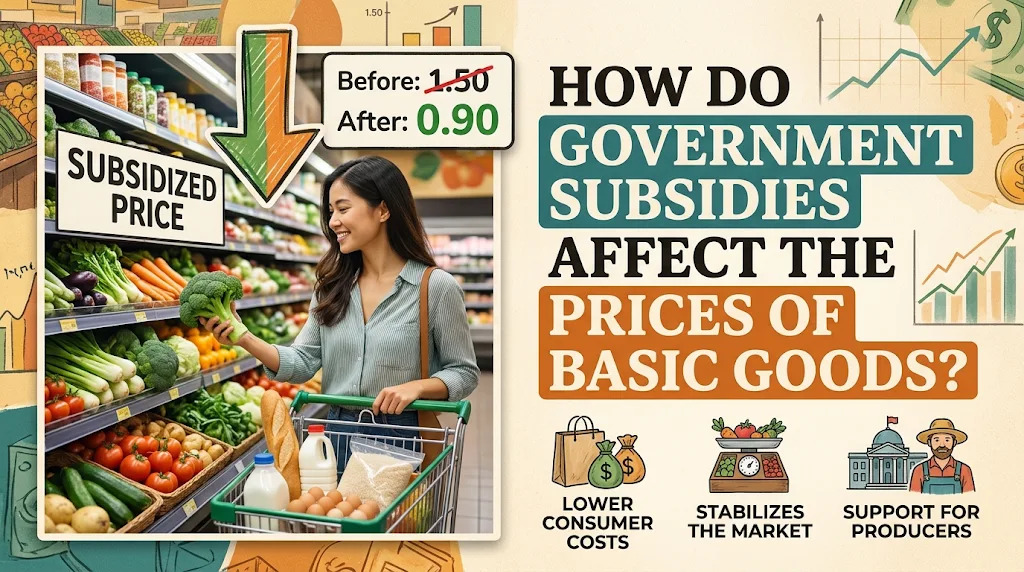
Government subsidies play an important role in influencing the prices of basic goods and services. Governments use these financial support programs to reduce production or distribution costs, making essential products more affordable for consumers. Basic goods such as food, fuel, electricity, and agricultural supplies can have a significant impact on household expenses. When their prices increase, families may experience greater financial pressure, particularly those with limited incomes.
In Indonesia, subsidies are used as one of the government's policy instruments to maintain purchasing power and support economic stability. However, their effects are not limited to lowering prices. Subsidies can also influence production costs, market demand, business activities, and the distribution of essential products. Understanding these effects helps explain why governments provide subsidies and how they influence everyday economic conditions.
REDUCING THE COST OF ESSENTIAL GOODS
One of the main effects of government subsidies is reducing the cost of certain essential goods for eligible consumers. When the government provides financial support to producers, distributors, or service providers, the final price paid by consumers can be lower than it would otherwise be. This allows households to purchase important products without facing the full impact of production or distribution costs. As a result, subsidies can help make essential goods more accessible.
For example, energy subsidies can reduce the prices of certain fuel and electricity services for eligible consumers. These benefits can help households manage their regular expenses and preserve money for other necessities. However, the extent of price reductions depends on the subsidy mechanism, government regulations, and market conditions. Not every product receives the same level of support, and some subsidies are limited to specific consumer groups.
PROTECTING HOUSEHOLD PURCHASING POWER
Government subsidies can help maintain household purchasing power, especially when the prices of essential goods increase. Purchasing power refers to the amount of goods and services that people can afford with their available income. When basic expenses become more expensive, households may have less money available for education, healthcare, transportation, and other needs. Subsidies can reduce some of this financial pressure by keeping the prices of selected goods or services more affordable.
This role is particularly important for low-income families because they generally have less flexibility in their household budgets. Even a moderate increase in essential expenses can affect their ability to meet daily needs. By supporting the affordability of certain products, subsidies can help reduce the immediate impact of rising costs. Nevertheless, subsidies are not a complete solution to income inequality or poverty, so they need to be supported by other economic and social policies.
SUPPORTING PRODUCTION AND DISTRIBUTION COSTS
Subsidies can also influence the prices of basic goods by reducing costs throughout the production and distribution process. Businesses and producers often face expenses related to raw materials, energy, transportation, equipment, and labor. When the government provides targeted financial support, certain operating costs may become more manageable. This can help producers maintain their activities and supply products at more affordable prices.
In the agricultural sector, for example, fertilizer subsidies can help eligible farmers obtain important production inputs at lower costs. More affordable agricultural inputs may support farming activities and help farmers manage production expenses. However, lower production costs do not automatically guarantee lower retail food prices. Weather conditions, harvest quantities, transportation expenses, storage facilities, and market demand can also influence the prices consumers pay.
HELPING CONTROL THE IMPACT OF INFLATION
Government subsidies can help reduce the pressure that rising prices place on consumers. Inflation refers to a general increase in the prices of goods and services over time, which reduces the purchasing power of money. When the prices of essential products increase, households may find it more difficult to manage their daily expenses. Subsidies can help limit the impact of certain price increases by reducing the amount consumers need to pay for supported goods and services.
However, subsidies cannot control inflation on their own. Price movements are influenced by many factors, including supply and demand, exchange rates, production costs, weather conditions, and international market developments. If subsidies are applied without considering these factors, their ability to maintain price stability may be limited. Therefore, governments often need to combine subsidy policies with other measures, such as improving supply chains, strengthening domestic production, and maintaining effective market supervision.
CREATING ECONOMIC AND MARKET CHALLENGES
Although subsidies offer several benefits, they can also create economic challenges when they are not properly designed or managed. One major concern is the pressure they place on the government budget. Large subsidy allocations may reduce the funds available for other public priorities, including infrastructure, education, healthcare, and public services. Governments must therefore evaluate whether subsidy spending provides sufficient benefits compared with its financial costs.
Another challenge is the possibility of inaccurate targeting. When subsidies are not distributed to the intended beneficiaries, some public funds may be used inefficiently. Subsidized goods may also be misused, resold, or consumed by groups that are not the primary targets of the program. In addition, keeping prices artificially low for too long can sometimes weaken incentives to improve production efficiency. Effective monitoring, accurate beneficiary data, and transparent regulations are necessary to reduce these risks.
CONCLUSION
Government subsidies affect the prices of basic goods by reducing certain production, distribution, and consumer costs. They can help protect household purchasing power, support producers, and reduce the impact of inflation on essential expenses. However, subsidies also require careful budget management and accurate targeting to prevent inefficient spending and market distortions. When implemented effectively, they can improve affordability while supporting broader economic stability.
Recent Posts

Bagaimana Sistem SKS pada Program Kuliah... 22.11.2026/25 View

How Does Technology Make Daily Evaluation... 21.11.2026/64 View

Apa Strategi Menghadapi Kesenjangan antara Kompetensi... 21.11.2026/65 View

Mengapa Inventaris Aset Penting bagi Kelancaran... 21.11.2026/62 View

When Should Musicians Join a Record... 21.11.2026/61 View
