

How Do Government Subsidies Help Improve the Economy?
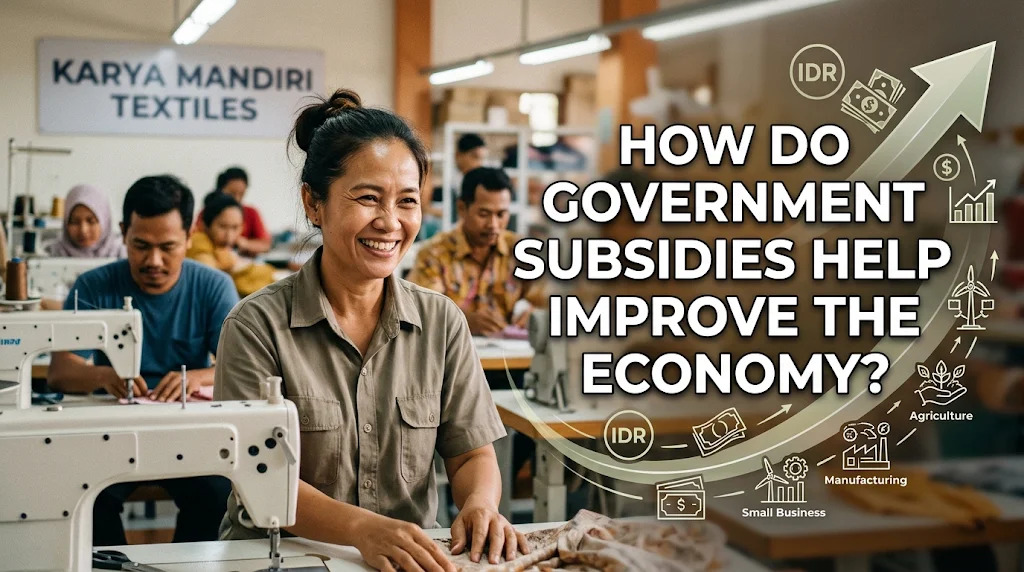
Government subsidies play an important role in supporting economic development and improving people's living conditions. Through financial assistance and price support, governments can help households manage essential expenses, encourage business activities, and strengthen important economic sectors. Subsidies may also protect consumers and producers from certain market pressures, especially when production costs or commodity prices increase. In countries such as Indonesia, government subsidy programs are used to support sectors including energy, agriculture, education, and healthcare. When properly planned and distributed, government subsidies can contribute to economic stability, productivity, and long-term national development.
INCREASING PEOPLE'S PURCHASING POWER
One way government subsidies improve the economy is by helping people maintain their purchasing power. When the prices of essential goods and services increase, households may need to spend more money to meet their daily needs. This situation can reduce the amount of income available for other expenses and weaken consumer demand. Subsidies can help reduce some of these financial pressures by making selected products and services more affordable.
For example, fuel and electricity subsidies can help households manage transportation and energy expenses. When people spend less on certain essential needs, they may have more money available for food, education, healthcare, and other purchases. This spending can support businesses because consumer demand is an important part of economic activity. Maintaining household purchasing power can therefore help sustain consumption and support the movement of money throughout the economy.
SUPPORTING BUSINESSES AND INDUSTRIAL ACTIVITIES
Government subsidies can also help businesses manage production costs and maintain their operations. Companies in certain industries may face high expenses related to energy, transportation, raw materials, and technology. Financial assistance or targeted price support can reduce some of these costs, allowing businesses to allocate resources more effectively. This support may be particularly useful for small and medium-sized enterprises that have limited financial capacity.
When businesses can manage their expenses, they may have more opportunities to improve production, develop products, and expand their markets. Some industries may also use government assistance to adopt better technology and improve operational efficiency. However, subsidies should be designed carefully so that businesses remain motivated to innovate and compete. Supporting productive businesses can strengthen economic activity and create opportunities for sustainable growth.
CREATING EMPLOYMENT OPPORTUNITIES
Subsidies may contribute to job creation by supporting industries that require workers to produce goods and provide services. When businesses receive appropriate financial support, they may be able to maintain existing operations or expand their production capacity. These activities can increase demand for employees in manufacturing, agriculture, transportation, and other sectors. As employment opportunities grow, more people can earn income and participate in economic activities.
Agricultural subsidies, for example, may help farmers access production resources and maintain their farming activities. Support for small businesses can also help entrepreneurs develop their operations and potentially hire additional workers. Nevertheless, the employment impact depends on how the subsidy is designed and whether the supported sector genuinely expands its activities. Productive subsidy programs can help strengthen the connection between business development, job opportunities, and household income.
STRENGTHENING IMPORTANT ECONOMIC SECTORS
Governments often provide subsidies to sectors considered important for national economic development. Agriculture, energy, education, healthcare, and transportation are examples of areas that can receive public support. These sectors influence the availability of essential goods, the quality of human resources, and the efficiency of economic activities. By helping maintain their operations, subsidies can support the foundations needed for a stronger economy.
In agriculture, assistance with fertilizers and other production resources may help farmers manage costs and maintain food production. In education, financial support can help students access learning opportunities and develop skills needed in the labor market. Meanwhile, healthcare subsidies can improve access to medical services and support a healthier population. Investment in essential sectors can create long-term benefits because economic development depends not only on business activity but also on human resources and reliable public services.
MAINTAINING ECONOMIC STABILITY AND REDUCING MARKET PRESSURES
Economic conditions can change because of inflation, international commodity prices, supply disruptions, and other external factors. These changes may increase production costs and affect the prices of essential goods and services. Government subsidies can help reduce the immediate impact of certain price increases on households and businesses. This support may help prevent sudden financial pressure from spreading across different parts of the economy.
However, subsidies cannot solve every economic problem or replace broader economic policies. If government spending on subsidies becomes excessive, it may place pressure on the national budget and reduce funding for other development priorities. Poorly targeted assistance can also benefit people who do not need it, making public spending less effective. Therefore, effective subsidy management requires accurate beneficiary data, transparent distribution, regular evaluation, and careful budget planning.
CONCLUSION
Government subsidies help improve the economy by maintaining people's purchasing power, supporting businesses, creating employment opportunities, and strengthening important economic sectors. They can also reduce the impact of market pressures and contribute to economic stability. However, their effectiveness depends on accurate distribution, responsible budget management, and policies that encourage long-term productivity. When implemented properly, subsidies can support both immediate public needs and sustainable national economic development.
Recent Posts

Bagaimana Sistem SKS pada Program Kuliah... 22.11.2026/27 View

How Does Technology Make Daily Evaluation... 21.11.2026/65 View

Apa Strategi Menghadapi Kesenjangan antara Kompetensi... 21.11.2026/65 View

Mengapa Inventaris Aset Penting bagi Kelancaran... 21.11.2026/62 View

When Should Musicians Join a Record... 21.11.2026/63 View
