

How Do Governments Control Inflation and Stabilize Prices?
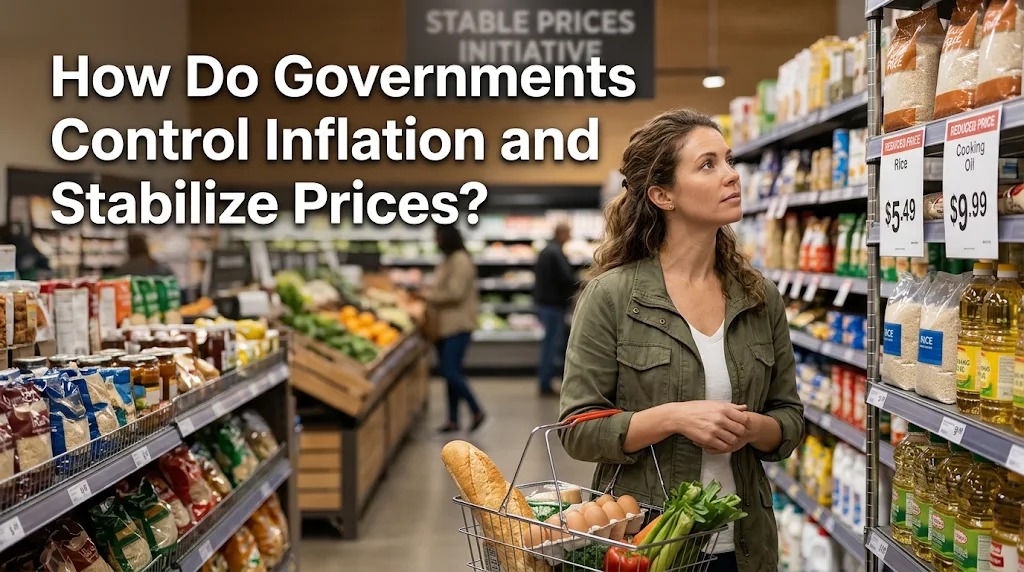
Inflation is an economic condition that occurs when the general prices of goods and services increase over time. Although a certain level of inflation can be part of normal economic activity, excessive price increases can reduce purchasing power, increase household expenses, and create uncertainty for businesses. To manage these challenges, governments and central banks implement various economic policies designed to control inflation and maintain price stability. These policies involve monetary measures, fiscal strategies, supply management, and improvements in domestic production. Understanding how governments control inflation and stabilize prices helps explain the role of economic institutions in protecting purchasing power and supporting sustainable economic growth.
USING MONETARY POLICY TO CONTROL INFLATION
One of the main ways inflation is controlled is through monetary policy, which is generally managed by a country's central bank. Monetary policy involves regulating financial conditions, influencing interest rates, and managing liquidity within the economy. These measures can affect how much consumers and businesses borrow, spend, and invest.
When inflation becomes too high, central banks may increase interest rates to make borrowing more expensive. Higher interest rates can discourage excessive borrowing and reduce some types of consumer and business spending. As demand becomes more moderate, pressure on the prices of goods and services may gradually decrease.
Central banks may also use other monetary instruments to manage liquidity and maintain financial stability. These measures need to be implemented carefully because overly restrictive monetary conditions can slow economic growth and affect employment. Therefore, policymakers must consider inflation trends, economic activity, and financial conditions when determining the appropriate policy response.
IMPLEMENTING FISCAL POLICY AND MANAGING GOVERNMENT SPENDING
Fiscal policy is another important instrument used by governments to influence economic activity and manage inflation. It involves decisions about public spending, taxation, and government revenue. Through these policies, governments can influence overall demand and help maintain a balance between economic activity and available resources.
When excessive demand contributes to inflation, governments may review public expenditure and prioritize spending more carefully. Reducing unnecessary expenses or postponing certain projects can help moderate demand in the economy. However, spending reductions need to be considered carefully because public investment in education, healthcare, and infrastructure can support long-term economic development.
Governments can also use targeted assistance programs to help households affected by rising prices. Financial support and subsidies for essential needs may reduce the immediate burden on vulnerable communities. However, these programs should be designed efficiently to avoid creating unnecessary pressure on government budgets or increasing demand beyond the economy's productive capacity.
INCREASING DOMESTIC PRODUCTION AND PRODUCT SUPPLY
Inflation does not always result from excessive consumer demand. In many situations, prices increase because the supply of goods and services is limited. Governments can address this problem by supporting domestic production, improving agricultural productivity, and encouraging businesses to expand their production capacity.
For example, investment in agriculture can help improve the availability of essential food products. Providing better access to farming technology, irrigation systems, storage facilities, and distribution networks can reduce production difficulties. When agricultural supply becomes more reliable, sudden shortages may become less likely to create significant increases in food prices.
Governments can also support manufacturing industries and small businesses through infrastructure development, business assistance, and improvements in access to production resources. These initiatives can strengthen domestic supply chains and reduce excessive dependence on imported products. Increasing the availability of goods and services can help reduce supply-related inflationary pressure over the longer term.
MAINTAINING PRICE STABILITY THROUGH MARKET SUPERVISION
Market supervision is important for maintaining fair competition and preventing practices that can contribute to unnecessary price increases. Governments may monitor the distribution and availability of essential products to identify shortages, irregularities, or disruptions in the supply chain. This is particularly important for food, fuel, medicine, and other necessities.
Effective market monitoring allows authorities to identify unusual price movements and investigate possible causes. For example, a sudden increase in food prices may result from poor harvest conditions, transportation difficulties, or distribution problems. Understanding the underlying cause helps governments determine whether additional supplies, logistical improvements, or other measures are necessary.
Competition policies can also support price stability by encouraging fair business practices and preventing market manipulation. However, price controls must be designed carefully. Setting prices below sustainable production costs may discourage suppliers and create shortages if businesses cannot continue operating profitably. Therefore, market interventions should consider consumer protection, business sustainability, and the availability of essential goods.
COORDINATING ECONOMIC POLICIES AND STRENGTHENING PUBLIC CONFIDENCE
Controlling inflation requires coordination between central banks, government institutions, businesses, and other economic stakeholders. Monetary and fiscal policies need to work toward compatible objectives so that one policy does not unnecessarily weaken the effectiveness of another. Consistent coordination can help maintain economic stability and reduce uncertainty.
Central banks also play an important role in managing inflation expectations. When consumers and businesses expect prices to increase rapidly, they may adjust their spending, wage negotiations, and pricing decisions accordingly. Clear communication about monetary policy objectives and economic conditions can help maintain public confidence and make inflation expectations more stable.
In addition, governments can strengthen long-term economic conditions by improving infrastructure, education, workforce skills, and technological development. These investments can increase productivity and support the production of goods and services. A more productive economy is generally better equipped to respond to rising demand without creating excessive pressure on prices. This approach helps support price stability while maintaining opportunities for sustainable economic growth.
CONCLUSION
Governments control inflation and stabilize prices through a combination of monetary policy, fiscal measures, domestic production improvements, and market supervision. Central banks can adjust interest rates and manage liquidity, while governments can regulate public spending and provide targeted assistance to affected households. Strengthening supply chains and improving productivity can also address some of the underlying causes of rising prices. Effective coordination between economic institutions is essential for maintaining purchasing power, supporting businesses, and creating a more stable economic environment.
Recent Posts

Bagaimana Sistem SKS pada Program Kuliah... 22.11.2026/35 View

How Does Technology Make Daily Evaluation... 21.11.2026/69 View

Apa Strategi Menghadapi Kesenjangan antara Kompetensi... 21.11.2026/69 View

Mengapa Inventaris Aset Penting bagi Kelancaran... 21.11.2026/67 View

When Should Musicians Join a Record... 21.11.2026/68 View
