

How Do Greenhouse Gases Cause Global Warming?
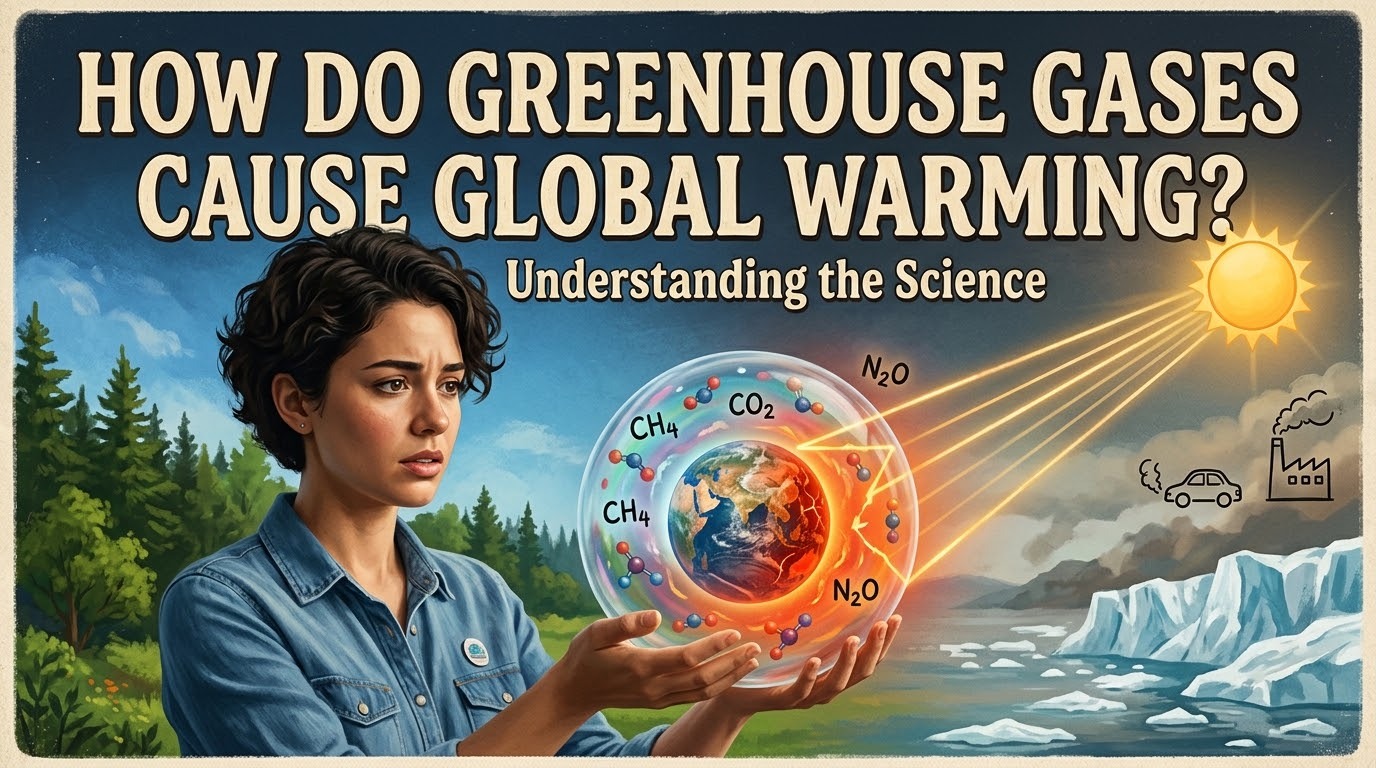
Greenhouse gases play an important role in regulating Earth's temperature. They occur naturally in the atmosphere and help keep the planet warm enough to support life. However, human activities have increased the concentration of these gases, strengthening the greenhouse effect and contributing to global warming. This process is one of the main reasons Earth's average surface temperature has risen over recent decades.
Understanding how greenhouse gases cause global warming helps explain the relationship between energy use, human activities, and environmental changes. Carbon dioxide, methane, nitrous oxide, and certain industrial gases can trap heat in the atmosphere. As their concentrations increase, the Earth's energy balance changes, affecting temperatures, weather patterns, oceans, and ecosystems.
UNDERSTANDING THE NATURAL GREENHOUSE EFFECT
The greenhouse effect is a natural process that keeps Earth warm enough to support life. Sunlight passes through the atmosphere and reaches the Earth's surface, where some of the energy is absorbed and warms the land and oceans. The warmed surface then releases energy as infrared radiation, which travels upward toward the atmosphere and space.
Greenhouse gases absorb some of this outgoing infrared radiation and re-emit energy in different directions, including back toward the surface. This process slows the loss of heat to space and helps maintain Earth's temperature. Without the natural greenhouse effect, the planet would be much colder and less suitable for most life as we know it. The problem arises when human activities increase greenhouse gas concentrations beyond natural levels, causing additional warming.
CARBON DIOXIDE INCREASES HEAT RETENTION
Carbon dioxide (CO₂) is one of the most important greenhouse gases contributing to modern global warming. It is released through activities such as burning coal, oil, and natural gas, as well as through deforestation and certain industrial processes. Carbon dioxide can remain in the climate system for a long time, so emissions continue to influence temperatures long after they are released.
When the concentration of carbon dioxide increases, the atmosphere absorbs more of the infrared radiation emitted by Earth's surface. This changes the planet's energy balance, causing the Earth system to retain additional energy until a new balance is reached at a higher temperature. Forests and oceans absorb some of the carbon dioxide released by human activities, but they cannot remove all emissions quickly enough to prevent the continued buildup in the atmosphere. Reducing fossil fuel use and protecting forests are therefore important ways to limit carbon dioxide emissions.
METHANE AND NITROUS OXIDE ADD TO GLOBAL WARMING
Although carbon dioxide receives significant attention, methane (CH₄) and nitrous oxide (N₂O) also contribute to global warming. Methane is released by sources such as livestock digestion, landfills, rice cultivation, and fossil fuel production. Over a 100-year period, methane has a much greater warming effect per unit of mass than carbon dioxide, although it remains in the atmosphere for a considerably shorter time.
Nitrous oxide can be released through agricultural soils, fertilizer use, manure management, and certain industrial processes. It is a potent greenhouse gas that can remain in the atmosphere for a long time. The warming impact of each gas depends on factors such as its concentration, atmospheric lifetime, and ability to absorb infrared radiation. Reducing methane leaks, improving waste management, and using fertilizers more efficiently can help lower emissions from these sources.
HUMAN ACTIVITIES STRENGTHEN THE GREENHOUSE EFFECT
The increase in greenhouse gas emissions is primarily linked to human activities. Electricity generation, transportation, industrial production, agriculture, and land-use changes all contribute to the accumulation of heat-trapping gases. Burning fossil fuels releases carbon dioxide, while deforestation reduces the amount of carbon stored in forests and can release additional carbon into the atmosphere.
Industrial activities can also release greenhouse gases through chemical processes and the use of certain refrigerants. Agricultural practices contribute methane and nitrous oxide, while decomposing organic waste can produce methane in landfills. These sources combine to increase the overall concentration of greenhouse gases in the atmosphere. Because the climate system responds to the combined effect of these emissions, reducing pollution across multiple sectors is essential for limiting future warming.
THE EFFECTS OF GREENHOUSE GASES ON EARTH'S CLIMATE
The accumulation of greenhouse gases leads to global warming, which can produce wider changes throughout the climate system. Rising temperatures contribute to the melting of glaciers and land-based ice sheets, while warmer ocean water expands and contributes to sea-level rise. Higher temperatures can also increase heatwave risks and influence rainfall patterns, drought conditions, and certain extreme weather events.
These changes affect both natural environments and human communities. Ecosystems may experience habitat loss, shifts in species distribution, and disruptions to food chains. Agriculture can face greater challenges from heat and changing rainfall, while coastal communities may experience increased flooding and erosion. The severity of these effects depends on the amount of future warming and local conditions. Reducing greenhouse gas emissions can limit additional warming and help reduce many associated risks.
CONCLUSION
Greenhouse gases cause global warming by absorbing and re-emitting infrared radiation, which slows the loss of heat from Earth's climate system. The natural greenhouse effect is essential for life, but the additional greenhouse gases released by human activities strengthen this effect and raise the planet's average temperature. Carbon dioxide, methane, nitrous oxide, and certain industrial gases all contribute to this process.
Limiting global warming requires reducing emissions from energy production, transportation, industry, agriculture, and waste management. Expanding renewable energy, improving energy efficiency, protecting forests, and adopting cleaner technologies can help reduce the accumulation of greenhouse gases. Understanding how these gases work provides a foundation for making informed environmental decisions and supporting effective climate action.
Recent Posts

Bagaimana Sistem SKS pada Program Kuliah... 22.11.2026/48 View

How Does Technology Make Daily Evaluation... 21.11.2026/76 View

Apa Strategi Menghadapi Kesenjangan antara Kompetensi... 21.11.2026/78 View

Mengapa Inventaris Aset Penting bagi Kelancaran... 21.11.2026/73 View

When Should Musicians Join a Record... 21.11.2026/78 View
