

How Do Historic Buildings Reflect Indonesian Culture?
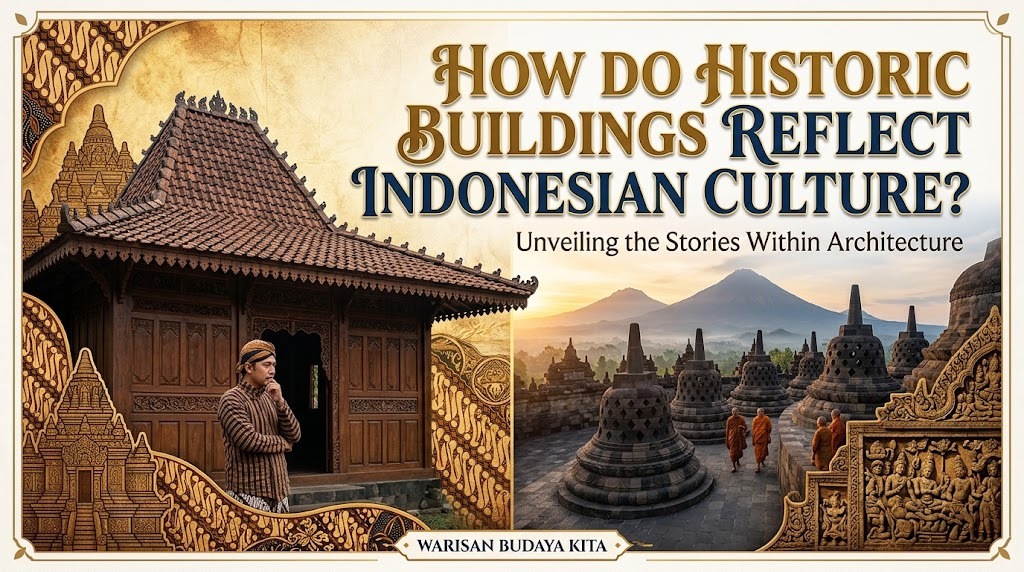
Historic buildings provide valuable insights into the traditions, beliefs, and social development of a nation. In Indonesia, these structures reflect centuries of cultural interaction, from traditional kingdoms and regional communities to the colonial period and modern independence. Their architectural designs, decorative details, and original functions help explain how Indonesian society developed over time.
Historic buildings in Indonesia are more than old structures. They represent cultural identity, local craftsmanship, religious traditions, and important historical experiences. By studying and preserving them, communities can better understand the diversity of Indonesian culture and pass this knowledge to future generations.
REFLECTING INDONESIA'S CULTURAL DIVERSITY
Indonesia consists of many ethnic groups, languages, traditions, and regional identities. This diversity can be seen in historic buildings, whose designs often reflect the environment, beliefs, and customs of the communities that created them. Traditional houses, royal palaces, places of worship, and community halls demonstrate how different groups developed their own architectural characteristics.
For example, traditional Minangkabau houses are known for their distinctive curved roofs, while traditional Torajan houses feature dramatic roof forms and meaningful decorative elements. These designs are connected to local customs, social structures, and cultural values. Such buildings demonstrate that Indonesian architectural heritage is not represented by one style but by a wide variety of regional traditions.
SHOWING RELIGIOUS BELIEFS AND SPIRITUAL TRADITIONS
Many historic buildings reflect Indonesia's religious heritage. Temples, mosques, churches, and other places of worship reveal how spiritual beliefs have influenced architecture and community life across different periods. Their layouts, decorations, inscriptions, and ceremonial spaces can provide information about religious practices and the societies that supported them.
Borobudur, for instance, is a major Buddhist monument known for its stupas and extensive relief panels. Prambanan is a Hindu temple complex recognized for its tall temple structures and sculptural details. Historic mosques such as the Great Mosque of Demak are associated with the development of Islam in Java. These buildings demonstrate the diversity of religious traditions that have shaped Indonesian history.
PRESERVING TRADITIONAL ARCHITECTURE AND CRAFTSMANSHIP
Historic buildings also reveal the skills and knowledge of earlier builders. Traditional construction methods often made use of locally available materials, including timber, stone, bamboo, and other resources suited to the surrounding environment. Roof shapes, ventilation systems, structural arrangements, and decorative patterns show how communities adapted buildings to local climates and practical needs.
Craftsmanship is another important part of Indonesian cultural heritage. Carved wooden panels, stone reliefs, ornamental motifs, and carefully constructed roof structures can reflect the knowledge passed from one generation to another. Studying these details helps explain the relationship between architecture, artistic expression, and everyday life. Preserving historic buildings can therefore help maintain appreciation for traditional techniques and regional design knowledge.
REFLECTING HISTORICAL CONTACT AND CULTURAL EXCHANGE
Indonesia's position along major maritime trade routes encouraged interaction with communities from different parts of Asia and beyond. Trade, migration, religious exchange, and political relationships influenced the development of local architecture. As a result, some historic buildings combine local design traditions with elements associated with other cultures.
Colonial-era buildings, for example, often display European architectural influences adapted to tropical conditions. Meanwhile, religious and commercial buildings in different regions may reveal connections between local traditions and wider networks of exchange. These structures show that Indonesian culture has developed through interaction and adaptation, rather than remaining unchanged throughout history.
STRENGTHENING CULTURAL IDENTITY AND EDUCATION
Historic buildings help communities maintain connections with their past. They can serve as landmarks that represent local identity and provide places where people learn about important events, cultural traditions, and architectural achievements. Their continued presence can also help younger generations understand the experiences and contributions of earlier communities.
These structures are valuable resources for historical education and cultural tourism. School visits, museum exhibitions, guided tours, and heritage programs can introduce visitors to the stories behind historic places. However, educational and tourism activities should be balanced with conservation needs. Careful maintenance, accurate historical interpretation, and respect for local communities help ensure that buildings retain their cultural significance.
CONCLUSION
Historic buildings reflect Indonesian culture through regional architectural styles, religious traditions, traditional craftsmanship, and evidence of cultural exchange. From traditional houses and sacred monuments to colonial-era structures, each building can reveal different aspects of the country's diverse history. Together, these places demonstrate how communities have expressed their beliefs, adapted to their environments, and developed their identities over time.
Preserving historic buildings helps protect both physical structures and the cultural knowledge connected to them. Through responsible conservation, education, and community involvement, Indonesia can maintain these valuable landmarks for future generations. Understanding their significance encourages greater appreciation for the country's cultural diversity and the many influences that have shaped Indonesian society.
Recent Posts

Bagaimana Sistem SKS pada Program Kuliah... 22.11.2026/51 View

How Does Technology Make Daily Evaluation... 21.11.2026/81 View

Apa Strategi Menghadapi Kesenjangan antara Kompetensi... 21.11.2026/81 View

Mengapa Inventaris Aset Penting bagi Kelancaran... 21.11.2026/77 View

When Should Musicians Join a Record... 21.11.2026/82 View
