

How Do Hospital Delivery Robots Transport Medication Securely?
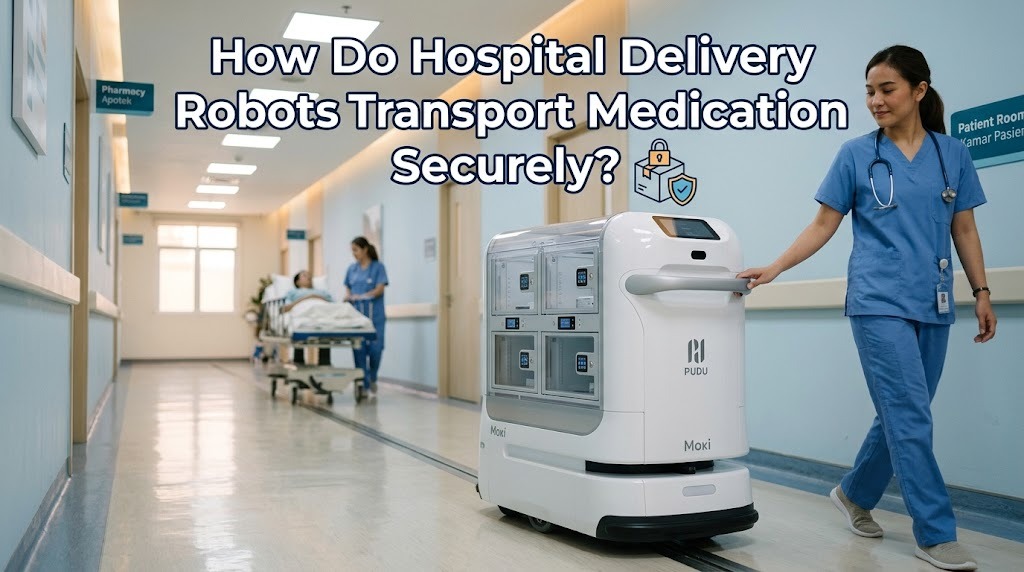
Hospital delivery robots help healthcare facilities transport medication, medical supplies, and other essential items between departments. These robots reduce repetitive tasks for hospital staff and support more efficient workflows. However, transporting medication requires strict security measures to prevent unauthorized access, delivery errors, and contamination. By combining secure compartments, navigation technology, access controls, and tracking systems, hospital delivery robots can improve the safety and reliability of medication distribution.
SECURE STORAGE COMPARTMENTS
Hospital delivery robots often use enclosed compartments to protect medication during transportation. These compartments help prevent items from falling out, being accidentally removed, or coming into contact with contaminants.
Some systems include separate compartments for different deliveries, allowing medication to remain organized throughout the journey. For temperature-sensitive products, specialized containers or temperature-controlled compartments may be necessary to maintain suitable storage conditions.
AUTHENTICATION AND ACCESS CONTROL
Access control helps ensure that only authorized healthcare personnel can retrieve medication. Depending on the system, staff may unlock a compartment using an identification card, personal identification number, mobile application, or other authentication method.
These controls reduce the risk of unauthorized access and accidental medication collection. Hospitals should also configure user permissions carefully so that employees can access only the deliveries relevant to their responsibilities.
REAL-TIME LOCATION TRACKING
Hospital delivery robots use sensors, mapping technology, and navigation software to move through corridors and reach designated destinations. A monitoring platform may display the robot's current location, delivery status, and assigned destination.
This visibility helps staff identify delayed deliveries and investigate missing items. When combined with delivery records, location tracking can also help hospitals determine where a transportation problem occurred.
MEDICATION IDENTIFICATION AND VERIFICATION
Accurate identification is essential when robots transport medication. Some hospital systems integrate barcode scanners, QR codes, or inventory software to associate each package with its intended destination and delivery record.
Before dispatch, staff can verify the medication, quantity, destination, and relevant order information. At the receiving point, authorized personnel can confirm that the correct package has arrived. These checks reduce the likelihood of misplaced deliveries, although robots do not replace professional medication verification.
TAMPER DETECTION AND DELIVERY RECORDS
Secure transportation systems may include compartment sensors, electronic locks, or tamper-evident seals. These features can help identify unauthorized opening or indicate that a package may have been disturbed during transit.
Delivery software can also record dispatch times, destination details, access events, and receipt confirmations. Such records support accountability and make it easier to investigate discrepancies. However, the effectiveness of these measures depends on system configuration, maintenance, and staff compliance.
TEMPERATURE AND ENVIRONMENTAL MONITORING
Certain medications require specific storage conditions to preserve their quality and effectiveness. Hospital delivery robots transporting these products may use temperature sensors and insulated or refrigerated compartments.
Monitoring systems can alert staff when temperatures move outside approved limits. Hospitals should define acceptable conditions for each medication, validate the transport equipment, and document any temperature excursions before deciding whether a product remains suitable for use.
SAFE NAVIGATION INSIDE HOSPITALS
Hospitals are busy environments where robots must share space with patients, visitors, medical staff, and equipment. Delivery robots typically use obstacle detection sensors, cameras, or other navigation technologies to detect nearby objects and adjust their movement.
Speed limits, emergency stop functions, restricted routes, and designated delivery areas can further reduce collision risks. Hospital staff should also receive instructions on interacting safely with robots, especially in crowded corridors and emergency situations.
INTEGRATION WITH HOSPITAL SYSTEMS
Connecting delivery robots to hospital inventory, pharmacy, and logistics systems can improve coordination. Integration allows staff to assign deliveries, monitor progress, and maintain records without repeatedly entering the same information.
However, these connections must be protected against unauthorized access and data exposure. Hospitals should use appropriate network security, access permissions, software updates, and audit procedures to protect sensitive operational and patient information.
CONCLUSION
Hospital delivery robots transport medication securely by combining locked compartments, access controls, tracking systems, package verification, environmental monitoring, and safe navigation. These technologies help reduce delivery errors and improve accountability, but they cannot eliminate every risk. Hospitals must support robotic systems with clear procedures, regular maintenance, staff training, and professional oversight to ensure medication reaches the correct destination in suitable condition.
Recent Posts

Bagaimana Sistem SKS pada Program Kuliah... 22.11.2026/49 View

How Does Technology Make Daily Evaluation... 21.11.2026/77 View

Apa Strategi Menghadapi Kesenjangan antara Kompetensi... 21.11.2026/78 View

Mengapa Inventaris Aset Penting bagi Kelancaran... 21.11.2026/74 View

When Should Musicians Join a Record... 21.11.2026/79 View
