

How Do Human Activities Accelerate Global Warming?
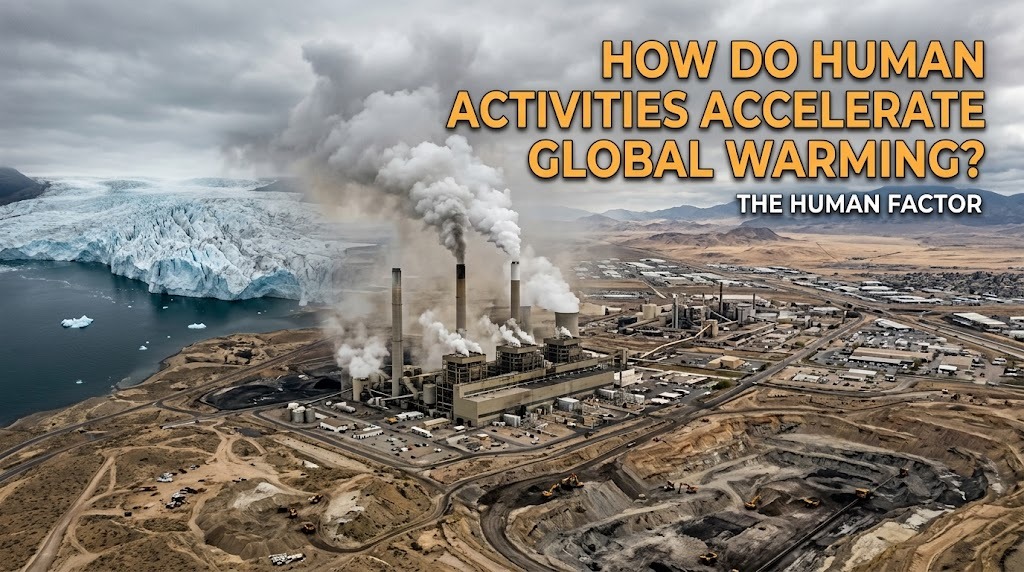
Global warming is the long-term increase in Earth's average surface temperature, primarily caused by the accumulation of greenhouse gases in the atmosphere. Although the Earth's climate can change naturally, human activities have become the main driver of the warming observed since the pre-industrial period. Activities such as burning fossil fuels, clearing forests, manufacturing products, and producing food release gases that trap heat and alter the planet's energy balance.
Understanding how human activities accelerate global warming helps explain why changes in energy use, land management, and consumption are important for protecting the environment. Greenhouse gas emissions from different sectors contribute to rising temperatures and affect ecosystems, weather patterns, and human communities. By identifying the main sources of these emissions, society can develop practical ways to reduce them.
BURNING FOSSIL FUELS FOR ELECTRICITY AND TRANSPORTATION
One of the largest sources of human-caused greenhouse gas emissions is the burning of fossil fuels. Coal, oil, and natural gas are used to generate electricity, power vehicles, operate machinery, and provide energy for buildings. When these fuels are burned, they release carbon dioxide, a greenhouse gas that contributes to the warming of the Earth.
Transportation also plays an important role in this process. Cars, motorcycles, trucks, ships, and airplanes that use fossil fuels release emissions during operation. As transportation demand increases, fuel consumption can rise, particularly in areas where private vehicles are the main travel option. Improving public transportation, using energy more efficiently, and expanding cleaner energy sources can help reduce emissions from these activities.
CUTTING DOWN FORESTS AND CHANGING LAND USE
Deforestation accelerates global warming by reducing the ability of forests to absorb and store carbon dioxide. Trees take in carbon dioxide during photosynthesis and store carbon in their trunks, branches, roots, and surrounding soil. When forests are cleared, this carbon storage capacity decreases, and burning or decomposing vegetation can release previously stored carbon into the atmosphere.
Land is often cleared for agriculture, settlements, infrastructure, or commercial activities. When natural forests are replaced by land uses that store less carbon, the overall balance of carbon in the environment can change. Forest loss also threatens biodiversity, disrupts water cycles, and reduces the natural protection that some landscapes provide against erosion and flooding. Protecting existing forests, restoring degraded areas, and using land responsibly can help limit these impacts.
INDUSTRIAL PRODUCTION AND MANUFACTURING
Industrial activities contribute to global warming through energy consumption and chemical processes. Factories often use electricity and fuels to produce materials, process raw resources, and manufacture goods. When this energy comes from fossil fuels, it generates carbon dioxide emissions that contribute to the greenhouse effect.
Some industrial processes also release greenhouse gases directly. For example, cement production generates carbon dioxide through chemical reactions involved in making clinker, a key ingredient in cement. Certain refrigeration and industrial gases can have a high warming potential when released into the atmosphere. As demand for buildings, electronics, vehicles, and other products grows, emissions may increase unless production methods become more efficient. Cleaner energy, improved industrial technology, material reuse, and better manufacturing practices can help reduce the environmental impact.
AGRICULTURE, LIVESTOCK, AND WASTE MANAGEMENT
Agriculture and livestock production contribute to global warming through emissions of methane and nitrous oxide. Methane is produced by the digestive processes of ruminant animals, such as cattle, and can also come from manure management and rice cultivation. Nitrous oxide can be released from soils when nitrogen-based fertilizers are used and through certain agricultural processes.
Waste management is another source of greenhouse gases. Organic waste placed in landfills can decompose under low-oxygen conditions and release methane. Wastewater treatment and the production of food and other materials can also generate emissions, depending on the methods used. Improving fertilizer management, reducing food waste, treating organic waste appropriately, and adopting more efficient farming practices can help limit these emissions while supporting food production and resource conservation.
OVERCONSUMPTION AND UNSUSTAINABLE DAILY HABITS
Everyday consumption can contribute to human-caused global warming because producing, transporting, and disposing of goods requires energy and resources. Purchasing products that are rarely used, replacing functional items unnecessarily, and wasting food can increase demand for production and disposal. These activities may generate emissions throughout a product's life cycle, from raw material extraction to manufacturing and transportation.
Energy use at home and travel choices also influence a person's environmental footprint. Excessive electricity consumption can increase emissions when electricity is generated from fossil fuels, while frequent private vehicle use can raise fuel consumption. However, individual emissions depend on factors such as local energy sources, transport options, and household circumstances. Reducing unnecessary consumption, saving electricity, choosing lower-emission transportation when practical, and reusing products can support broader efforts to reduce greenhouse gas emissions.
CONCLUSION
Human activities accelerate global warming mainly by increasing the concentration of greenhouse gases in the atmosphere. Burning fossil fuels, deforestation, industrial production, agriculture, waste management, and resource-intensive consumption all contribute to this process. These activities strengthen the greenhouse effect and cause the Earth system to retain more heat, leading to rising average temperatures and associated environmental changes.
Reducing global warming requires action across households, businesses, industries, and governments. Expanding renewable energy, improving energy efficiency, protecting forests, reducing waste, and developing lower-emission production methods can help limit greenhouse gas emissions. Individual choices are valuable, but they are most effective when supported by wider changes in infrastructure, technology, and public policy. Through coordinated action, society can reduce future warming and protect the environment for coming generations.
Recent Posts

Bagaimana Sistem SKS pada Program Kuliah... 22.11.2026/48 View

How Does Technology Make Daily Evaluation... 21.11.2026/76 View

Apa Strategi Menghadapi Kesenjangan antara Kompetensi... 21.11.2026/78 View

Mengapa Inventaris Aset Penting bagi Kelancaran... 21.11.2026/73 View

When Should Musicians Join a Record... 21.11.2026/78 View
