

How Do Interest Rates Influence Inflation?
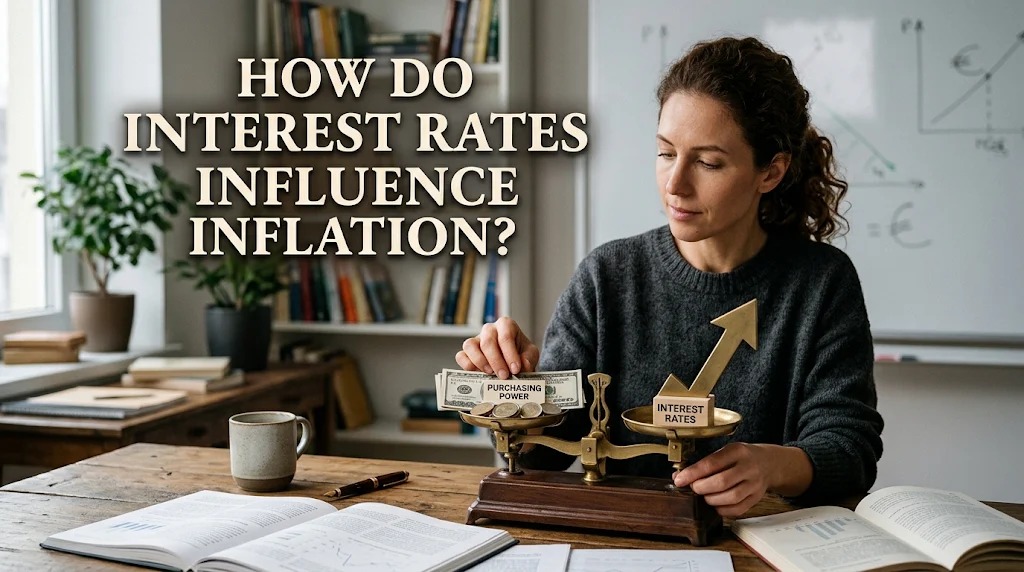
Interest rates play an important role in controlling inflation and maintaining economic stability. Central banks use interest rate policies to influence borrowing, saving, spending, and investment activities across an economy. When inflation rises too quickly, adjusting interest rates can help manage demand and reduce pressure on prices. Understanding the relationship between interest rates and inflation helps explain how monetary policy affects households, businesses, and financial markets.
THE RELATIONSHIP BETWEEN INTEREST RATES AND INFLATION
Interest rates and inflation are closely connected because changes in borrowing costs can influence how much money people and businesses spend. When interest rates are low, loans generally become more affordable, encouraging consumers to borrow money and businesses to invest in expansion. Increased spending can stimulate economic activity, but if demand grows faster than the available supply of goods and services, prices may rise.
In contrast, higher interest rates make borrowing more expensive and can encourage people to save rather than spend. This may reduce overall demand and help slow down price increases. The relationship is not always immediate because inflation is also influenced by production costs, energy prices, exchange rates, and supply chain conditions. However, interest rate adjustments remain an important instrument for managing inflationary pressure.
HOW CENTRAL BANKS USE INTEREST RATES TO CONTROL INFLATION
Central banks use monetary policy to maintain price stability and support sustainable economic conditions. When inflation becomes too high, they may increase their policy interest rates to make borrowing more expensive throughout the financial system. Commercial banks may then adjust the interest rates offered on loans and savings products.
Higher borrowing costs can reduce excessive consumer spending and business investment. For example, households may postpone purchasing expensive products through credit, while companies may delay expansion projects that require substantial financing. These changes can gradually reduce demand for goods and services, helping to moderate price increases. However, central banks must carefully evaluate economic conditions because excessive interest rate increases can also slow economic growth.
THE IMPACT OF HIGH INTEREST RATES ON CONSUMERS AND BUSINESSES
High interest rates can affect consumers by increasing the cost of certain loans, particularly new borrowing and loans with variable interest rates. People may face higher financing expenses when purchasing homes, vehicles, or other expensive products. As a result, households may reduce discretionary spending and focus more on essential needs.
Businesses can also experience financial pressure because loans used for equipment, inventory, and expansion may become more expensive. Small businesses that depend on external financing may postpone investment or reduce operating plans. Although these effects can help moderate inflation by reducing demand, they may also influence employment opportunities, business growth, and overall economic activity.
HOW LOW INTEREST RATES CAN INCREASE INFLATIONARY PRESSURE
Low interest rates can encourage economic activity by making loans more affordable for consumers and businesses. Households may become more willing to borrow money for housing, vehicles, education, and other purchases. Meanwhile, companies may use affordable financing to increase production capacity, purchase equipment, or expand their operations.
However, low interest rates can contribute to inflation when total demand grows faster than the economy's ability to supply goods and services. Businesses may struggle to meet rising demand, especially when production capacity and available resources are limited. Under these conditions, sellers may increase prices because more consumers are competing for the same products. Nevertheless, low interest rates do not automatically cause inflation, as the final outcome also depends on supply conditions, consumer confidence, and broader economic activity.
THE CHALLENGE OF BALANCING INFLATION AND ECONOMIC GROWTH
Central banks face an important challenge when deciding whether to raise, maintain, or lower interest rates. Increasing rates may help control inflation, but it can also reduce borrowing, investment, and consumer spending. Lowering rates can support economic growth, but it may increase demand and create additional inflationary pressure if supply cannot keep up.
To make appropriate decisions, policymakers monitor several economic indicators, including the inflation rate, employment conditions, economic growth, consumer spending, and business activity. They also consider whether inflation is driven mainly by strong demand or by rising production costs and supply disruptions. Careful policy decisions help central banks pursue price stability while limiting unnecessary disruptions to economic activity.
CONCLUSION
Interest rates influence inflation by changing the cost of borrowing and the incentives to save or spend. Higher interest rates can reduce excessive demand and help control rising prices, while lower rates can stimulate economic activity and potentially increase inflationary pressure. However, the relationship depends on several economic conditions, including product supply, production costs, and consumer behavior. Effective monetary policy requires a careful balance between controlling inflation and supporting sustainable economic growth.
Recent Posts

Bagaimana Sistem SKS pada Program Kuliah... 22.11.2026/35 View

How Does Technology Make Daily Evaluation... 21.11.2026/69 View

Apa Strategi Menghadapi Kesenjangan antara Kompetensi... 21.11.2026/69 View

Mengapa Inventaris Aset Penting bagi Kelancaran... 21.11.2026/67 View

When Should Musicians Join a Record... 21.11.2026/68 View
