

How Do Language Quiz Competitions Test Participants' Knowledge?
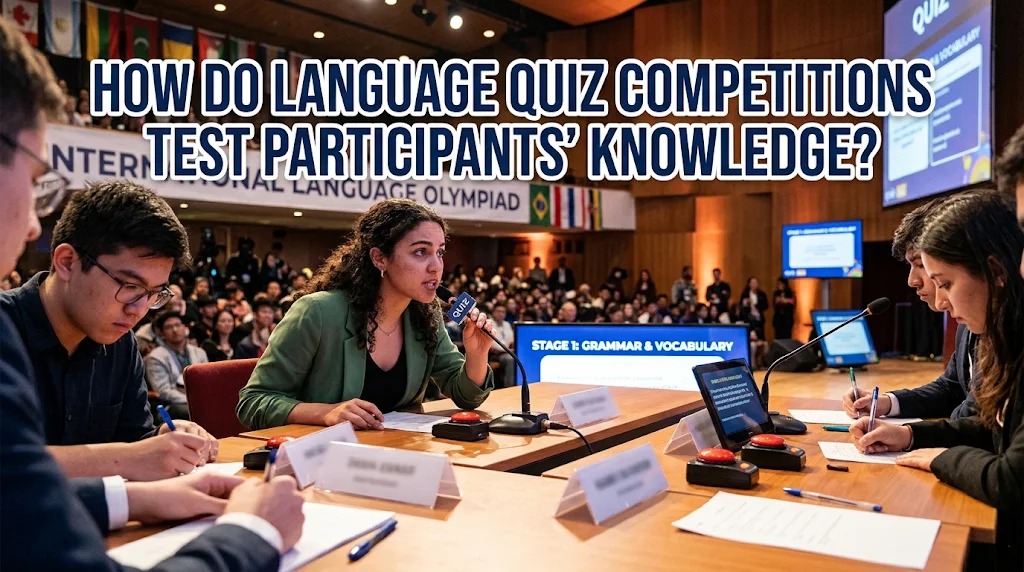
Language quiz competitions are educational activities designed to test participants' knowledge and understanding of a particular language. These competitions usually involve questions about vocabulary, grammar, spelling, pronunciation, sentence structure, and reading comprehension. Participants are expected to answer questions correctly within a specific time limit, depending on the competition rules.
Language quizzes are commonly organized in schools, universities, and educational institutions to encourage students to improve their language abilities. They can be conducted individually or in teams, using written questions, oral questions, or digital platforms. Through these activities, participants can demonstrate their knowledge while discovering which language skills they need to improve.
TESTING VOCABULARY AND WORD MEANINGS
Vocabulary is one of the main aspects assessed in language quiz competitions. Participants may be asked to identify word meanings, choose appropriate synonyms and antonyms, complete sentences, or recognize words based on specific descriptions. These questions help determine how well participants understand and use different words.
Some competitions also include questions about word formation, commonly confused words, and expressions used in everyday communication. Participants must understand the meaning of words based on their context rather than simply memorizing definitions. This makes vocabulary questions useful for developing a wider understanding of language and improving communication abilities.
EVALUATING GRAMMAR AND SENTENCE STRUCTURE
Grammar questions are another important part of language quiz competitions. Participants may need to identify correct verb forms, choose appropriate tenses, arrange words into meaningful sentences, or recognize grammatical errors. These questions evaluate their understanding of language rules and their ability to apply them correctly.
For example, an English language quiz may ask participants to select the correct sentence based on subject and verb agreement. Other questions may focus on prepositions, articles, pronouns, conjunctions, and sentence patterns. By answering these questions, participants demonstrate whether they can recognize grammatical structures and use them appropriately in different situations.
MEASURING READING AND LANGUAGE COMPREHENSION
Language quiz competitions also test participants' ability to understand written information. They may be given short passages, paragraphs, conversations, or announcements followed by several questions. Participants must read carefully, identify important information, and understand the meaning of the text.
Some questions require direct answers, while others test the ability to recognize the main idea, identify supporting details, understand vocabulary in context, and draw reasonable conclusions. These activities measure more than reading speed because participants must understand the information accurately. Strong reading comprehension also helps students develop better learning habits and understand various types of written material.
TESTING ACCURACY AND QUICK THINKING
Many language quiz competitions use time limits to evaluate how accurately and quickly participants can answer questions. They must understand each question, consider the available answers, and make decisions within the time provided. This format encourages concentration, logical thinking, and effective time management.
However, answering quickly is not the only important factor. Participants must also pay attention to details and avoid choosing answers without understanding the questions. Some competitions use scoring systems that consider correct answers, incorrect answers, or unanswered questions. Therefore, participants need to balance speed with accuracy to achieve the best possible results.
CONCLUSION
Language quiz competitions test participants' knowledge through different activities involving vocabulary, grammar, reading comprehension, and quick thinking. Each question is designed to evaluate specific language abilities and determine how well participants understand and apply language concepts.
Beyond measuring knowledge, these competitions provide valuable learning experiences. Participants can identify their strengths, recognize areas that require improvement, and become more motivated to study. With regular practice and proper preparation, language quiz competitions can become an effective way to develop language proficiency and academic confidence.
Recent Posts

How Does Technology Make Daily Evaluation... 21.11.2026/62 View

Apa Strategi Menghadapi Kesenjangan antara Kompetensi... 21.11.2026/63 View

Mengapa Inventaris Aset Penting bagi Kelancaran... 21.11.2026/59 View

When Should Musicians Join a Record... 21.11.2026/58 View

Daily Evaluation or Daily Planning Which... 21.11.2026/66 View
