

How Do Language Skills Influence Verbal Reasoning Test Results?
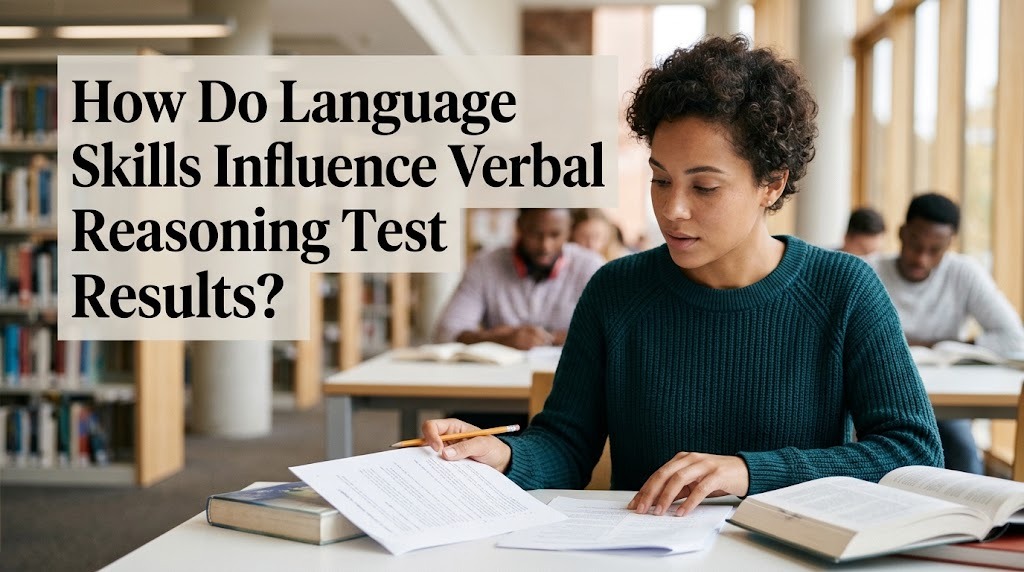
Language skills play an important role in determining how well individuals perform in verbal reasoning tests. These assessments are commonly used in university admissions, job recruitment, scholarship programs, and professional selection processes. Candidates are expected to understand written information, interpret word meanings, recognize relationships between sentences, and draw logical conclusions based on available evidence.
Strong language skills can help individuals process questions more accurately and efficiently. On the other hand, limited vocabulary, poor reading comprehension, and difficulties understanding sentence structures may create obstacles during examinations. Therefore, developing language abilities is an important part of preparing for verbal reasoning tests and achieving better assessment results.
UNDERSTAND THE ROLE OF LANGUAGE SKILLS IN VERBAL REASONING
Language skills refer to an individual's ability to understand, interpret, and use language effectively. These abilities include reading, writing, listening, speaking, vocabulary knowledge, and understanding grammatical structures. In verbal reasoning tests, reading comprehension and vocabulary knowledge are particularly important because most questions involve interpreting written information.
Candidates need to understand the meaning of words, recognize sentence structures, and identify relationships between different ideas. Without these abilities, even relatively simple questions can become challenging. For example, a candidate who misunderstands an important word may select an incorrect answer despite having good logical reasoning skills.
Language skills also influence how individuals interpret instructions and evaluate statements. Understanding the exact meaning of a question helps candidates avoid unnecessary assumptions and focus on the information being assessed.
Therefore, strong language comprehension provides an important foundation for successful verbal reasoning performance. It allows individuals to understand questions more clearly and apply their reasoning abilities more effectively.
VOCABULARY KNOWLEDGE IMPROVES ANSWERING ACCURACY
Vocabulary knowledge is one of the most influential language abilities in verbal reasoning assessments. Candidates need to recognize the meanings of different words to answer synonym, antonym, analogy, and sentence completion questions correctly. A limited vocabulary can make it difficult to distinguish between answer choices that have similar meanings.
For example, the words accurate and precise are closely related, but their meanings can differ depending on the context. Understanding these differences helps candidates select the most appropriate answer. Similarly, knowing that generous is an antonym of selfish can make vocabulary-based questions easier to solve.
Expanding vocabulary also helps candidates understand unfamiliar expressions in reading passages. When individuals recognize more words, they spend less time trying to interpret individual terms and can focus more on the overall meaning of the text.
Regular reading, vocabulary notes, flashcards, and word exercises are effective ways to develop this ability. Learning synonyms, antonyms, definitions, and example sentences can strengthen vocabulary recognition and answering accuracy during verbal reasoning tests.
READING COMPREHENSION SUPPORTS INFORMATION ANALYSIS
Reading comprehension is another essential language skill that directly influences verbal reasoning results. Candidates must understand written passages, identify important details, and recognize the main ideas before answering questions. Poor comprehension can lead to incorrect interpretations even when the required information is clearly provided.
Many verbal reasoning assessments include passages followed by statements that must be evaluated. Candidates may need to determine whether a statement is supported, contradicted, or cannot be confirmed by the available information. These tasks require careful reading and the ability to distinguish relevant details from unnecessary information.
One effective way to improve reading comprehension is by practicing with different types of English materials. Articles, educational books, newspapers, and informative texts can expose individuals to various sentence structures and writing styles. After reading, try summarizing the main message and identifying the supporting arguments.
This habit helps candidates process information more efficiently and recognize important details. Strong reading comprehension also supports critical thinking, information analysis, and logical decision-making during verbal reasoning assessments.
GRAMMATICAL UNDERSTANDING HELPS INTERPRET SENTENCES CORRECTLY
Grammar knowledge influences how individuals understand the relationships between words and sentences. Although verbal reasoning tests do not always focus directly on grammar rules, candidates still need to recognize sentence structures to interpret information accurately.
For example, understanding the difference between active and passive sentences can help candidates identify who performs an action and who receives it. Similarly, recognizing conjunctions such as although, because, however, and therefore helps individuals understand how ideas are connected.
Small grammatical differences can also change the meaning of a statement. Words such as some, all, none, and only affect how broadly a sentence applies. Candidates who overlook these terms may misunderstand the information and choose incorrect conclusions.
Developing grammatical awareness can make reading and interpreting written passages easier. Candidates should practice identifying sentence structures, understanding connecting words, and recognizing how different expressions influence meaning. These abilities help improve sentence interpretation and verbal reasoning accuracy.
LANGUAGE FLUENCY IMPROVES READING SPEED AND EFFICIENCY
Language fluency refers to the ability to understand and process language smoothly. In verbal reasoning tests, this ability can help candidates read questions more efficiently without repeatedly stopping to interpret familiar vocabulary or sentence structures.
Candidates with stronger language fluency generally find it easier to recognize common expressions and understand the overall meaning of written passages. This can reduce the time needed to process information and provide more opportunities to analyze difficult questions.
However, reading quickly does not automatically guarantee good results. Candidates must maintain accuracy while increasing their reading speed. Rushing through a passage without understanding its meaning can lead to careless mistakes and incorrect conclusions.
To develop reading efficiency, practice reading short passages within a reasonable time limit. Focus on identifying the main idea, important keywords, and supporting details rather than reading every sentence repeatedly. Gradually increase the difficulty of the materials as comprehension improves.
Combining reading speed with careful analysis can strengthen time management, concentration, and examination performance. These abilities are particularly useful when candidates must complete many questions within a limited period.
DEVELOP LANGUAGE SKILLS THROUGH CONSISTENT PRACTICE
Language skills can be improved through regular learning and practical exercises. Candidates who want better verbal reasoning results should establish a preparation routine that develops vocabulary, reading comprehension, grammar, and logical interpretation together.
Several activities can support this improvement:
- Daily Reading: Read English articles, books, and educational materials to become familiar with different expressions.
- Vocabulary Exercises: Learn new words, synonyms, antonyms, and their meanings in various contexts.
- Grammar Practice: Study sentence structures and connecting words to improve language interpretation.
- Reading Summaries: Summarize passages using your own words to strengthen comprehension.
- Verbal Reasoning Exercises: Solve analogy, sentence completion, and logical statement questions.
- Timed Practice Tests: Complete sample assessments under time restrictions to improve speed and accuracy.
After completing each exercise, review incorrect answers and identify the reasons behind the mistakes. Some errors may result from unfamiliar vocabulary, while others may involve misunderstanding sentence structures or drawing unsupported conclusions.
Candidates should also monitor their progress through regular practice tests. This makes it easier to identify improvements and determine which language abilities still require attention. With consistent preparation, individuals can strengthen their language proficiency, analytical abilities, and confidence when facing verbal reasoning assessments.
CONCLUSION
Language skills significantly influence verbal reasoning test results because candidates must understand vocabulary, interpret sentences, analyze written passages, and recognize logical relationships between ideas. Strong reading comprehension, grammatical understanding, and language fluency can help individuals answer questions more accurately and efficiently.
To achieve better results, candidates should develop regular reading habits, expand their vocabulary, practice grammar, and complete different verbal reasoning exercises. Consistent preparation can improve language comprehension and critical thinking, providing a stronger foundation for university admissions, job recruitment, and other selection processes.
Recent Posts

Bagaimana Sistem SKS pada Program Kuliah... 22.11.2026/44 View

How Does Technology Make Daily Evaluation... 21.11.2026/73 View

Apa Strategi Menghadapi Kesenjangan antara Kompetensi... 21.11.2026/75 View

Mengapa Inventaris Aset Penting bagi Kelancaran... 21.11.2026/70 View

When Should Musicians Join a Record... 21.11.2026/74 View
