

How Do Lecturer Seminars Encourage Innovation in Teaching Methods?
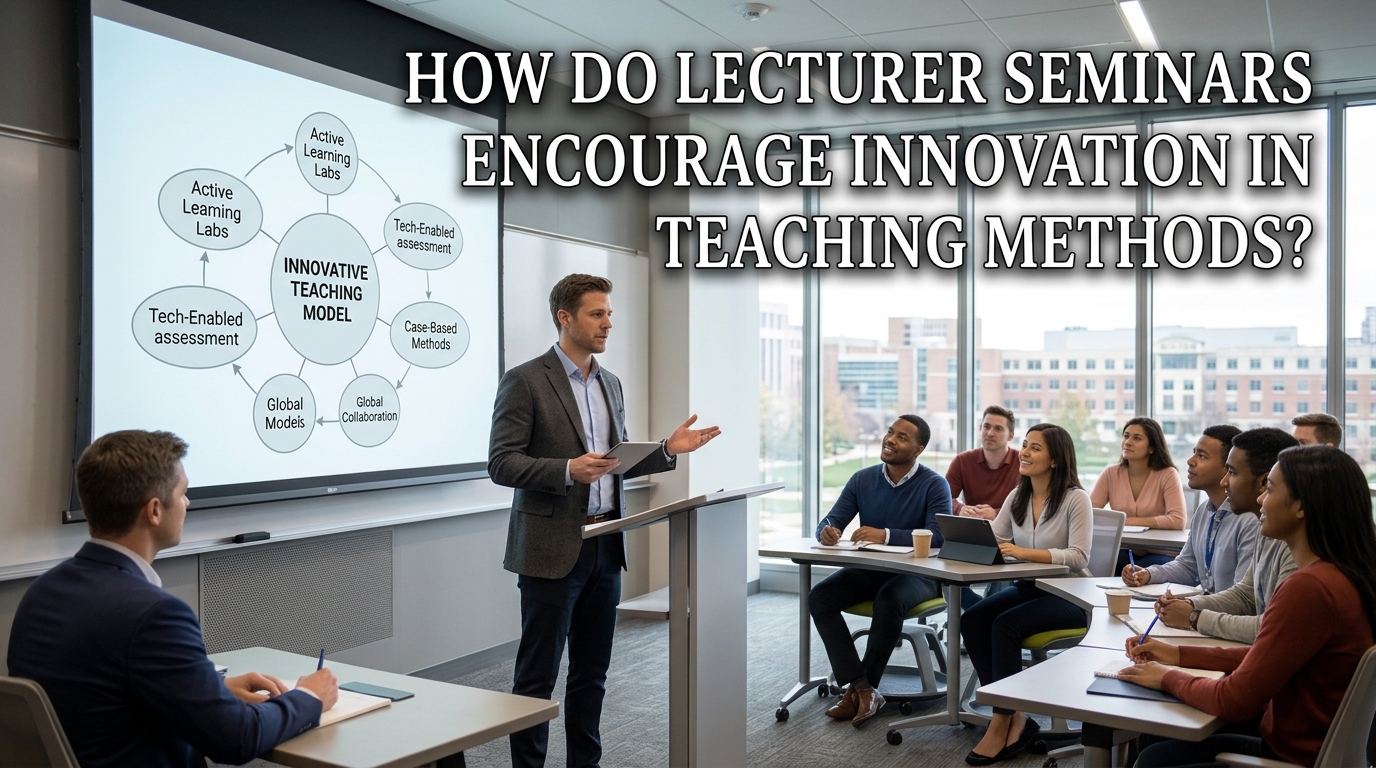
Lecturer seminars play an important role in encouraging innovation in teaching methods by providing opportunities for educators to exchange ideas, explore new approaches, and learn from academic experts. As education continues to develop, lecturers need to adapt their teaching strategies to meet students' changing needs and make learning more effective. Seminars create an environment where educators can discuss classroom challenges, examine new educational practices, and discover practical solutions. By applying relevant insights from these activities, lecturers can create more engaging learning experiences and improve the quality of education.
WHAT ARE LECTURER SEMINARS AND WHY ARE THEY IMPORTANT?
Lecturer seminars are academic activities that bring lecturers, researchers, and education professionals together to discuss teaching, research, and developments in higher education. These events may include expert presentations, interactive discussions, practical workshops, and opportunities to share professional experiences. Their main purpose is to expand knowledge and support continuous professional development.
Seminars are important because teaching methods should evolve alongside changes in educational needs, technology, and academic knowledge. Lecturers can learn about different instructional approaches and evaluate whether these methods suit their subjects and students. They can also discuss common classroom challenges and receive feedback from colleagues. Professional learning and knowledge exchange help lecturers develop new perspectives and improve their teaching practices.
HOW DO SEMINARS INTRODUCE NEW TEACHING METHODS?
Lecturer seminars introduce educators to teaching strategies that may not be widely used in their current academic environments. Experts and experienced lecturers can demonstrate methods such as project-based learning, problem-based learning, flipped classrooms, and collaborative learning. These approaches encourage students to participate actively, analyze information, and apply knowledge to practical situations. Seminars also help participants understand the strengths and limitations of different methods.
For example, a seminar on project-based learning may show lecturers how to organize assignments around real-world problems. Participants can discuss how to set learning objectives, divide responsibilities, and assess student contributions fairly. They can then adapt these ideas to their subjects and classroom conditions. Exposure to new instructional strategies gives lecturers a practical starting point for improving their teaching methods.
HOW DO LECTURER SEMINARS ENCOURAGE CREATIVITY IN THE CLASSROOM?
Creativity in teaching involves finding effective ways to explain concepts, engage students, and encourage independent thinking. Lecturer seminars provide opportunities to explore creative activities such as simulations, case studies, educational games, debates, and interdisciplinary projects. These methods can help make complex topics easier to understand and connect academic knowledge with real-life situations.
Seminars also encourage lecturers to think critically about their existing practices. By hearing different perspectives and discussing teaching experiences, participants may discover alternative ways to present information or solve learning difficulties. However, creative methods should always support the intended learning outcomes rather than simply make lessons entertaining. Creative teaching strategies are most effective when they combine student engagement with clear academic goals.
HOW DOES EDUCATIONAL TECHNOLOGY SUPPORT TEACHING INNOVATION?
Educational technology is a common topic in lecturer seminars because digital tools offer new ways to deliver learning materials and support classroom interaction. Lecturers may learn to use learning management systems, interactive presentations, online quizzes, virtual simulations, and digital collaboration platforms. These tools can provide flexible access to resources and create additional opportunities for student participation. Seminars can also demonstrate how to select technology according to specific teaching objectives.
In addition, lecturers can discuss the responsible use of artificial intelligence and other emerging technologies in education. Important considerations include student privacy, accessibility, academic integrity, and the accuracy of digital information. Technology should complement effective teaching rather than replace meaningful communication between lecturers and students. Through practical training and discussion, seminars help educators make informed decisions about technology-based learning.
HOW DO KNOWLEDGE SHARING AND COLLABORATION INSPIRE INNOVATION?
Knowledge sharing allows lecturers to learn from the successes, challenges, and experiences of other educators. During seminars, participants can exchange teaching materials, discuss classroom problems, and explain how particular strategies work in different learning environments. These conversations may reveal solutions that individual lecturers would not have considered independently. They also help educators understand how teaching approaches can be adapted across disciplines.
Collaboration can continue after the seminar through peer mentoring, joint workshops, and shared teaching projects. For example, lecturers from different departments may work together to design an interdisciplinary assignment that combines several academic perspectives. Such cooperation can encourage experimentation and help educators evaluate new methods collectively. Academic collaboration and peer learning create opportunities for innovation to develop beyond a single seminar session.
HOW CAN LECTURERS APPLY INNOVATIVE METHODS AFTER A SEMINAR?
The value of a lecturer seminar depends on how effectively participants apply what they have learned. After attending, lecturers should identify one or two suitable strategies and connect them to specific learning objectives. They can begin with a small classroom activity, such as introducing group problem-solving or using short digital assessments. Starting on a manageable scale makes it easier to observe results and identify possible difficulties.
Lecturers should then collect evidence to evaluate the effectiveness of the new approach. Student feedback, classroom observations, assessment results, and peer discussions can provide useful information about what works well and what needs adjustment. Not every innovation will produce the same results in every subject or group of students. Practical implementation and continuous evaluation help lecturers refine teaching methods and make improvements based on evidence.
WHAT CHALLENGES CAN LIMIT TEACHING INNOVATION?
Although lecturer seminars can inspire new ideas, several challenges may prevent educators from applying them. Limited budgets, large class sizes, insufficient equipment, and heavy workloads can make some teaching methods difficult to implement. Lecturers may also need additional training before using unfamiliar technologies or assessment strategies confidently. Recognizing these barriers helps educators choose realistic approaches.
Universities can support innovation by providing appropriate resources, time for professional development, technical assistance, and opportunities for collaboration. Lecturers should also adapt new methods to their students' needs and the available learning environment. Institutional support and flexible implementation make it easier to turn seminar ideas into sustainable teaching improvements. Innovation is more likely to succeed when educators have both the motivation and the resources to apply what they learn.
HOW CAN UNIVERSITIES MEASURE THE IMPACT OF TEACHING INNOVATION?
Universities can evaluate teaching innovation by examining whether new methods support the intended learning outcomes. They may review student participation, the quality of student work, assessment results, and feedback from lecturers and learners. Classroom observations and peer reviews can provide additional insight into how new strategies are implemented. These measures help institutions understand whether an approach is useful in a particular educational context.
Evaluation should consider more than immediate student satisfaction or examination scores. Learning outcomes can be influenced by many factors, including prior knowledge, course design, and access to learning resources. Universities should therefore combine different forms of evidence and review results over time. Evidence-based evaluation and continuous improvement help institutions identify effective practices and guide future professional development activities.
CONCLUSION
Lecturer seminars encourage innovation in teaching methods by introducing new instructional strategies, supporting creative thinking, promoting educational technology, and strengthening collaboration among educators. They provide opportunities to exchange ideas and explore practical solutions to classroom challenges. However, meaningful innovation requires lecturers to adapt new approaches to their learning objectives, students' needs, and available resources.
Universities can strengthen these efforts by providing relevant seminars, encouraging experimentation, and supporting ongoing evaluation. Lecturers should apply suitable ideas, gather feedback, and refine their methods based on the results. Through continuous professional development and collaborative learning, lecturer seminars can help create more engaging, adaptable, and effective educational experiences.
Recent Posts

Bagaimana Sistem SKS pada Program Kuliah... 22.11.2026/49 View

How Does Technology Make Daily Evaluation... 21.11.2026/77 View

Apa Strategi Menghadapi Kesenjangan antara Kompetensi... 21.11.2026/78 View

Mengapa Inventaris Aset Penting bagi Kelancaran... 21.11.2026/74 View

When Should Musicians Join a Record... 21.11.2026/79 View
