

How Do Mangrove Forests Reduce Coastal Erosion Risks?
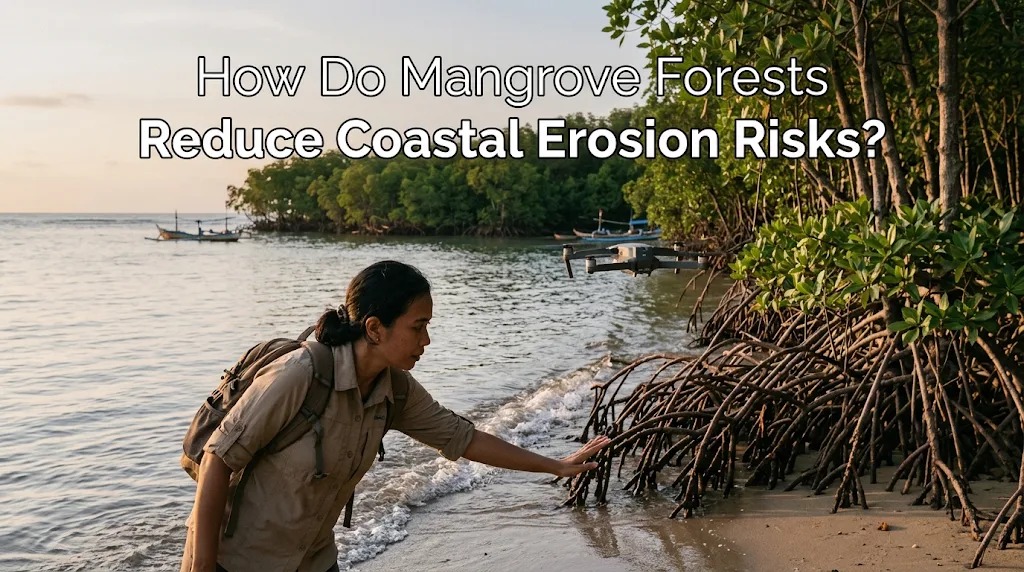
Coastal erosion is a natural process in which waves, currents, tides, and other environmental forces gradually remove soil and sediment from shorelines. However, human activities, rising sea levels, and the loss of natural coastal vegetation can make erosion more severe. This process threatens coastal settlements, roads, agricultural land, and important ecosystems.
Mangrove forests provide natural protection against coastal erosion through their dense root systems and vegetation. Growing along tropical and subtropical coastlines, mangroves help slow water movement, trap sediment, and stabilize shorelines. Protecting and restoring these forests can strengthen coastal resilience while supporting biodiversity and local livelihoods.
REDUCING WAVE ENERGY ALONG THE COAST
Mangrove forests help reduce the energy of waves before they reach the shoreline. Their trunks, branches, and dense vegetation create physical resistance that slows water movement as waves travel through the forest.
The amount of wave energy reduced depends on factors such as forest width, tree density, species composition, water depth, and wave conditions. Wider and healthier mangrove forests can provide greater protection in suitable coastal environments. By reducing wave energy, mangroves can limit the force acting directly on coastal soil and help reduce erosion.
STABILIZING SOIL THROUGH ROOT SYSTEMS
One of the most important features of mangroves is their complex root system. Different mangrove species develop structures such as prop roots and pneumatophores that help them survive in waterlogged coastal environments.
These roots hold sediment in place and reduce the movement of loose soil caused by waves and currents. They also create a more stable environment for sediment accumulation. As mangrove roots grow and spread, they can help strengthen the coastal surface and reduce the risk of shoreline material being washed away.
TRAPPING SEDIMENT AND BUILDING COASTAL LAND
Mangrove forests can trap sediment carried by rivers, tides, and coastal currents. Their roots and vegetation slow water movement, allowing suspended particles to settle instead of being transported away.
Over time, accumulated sediment can contribute to the development and maintenance of coastal land. This process supports shoreline stability and helps mangrove ecosystems adapt to changing environmental conditions when sediment supply and elevation gain are sufficient. However, the process varies depending on local water movement, sediment availability, and coastal development.
PROTECTING COASTAL COMMUNITIES AND INFRASTRUCTURE
Coastal communities are often exposed to strong waves, tidal flooding, and storm surges. These hazards can damage houses, roads, fishing facilities, and other infrastructure located near the shoreline.
Mangrove forests can serve as natural protective barriers by reducing wave energy and limiting sediment loss. They may also reduce some of the impacts of storm surges, although their effectiveness depends on local conditions and the characteristics of the hazard. Maintaining healthy mangrove areas can therefore become part of a broader coastal protection strategy.
SUPPORTING BIODIVERSITY AND ECOSYSTEM HEALTH
Mangrove forests provide important habitats for fish, crabs, shrimp, birds, and many other organisms. Their roots create sheltered environments where young aquatic animals can find food and protection from predators.
Healthy biodiversity also supports the ecological functions of coastal environments. Mangrove ecosystems contribute to nutrient cycling, carbon storage, and food webs that connect coastal habitats. Protecting these natural functions helps maintain the long-term condition of shorelines and the resources used by nearby communities.
REDUCING THE IMPACT OF HUMAN ACTIVITIES
Human activities can increase coastal erosion when they damage natural vegetation or disrupt sediment movement. Mangrove clearing for aquaculture, construction, agriculture, and coastal development can remove important natural barriers and expose shorelines to stronger wave action.
Unsustainable sand extraction, poorly planned coastal structures, and changes to river flows can also affect sediment supply and coastal stability. Protecting existing mangrove forests requires responsible land-use planning, enforcement of environmental regulations, and careful management of activities near sensitive coastal areas.
RESTORING DAMAGED MANGROVE ECOSYSTEMS
Mangrove restoration can help recover coastal protection functions in areas where forests have been damaged or removed. However, successful restoration requires more than simply planting young trees. Projects must consider suitable species, tidal conditions, soil characteristics, freshwater flows, and natural sediment movement.
In some locations, restoring the natural flow of water and allowing mangroves to regenerate naturally may be more effective than planting trees without addressing the underlying environmental problems. Monitoring survival rates, vegetation growth, and shoreline changes helps determine whether restoration efforts are working.
INVOLVING LOCAL COMMUNITIES IN MANGROVE CONSERVATION
Local communities play an important role in protecting mangrove forests because their livelihoods are often closely connected to coastal environments. Fishers, farmers, community groups, and local organizations can participate in conservation activities and help prevent illegal mangrove clearing.
Community-based programs may include mangrove monitoring, educational campaigns, sustainable aquaculture practices, and responsible ecotourism. Providing alternative livelihood opportunities can also reduce pressure on mangrove resources. When residents understand the benefits of mangroves, they are more likely to support long-term conservation efforts.
COMBINING MANGROVES WITH OTHER COASTAL PROTECTION MEASURES
Mangrove forests are valuable natural defenses, but they cannot prevent every form of coastal erosion. Their effectiveness may be limited in locations with strong wave exposure, unsuitable soil conditions, insufficient sediment, or heavily modified coastlines.
For this reason, mangrove conservation should be combined with other coastal management measures when necessary. These may include coastal setback zones, sustainable land-use planning, beach nourishment, improved drainage, and carefully designed protective structures. Integrated coastal management helps balance environmental protection with the safety and development needs of coastal communities.
CONCLUSION
Mangrove forests reduce coastal erosion risks by slowing waves, stabilizing soil, trapping sediment, and protecting shorelines from some of the effects of coastal hazards. Their root systems and dense vegetation create natural barriers that support coastal stability and provide important habitats for wildlife.
Protecting existing mangroves and restoring damaged ecosystems can strengthen coastal resilience over time. However, successful conservation requires suitable environmental conditions, responsible coastal development, and active participation from local communities. By combining mangrove protection with broader coastal management strategies, communities can better safeguard shorelines and maintain healthy coastal ecosystems.
Recent Posts

Bagaimana Sistem SKS pada Program Kuliah... 22.11.2026/37 View

How Does Technology Make Daily Evaluation... 21.11.2026/70 View

Apa Strategi Menghadapi Kesenjangan antara Kompetensi... 21.11.2026/73 View

Mengapa Inventaris Aset Penting bagi Kelancaran... 21.11.2026/68 View

When Should Musicians Join a Record... 21.11.2026/71 View
