

How Do Online Scammers Use Fake Identities to Deceive People?
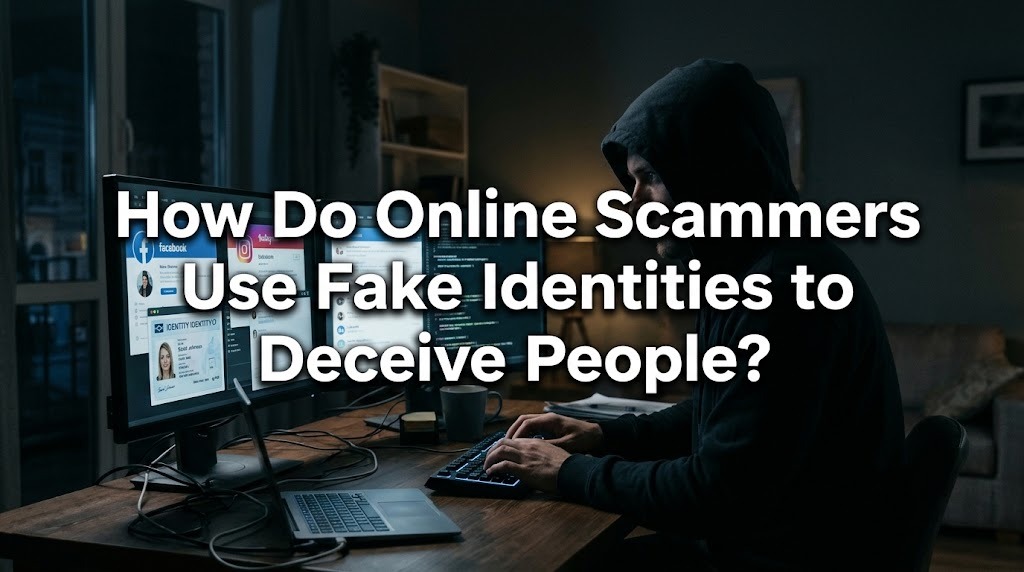
Online scams have become increasingly common as more people use the internet for communication, shopping, banking, and other daily activities. Unfortunately, scammers take advantage of these digital activities by creating fake identities to gain people's trust and steal their money or personal information. They may pretend to be trusted individuals, company representatives, romantic partners, or government officials to make their stories appear convincing.
Fake identities make online scams more difficult to recognize because criminals can use stolen photographs, fabricated personal information, and carefully prepared conversations. Understanding how scammers use fake identities is essential to avoiding financial losses, identity theft, and other forms of online crime.
WHAT ARE FAKE IDENTITIES IN ONLINE SCAMS?
Fake identities are false personal profiles or information created to make someone appear to be a different person. Online scammers use these identities to hide their real backgrounds and create a believable image that attracts potential victims. They may use fake names, stolen profile pictures, fabricated occupations, and misleading personal histories.
In many cases, scammers pretend to be people who seem trustworthy or have authority. They may impersonate bank employees, business owners, recruiters, public figures, or even people known to their victims. By presenting themselves as reliable individuals, they attempt to reduce suspicion and encourage others to follow their instructions.
The main purpose of using fake identities is to manipulate victims into taking actions that benefit the criminals. These actions may include transferring money, sharing passwords, providing identification documents, or clicking dangerous links. Therefore, recognizing false identities is an important part of protecting personal and financial security online.
COMMON METHODS SCAMMERS USE TO CREATE FAKE IDENTITIES
One common method is stealing photographs and personal information from genuine social media accounts. Scammers may copy someone's profile picture, name, occupation, and other publicly available details to create an account that looks authentic. They sometimes use these details to impersonate real individuals without their knowledge or permission.
Another method involves creating completely fictional identities. Scammers invent personal backgrounds, professional achievements, business information, and family situations to make their accounts appear realistic. They may also prepare several social media accounts to create the impression that their identity is supported by other people.
Some criminals use artificial intelligence and photo-editing technology to create convincing profile pictures, documents, or communication materials. These tools can make fake identities appear more professional and believable. However, even sophisticated images cannot guarantee that an account represents a genuine person.
Scammers may also build their online presence gradually by posting regular content, interacting with other users, and collecting followers. This strategy helps them appear more established before approaching potential victims. As a result, users should not assume that an account is trustworthy simply because it has many followers or attractive content.
HOW SCAMMERS USE FAKE IDENTITIES TO DECEIVE PEOPLE
Scammers often begin by building relationships with their potential victims. They may send friendly messages, offer assistance, or show romantic interest to create an emotional connection. After gaining trust, they introduce requests for money, personal information, or other valuable resources.
Another technique is impersonating trusted institutions or professionals. For example, criminals may pretend to be bank representatives and claim that a user's account has a security problem. They then ask the victim to provide passwords, verification codes, or financial details. In reality, legitimate financial institutions do not need customers to disclose confidential passwords or one-time verification codes through unsolicited messages.
Fake identities are also used in online shopping and employment scams. A criminal may pretend to operate a legitimate online store and offer attractive prices to encourage advance payments. In employment scams, they may impersonate recruiters and request administrative fees or personal documents before providing a fake job opportunity.
Some scammers create urgent situations to prevent victims from thinking carefully. They may claim that a family member needs emergency assistance, an account will be blocked, or an investment opportunity will disappear soon. This pressure can make people act emotionally instead of checking whether the information is genuine.
WARNING SIGNS OF FAKE IDENTITY SCAMS
There are several warning signs that may indicate someone is using a fake identity to deceive others. One common sign is inconsistent personal information, such as different names, occupations, locations, or backgrounds across various platforms. Suspicious accounts may also have limited activity, recently uploaded photographs, or profile pictures that appear on unrelated accounts.
Another warning sign is unusual communication behavior. Scammers may quickly develop emotional relationships, avoid direct identity verification, or refuse to communicate through reliable channels. They may also provide excuses whenever someone asks for a video call or additional proof of identity.
Requests for money and confidential information should receive particular attention. Be cautious if someone asks for bank details, passwords, identification documents, or verification codes without a clear and legitimate reason. Unexpected links, unrealistic financial offers, and pressure to make immediate payments are also common characteristics of online scams.
However, a single suspicious characteristic does not automatically prove that someone is a scammer. Some genuine users have limited profiles or prefer to protect their privacy. The safest approach is to examine several warning signs and verify important information through independent and trusted sources.
HOW TO AVOID ONLINE SCAMS INVOLVING FAKE IDENTITIES
The first step in avoiding fake identity scams is to verify someone's identity before trusting their claims. Check their social media history, compare information across different platforms, and use official communication channels when dealing with businesses or institutions. If someone claims to represent a company, contact that company using the contact details listed on its official website.
Never share passwords, one-time verification codes, financial information, or sensitive identification documents with unfamiliar people. Avoid transferring money to individuals whose identities have not been properly verified, even if they appear friendly or professional. Be particularly careful with investment offers and online relationships that involve financial requests.
Strengthening account security is equally important. Use unique passwords, activate two-factor authentication, and regularly review your social media privacy settings. These steps can reduce the risk of account theft and prevent criminals from accessing personal information.
If you encounter a suspected scam, stop communicating with the account and avoid clicking any links it sends. Save relevant messages and transaction records, then report the account through the platform's official reporting system. If you have already transferred money or shared financial information, contact your bank or payment provider immediately to ask about protective measures.
CONCLUSION
Online scammers use fake identities to manipulate people's trust, steal personal information, and commit financial fraud. They may impersonate real individuals, create fictional profiles, or use advanced digital tools to make their identities appear convincing. These methods are commonly found in romance scams, online shopping fraud, employment scams, and financial deception.
Protecting yourself requires careful verification, strong account security, and awareness of suspicious online behavior. By avoiding rushed decisions and refusing to share confidential information with unverified individuals, social media and internet users can reduce the risk of becoming victims of fake identity scams.
Recent Posts

Bagaimana Sistem SKS pada Program Kuliah... 22.11.2026/37 View

How Does Technology Make Daily Evaluation... 21.11.2026/70 View

Apa Strategi Menghadapi Kesenjangan antara Kompetensi... 21.11.2026/73 View

Mengapa Inventaris Aset Penting bagi Kelancaran... 21.11.2026/68 View

When Should Musicians Join a Record... 21.11.2026/71 View
