

How Do Radio Announcers Build Strong Relationships with Their Listeners?
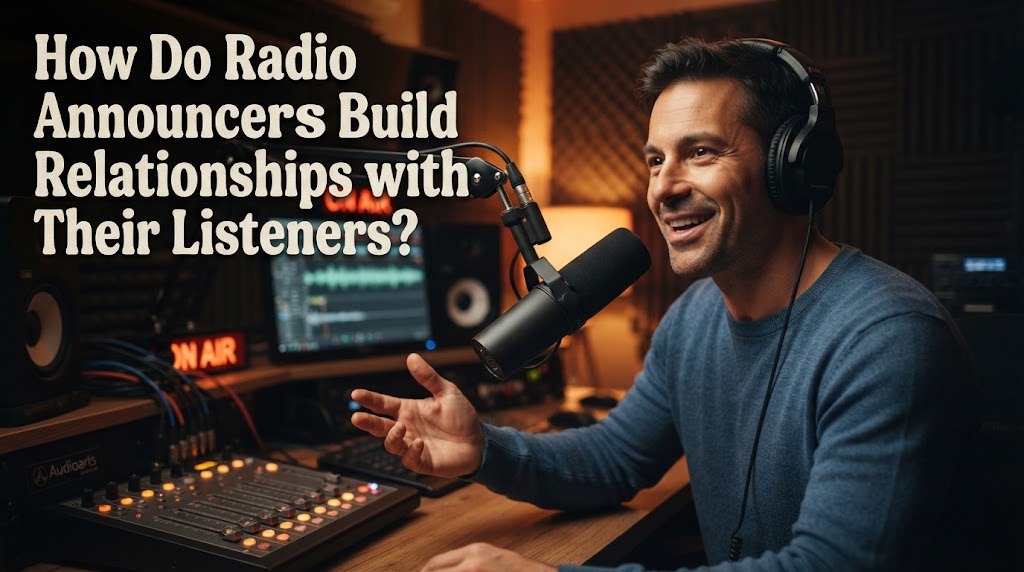
uilding a strong relationship with listeners is an important part of becoming a successful radio announcer. Unlike visual media, radio depends heavily on voice, conversation, and emotional connection. Listeners may spend hours with the same announcer while driving, working, studying, or relaxing. For this reason, an announcer needs to make the audience feel comfortable, respected, and included in the program.
A strong listener relationship does not develop instantly. It requires consistency, authenticity, good communication, and an understanding of what the audience needs. Radio announcers can strengthen this relationship by interacting with listeners, providing valuable content, responding to feedback, and developing a recognizable broadcasting personality.
UNDERSTAND THE LISTENERS
Understanding the audience is the foundation of a strong relationship between radio announcers and listeners. Announcers should learn about the interests, lifestyles, preferences, and expectations of the people who regularly listen to their programs. This information can help them choose topics, music, discussions, and communication styles that feel relevant. When content matches the audience's interests, listeners are more likely to feel connected to the program.
Audience understanding should be developed continuously rather than based only on assumptions. Announcers can observe messages, song requests, questions, comments, and other forms of listener feedback. They can also pay attention to which topics generate the most meaningful responses. This allows announcers to adjust their content while maintaining the identity of their program.
SPEAK IN A NATURAL AND FRIENDLY WAY
A natural communication style can make listeners feel as though they are having a personal conversation with the announcer. Radio announcers should avoid sounding overly formal when the program is designed to be casual and conversational. Simple vocabulary and a warm tone can make information easier to understand. The goal is to sound professional without creating unnecessary distance from the audience.
Announcers can imagine that they are speaking to one person rather than a large and anonymous crowd. This mindset can make their delivery sound more personal and relaxed. They should also avoid excessive scripted language when spontaneous conversation is more appropriate. A natural style helps listeners recognize the personality behind the voice.
BE CONSISTENT ON AIR
Consistency helps listeners become familiar with an announcer's personality and communication style. Regular listeners may develop a routine around a particular program because they know what kind of experience to expect. Consistency can involve the quality of content, speaking style, program schedule, and interaction with the audience. Being reliable can gradually strengthen listener trust.
Consistency does not mean that every broadcast needs to sound exactly the same. Announcers can introduce new topics, stories, and creative segments while maintaining their recognizable style. They should also remain dependable when communicating information or responding to listeners. Over time, this balance can make the audience feel more comfortable with the program.
INTERACT WITH LISTENERS
Listener interaction is one of the most direct ways to build a relationship through radio. Announcers can invite listeners to send messages, request songs, answer questions, share experiences, or participate in discussions. These activities make the audience feel that their presence matters. Interaction can also transform a broadcast from a one way presentation into a shared experience.
Responses should be respectful and relevant to the listener's contribution. When appropriate, announcers can mention listener comments or questions during the program. However, they should avoid sharing private information without permission. Responsible interaction helps create a community while maintaining professional boundaries.
LISTEN TO AUDIENCE FEEDBACK
Feedback provides valuable information about how listeners experience a radio program. Announcers can learn from positive comments as well as constructive criticism. Feedback may reveal whether certain topics are useful, whether the delivery is clear, or whether a particular segment needs improvement. Listening carefully shows that the audience's opinions are taken seriously.
Not every suggestion needs to be followed, because announcers and radio stations still need to maintain their editorial direction. However, repeated feedback can reveal patterns that deserve attention. Announcers should evaluate feedback objectively and use useful information to improve future broadcasts. This approach can strengthen trust and demonstrate professionalism.
CREATE CONTENT THAT PROVIDES VALUE
Strong relationships are easier to maintain when listeners receive something valuable from a program. Value can come in many forms, including useful information, entertainment, education, inspiration, practical advice, or meaningful conversation. Announcers should understand what their audience expects from each segment. Content should have a clear purpose rather than simply filling airtime.
Even short segments can provide value when they are well prepared. A simple explanation, interesting fact, helpful recommendation, or relatable story can make a listener's experience more enjoyable. Announcers should also avoid repeating information unnecessarily. Useful and relevant content gives listeners a reason to return to the program.
SHOW AUTHENTIC PERSONALITY
Authenticity can help an announcer develop a recognizable identity. Listeners often become familiar with an announcer's humor, interests, expressions, storytelling style, and way of responding to situations. An announcer does not need to create an exaggerated personality simply to attract attention. A genuine and appropriate personality can be more sustainable over the long term.
Being authentic still requires professionalism. Announcers should understand that they are communicating publicly and should consider the effect of their words on different listeners. Personal stories can create connection, but sensitive or private information should be handled carefully. The best approach is to combine genuine personality with responsible communication.
USE HUMOR RESPONSIBLY
Humor can make a radio program more enjoyable and memorable. Appropriate jokes, light stories, and playful conversations can help create a relaxed relationship with listeners. However, humor should match the program's audience and context. Announcers need to avoid jokes that could unnecessarily offend, embarrass, or discriminate against other people.
Good humor often comes from everyday experiences that many listeners can understand. Announcers can use simple observations, funny situations, or lighthearted stories without making the program uncomfortable. They should also recognize when a serious topic requires a more respectful tone. Using humor thoughtfully can strengthen the atmosphere of a program.
CONNECT THROUGH DIGITAL PLATFORMS
Modern radio programs can extend their relationship with listeners beyond traditional broadcasts. Social media, streaming platforms, websites, and messaging services can provide additional opportunities for communication. Announcers can use these channels to share program updates, invite opinions, publish related content, and continue discussions after a broadcast ends. This creates more opportunities for listeners to remain connected with the program.
Digital interaction should remain consistent with the identity and standards of the radio station. Announcers should communicate professionally and protect personal information when interacting online. They should also avoid treating every online reaction as representative of the entire audience. Used thoughtfully, digital platforms can complement traditional radio interaction.
BUILD TRUST THROUGH RESPONSIBLE COMMUNICATION
Trust is essential for maintaining a long term relationship with listeners. Announcers should communicate information accurately and avoid deliberately presenting rumors or unverified claims as facts. When discussing current events or sensitive subjects, they should use reliable information and make clear when something is uncertain. Responsible communication helps protect the credibility of both the announcer and the radio station.
Trust is also built through respectful treatment of guests and listeners. Announcers should avoid deliberately humiliating people for entertainment. They should understand the difference between engaging conversation and inappropriate behavior. When audiences recognize that an announcer communicates responsibly, they have stronger reasons to continue listening.
KEEP IMPROVING THE BROADCAST
Building relationships with listeners requires continuous improvement. Announcers should regularly evaluate their voice, content, timing, interaction, and overall program performance. Recordings and audience feedback can help identify areas that need improvement. Learning from experienced broadcasters can also provide useful ideas for developing a stronger communication style.
Improvement should be gradual and consistent. An announcer does not need to change everything at once to become more engaging. Small adjustments to speaking style, topic selection, storytelling, or listener interaction can create meaningful progress. Over time, continuous learning can help an announcer become more confident and effective.
CONCLUSION
Radio announcers build strong relationships with listeners through consistency, authenticity, meaningful interaction, and valuable content. Understanding the audience allows announcers to create programs that feel relevant and personal. Friendly communication, responsible humor, listener feedback, and digital engagement can further strengthen the connection. Most importantly, announcers need to maintain trust by communicating accurately and respectfully. With continuous improvement and genuine communication, radio announcers can develop loyal audiences and create a stronger sense of community around their programs.
Recent Posts

Bagaimana Sistem SKS pada Program Kuliah... 22.11.2026/35 View

How Does Technology Make Daily Evaluation... 21.11.2026/69 View

Apa Strategi Menghadapi Kesenjangan antara Kompetensi... 21.11.2026/69 View

Mengapa Inventaris Aset Penting bagi Kelancaran... 21.11.2026/67 View

When Should Musicians Join a Record... 21.11.2026/68 View
