

How Do Radio Announcers Help Deliver Information to the Public?
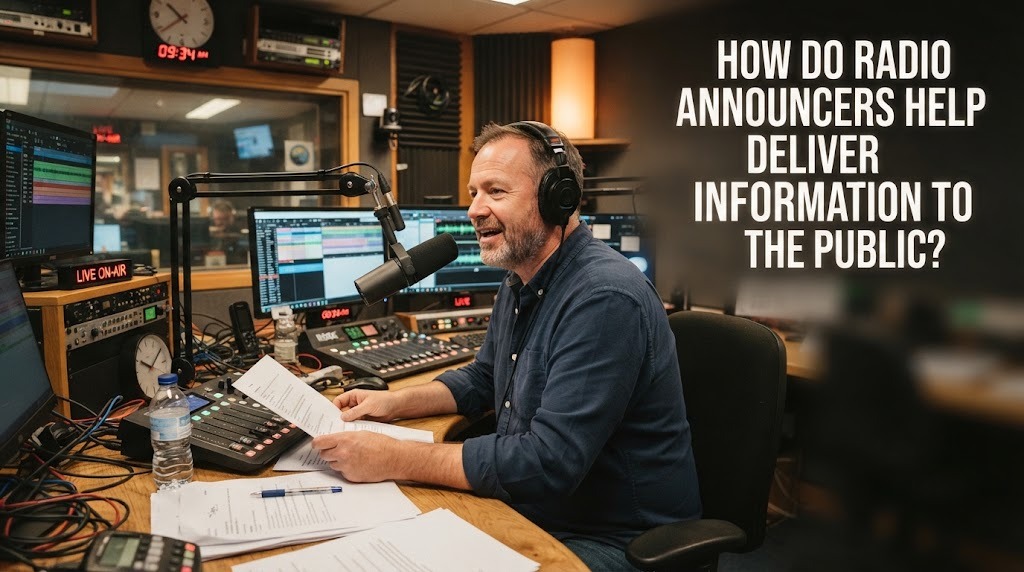
Radio remains an important communication medium for delivering information to the public. Even though people now have access to social media, websites, podcasts, and streaming platforms, radio can still reach audiences quickly and conveniently. Behind every radio program, radio announcers play an important role in presenting information in a clear, engaging, and understandable way. They do more than simply read a script because they must understand the information before delivering it to listeners. Their communication skills can influence how effectively the public receives and understands a message.
THE ROLE OF RADIO ANNOUNCERS IN PUBLIC INFORMATION
Radio announcers act as a bridge between information sources and the audience. They receive information from reliable sources, understand its meaning, and communicate it through spoken language. Their role is especially important when listeners need information quickly, such as news updates, traffic conditions, weather information, public announcements, or emergency messages. A good announcer presents information in an organized manner so listeners can follow the message without confusion. They also adjust their speaking style according to the type of information being delivered.
Radio announcers must maintain accuracy when communicating public information. They should check important facts and avoid changing the meaning of information simply to make a broadcast more interesting. When dealing with sensitive topics, announcers also need to use responsible language and avoid spreading rumors or unverified claims. This responsibility helps maintain public trust in radio as an information source.
HOW RADIO ANNOUNCERS MAKE INFORMATION EASY TO UNDERSTAND
One of the main strengths of radio is its use of spoken communication. Radio announcers therefore need to choose simple words, clear sentences, and an appropriate speaking speed. They use pauses, pronunciation, intonation, and emphasis to help listeners understand important parts of a message. This is particularly useful because listeners cannot see written information while listening to a radio broadcast. A clear voice and logical explanation can make complex information easier to understand.
Announcers also consider the characteristics of their audience. Information intended for students may use different language from information intended for workers, families, or the general public. They can provide short explanations when a topic is complicated and repeat essential information when necessary. By adapting their communication style, radio announcers can make public information more accessible to different groups of listeners.
DELIVERING NEWS AND CURRENT INFORMATION
Radio announcers contribute to public awareness by delivering news and current information. They may introduce news reports, summarize important developments, or provide additional context during a program. Their delivery helps listeners understand what happened, why it matters, and how it may affect everyday life. Radio is particularly useful for people who want to receive information while driving, working, studying, or doing household activities. This makes radio a practical medium for reaching people in different situations.
When presenting news, announcers need to separate verified information from personal opinions. They should identify the source of important information and avoid presenting speculation as fact. Professional announcers also remain careful when reporting developing situations because information can change as new facts become available. Responsible reporting helps prevent misunderstanding and protects the credibility of the broadcast.
PROVIDING INFORMATION DURING EMERGENCIES
Radio announcers can become especially important during emergencies and disasters. When electricity, internet access, or mobile communication is disrupted, radio may remain available to communities. Announcers can deliver official warnings, evacuation information, weather updates, safety instructions, and other urgent messages. Their ability to communicate calmly and clearly can help listeners understand what actions they should take. In these situations, accurate information can be extremely valuable for public safety.
Emergency broadcasts require careful coordination with reliable authorities and information sources. Announcers should avoid spreading unconfirmed reports that could create panic. They need to repeat critical instructions when appropriate and make important details easy to remember. A calm and professional delivery can also help audiences focus on practical safety information rather than fear.
CONNECTING THE PUBLIC WITH IMPORTANT SERVICES
Radio announcers also help introduce the public to services and programs that may be useful in everyday life. These can include educational programs, health campaigns, employment information, public services, community activities, and government announcements. By explaining where people can obtain additional information, announcers can make public services easier to access. Radio can therefore function as a communication channel between institutions and communities. This role is particularly valuable for audiences who may not regularly use digital platforms.
Community radio can strengthen this function by focusing on local issues and the needs of nearby residents. Announcers may discuss local events, public facilities, transportation conditions, or community concerns. They can also invite experts or relevant organizations to explain important topics. This creates opportunities for listeners to receive information that is directly connected to their daily lives.
USING INTERVIEWS AND DISCUSSIONS TO EXPLAIN INFORMATION
Radio announcers often use interviews and discussions to provide deeper explanations. Instead of simply reading information, they can ask experts questions about education, health, economics, technology, public policy, or social issues. Good questions help listeners understand complicated subjects from different perspectives. Announcers must listen carefully so they can ask relevant follow-up questions and keep the discussion focused. This makes radio programs more informative and engaging.
Interviews also give audiences access to people with professional knowledge or direct experience. However, announcers still need to consider the credibility of their guests and the accuracy of the information presented. They should avoid allowing misleading claims to go unchallenged when clarification is necessary. Through responsible interviews, radio can encourage informed public discussion.
BUILDING TRUST THROUGH RESPONSIBLE COMMUNICATION
Trust is an important part of public information. Radio announcers can build trust by being consistent, accurate, transparent, and professional when communicating with listeners. They should correct significant mistakes when they occur and distinguish factual information from commentary. Their tone should remain appropriate, especially when discussing serious or sensitive subjects. Over time, responsible communication can strengthen the relationship between radio stations and their audiences.
Radio announcers also need to understand the ethical responsibilities of broadcasting. They should respect privacy, avoid discriminatory language, and consider the possible impact of their words. They must be careful when discussing allegations, personal matters, or information involving vulnerable people. Ethical communication helps ensure that the public receives useful information without unnecessary harm.
THE IMPORTANCE OF DIGITAL SKILLS FOR MODERN RADIO ANNOUNCERS
Modern radio announcers increasingly work across traditional and digital platforms. A radio program may also be promoted through social media, websites, streaming services, or podcast platforms. Announcers therefore need basic digital skills to communicate with audiences beyond live broadcasts. They may prepare short digital content, interact with listeners online, or direct audiences toward additional information. These skills help radio remain relevant in a changing media environment.
Digital platforms can also make radio information easier to access after a live broadcast has ended. However, announcers must continue to apply the same standards of accuracy and responsibility across different platforms. Information shared online can spread quickly, so mistakes may reach a large audience in a short time. Combining strong broadcasting skills with digital awareness allows announcers to communicate more effectively with modern audiences.
CONCLUSION
Radio announcers help deliver information to the public by acting as a clear and reliable link between information sources and listeners. They present news, public announcements, emergency instructions, educational content, and community information in a form that is easy to understand. Their voice, pronunciation, timing, and communication style can significantly influence how audiences receive a message. They also have an important responsibility to verify information, avoid misinformation, and communicate ethically.
Although media consumption continues to change, radio announcers remain valuable in public communication. Their ability to deliver information quickly, explain complex topics, and connect with communities makes radio an effective communication medium. By combining professional broadcasting skills, accurate information, and digital awareness, radio announcers can continue helping the public stay informed in an increasingly connected world.
Recent Posts

Bagaimana Sistem SKS pada Program Kuliah... 22.11.2026/35 View

How Does Technology Make Daily Evaluation... 21.11.2026/69 View

Apa Strategi Menghadapi Kesenjangan antara Kompetensi... 21.11.2026/69 View

Mengapa Inventaris Aset Penting bagi Kelancaran... 21.11.2026/67 View

When Should Musicians Join a Record... 21.11.2026/68 View
