

How Do Radiology Staff Stay Safe from Daily Radiation Exposure?
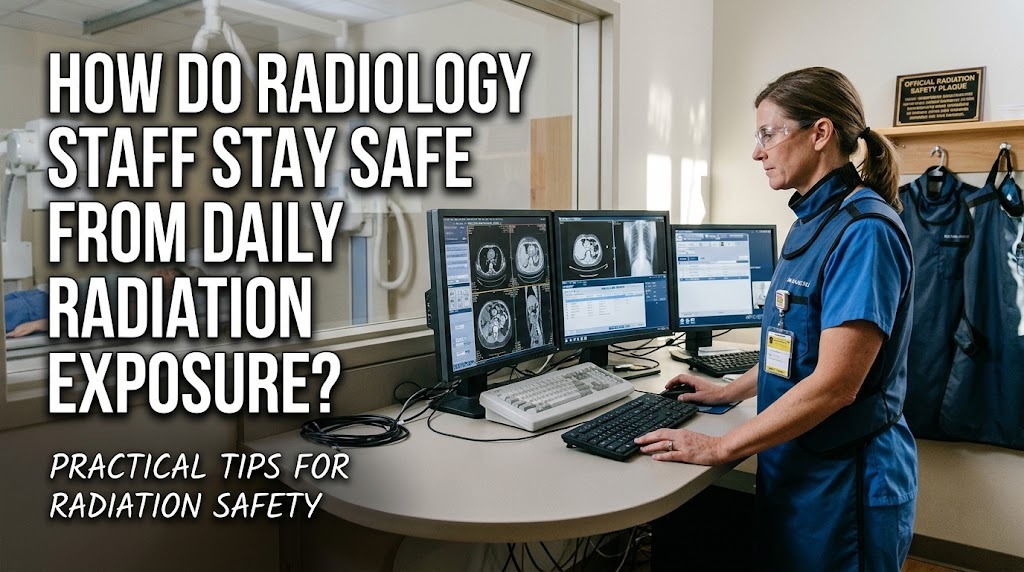
Radiology staff work alongside diagnostic radiation equipment every day to help detect, diagnose, and treat medical conditions. Because they are regularly near ionizing energy sources like X-rays, fluoroscopy units, and CT scanners, maintaining strict occupational radiation safety is essential.
Healthcare facilities follow international guidelines set by organizations like the International Atomic Energy Agency to keep staff safety a top priority. By combining physical engineering, specialized equipment, and proper protocols, medical teams work in a secure and controlled environment.
THE PRINCIPLE OF TIME, DISTANCE, AND SHIELDING
The cornerstone of radiation protection for healthcare workers relies on three fundamental practices: minimizing time, maximizing distance, and using shielding. By adhering to these three rules, staff drastically lower their daily occupational exposure.
- Minimizing Time: Staff structure procedures to reduce the amount of time spent near an active radiation beam.
- Maximizing Distance: Standing further away from the radiation source significantly reduces the energy intensity hitting the body due to the inverse-square law.
- Using Shielding: Physical barriers like lead glass windows, lead walls, and protective aprons block incoming rays from reaching body tissues.
PROTECTIVE APPAREL AND SHIELDING EQUIPMENT
When radiology staff need to remain inside an imaging room during a procedure, they wear specialized lead-equivalent protective gear. This apparel acts as a dense physical barrier that absorbs scattering radiation before it can reach vital organs.
Everyday protective wear includes heavy lead aprons, thyroid collars, and leaded eyewear. Radiologists and technologists also utilize mobile protective lead screens and table-mounted lead drapes to block scattered X-rays during longer procedures like fluoroscopy.
PERSONAL RADIATION DOSIMETER MONITORING
To track individual cumulative exposure over time, all healthcare workers operating imaging equipment are required to wear a personal dosimeter badge. These small, sensitive devices track the exact dose of ionizing radiation a worker absorbs throughout their shift.
Dosimeter badges are submitted regularly to certified laboratories for detailed safety analysis. This continuous tracking ensures that every staff member's exposure stays well below the established annual safety limits for occupational workers.
FACILITY DESIGN AND STRUCTURAL PROTECTION
Modern radiology departments are built with built-in structural shielding to protect staff working outside imaging rooms. X-ray, CT scan, and interventional procedure rooms feature walls reinforced with lead lining or extra-thick concrete.
Control booths are situated behind lead glass viewing windows, allowing technologists to monitor patients and operate machinery without being exposed to the primary beam. Controlled access doors automatically seal during active exposure cycles, ensuring that surrounding hallways remain completely safe.
CONTINUOUS TRAINING AND SAFETY PROTOCOLS
In addition to physical barriers and monitoring gear, radiology staff undergo regular radiation safety training. Training programs emphasize proper equipment positioning, beam collimation (limiting the beam to only the necessary area), and adherence to safety guidelines.
Facilities assign a dedicated Radiation Safety Officer (RSO) to oversee safety practices, inspect imaging equipment routinely, and verify that safety standards are met. This active administrative oversight maintains a safety-first culture across all diagnostic departments.
CONCLUSION
In conclusion, radiology staff stay safe from daily radiation exposure through a combination of structural shielding, protective apparel, and continuous dosimeter monitoring. By consistently practicing time, distance, and shielding principles, staff keep their exposure far below established safety thresholds.
Advanced facility designs and strict administrative safety oversight ensure that medical professionals work safely every day. These combined measures allow healthcare teams to deliver high-quality patient care while protecting their own health and well-being.
Recent Posts

Bagaimana Sistem SKS pada Program Kuliah... 22.11.2026/53 View

How Does Technology Make Daily Evaluation... 21.11.2026/82 View

Apa Strategi Menghadapi Kesenjangan antara Kompetensi... 21.11.2026/81 View

Mengapa Inventaris Aset Penting bagi Kelancaran... 21.11.2026/77 View

When Should Musicians Join a Record... 21.11.2026/82 View
