

How Do School Flag Ceremonies Develop Discipline Among Students?
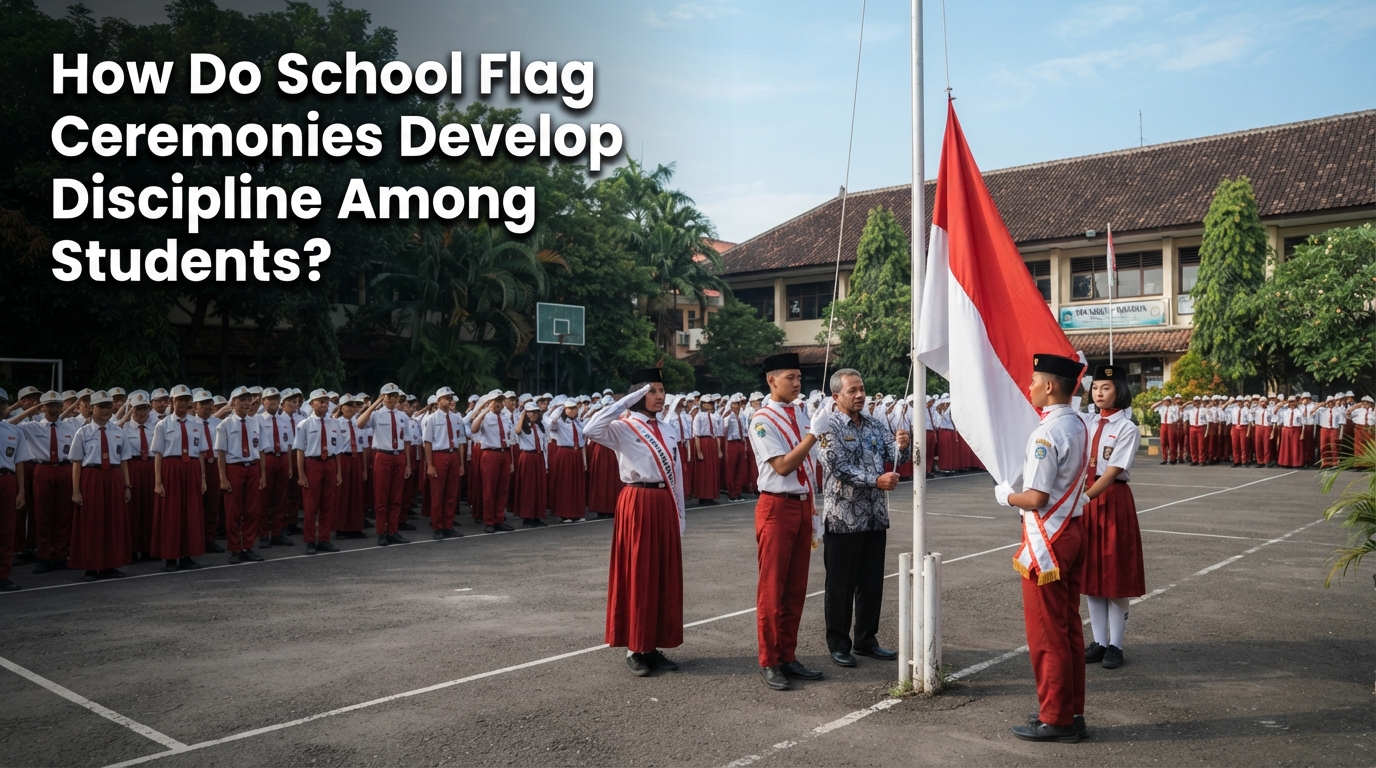
School flag ceremonies are more than formal activities held every Monday morning. They are educational routines that help students develop discipline, responsibility, punctuality, and respect for rules. In Indonesia, flag ceremonies are commonly conducted in schoolyards, where students gather to participate in raising the Red and White Flag, singing the national anthem, and listening to messages from the ceremony supervisor.
Through these activities, students learn how to follow instructions, manage their time, and behave appropriately in an organized environment. Regular participation also encourages them to understand the importance of fulfilling their responsibilities as members of the school community. Therefore, school flag ceremonies play an important role in building disciplined habits that students can apply in their academic activities and everyday lives.
TEACHING STUDENTS THE IMPORTANCE OF PUNCTUALITY
One of the simplest ways flag ceremonies develop discipline is by teaching students to value punctuality. Students are expected to arrive at school before the ceremony begins and prepare themselves according to the schedule. This habit encourages them to manage their morning routines, prepare their uniforms, and avoid unnecessary delays. By practicing punctuality regularly, students become more aware that time is an important responsibility.
Arriving on time also demonstrates respect for teachers, classmates, and other participants. Students learn that being late can disturb the activities of an entire group. This understanding encourages them to become more organized and responsible when managing their daily schedules. Over time, punctuality during school ceremonies can influence their behavior in classrooms, extracurricular activities, and other responsibilities.
TRAINING STUDENTS TO FOLLOW RULES AND INSTRUCTIONS
Flag ceremonies provide opportunities for students to practice following rules and instructions in an organized environment. During the activity, participants must follow specific procedures, such as standing in the correct positions, maintaining order, and observing the instructions given by the ceremony leader. These activities teach students the importance of obedience, self-control, and respect for established rules. They also help students understand that rules exist to maintain order and ensure that activities run smoothly.
Following instructions does not simply mean doing what others say without understanding. Students should also recognize the purpose of the rules and how their behavior affects other participants. For example, maintaining silence during speeches allows everyone to listen and understand the information being delivered. Through these experiences, students gradually develop the ability to control their actions and respect shared responsibilities.
BUILDING RESPONSIBILITY THROUGH CEREMONY PARTICIPATION
Another important way flag ceremonies develop discipline is by giving students opportunities to carry out specific responsibilities. Some students may be selected as flag-raising officers, ceremony leaders, or members of the organizing team. Each role requires preparation, commitment, and attention to detail. Students must understand their duties and complete them according to the planned schedule.
These responsibilities teach students that every task has an important purpose. If one participant fails to prepare properly, the entire ceremony may be affected. This experience helps students understand the value of accountability and commitment. The lessons they gain can also encourage them to become more responsible when completing school assignments, participating in group projects, and managing personal activities.
DEVELOPING SELF-CONTROL AND ORDERLY BEHAVIOR
During flag ceremonies, students are expected to maintain appropriate behavior throughout the activity. They need to stand properly, avoid unnecessary conversations, pay attention to instructions, and respect the people leading the ceremony. These expectations help develop self-control and emotional discipline. Students gradually learn to manage their movements, reactions, and attention in public situations.
Self-control is an important ability that supports learning and social relationships. Students who can manage their behavior are generally better prepared to listen during lessons, communicate respectfully, and handle different situations. Flag ceremonies provide regular opportunities to practice these habits in a structured setting. As a result, students can become more aware of how their actions influence the comfort and order of others.
ENCOURAGING RESPECT FOR OTHERS AND SCHOOL REGULATIONS
Discipline is not only about following instructions but also about respecting other people. During flag ceremonies, students learn to appreciate the responsibilities of teachers, ceremony officers, and fellow participants. They are expected to avoid disturbing others and follow the procedures established by the school. These habits encourage mutual respect, cooperation, and social awareness.
Respecting school regulations also helps students understand the importance of maintaining a positive learning environment. For example, wearing the correct uniform, keeping the schoolyard clean, and following ceremony procedures demonstrate responsible behavior. When students practice these actions consistently, they become more familiar with the importance of respecting shared standards. This awareness can help create a school environment that is orderly, comfortable, and supportive.
STRENGTHENING CONSISTENCY AND POSITIVE HABITS
Discipline cannot be developed through a single activity. It requires repeated practice and consistency in daily behavior. School flag ceremonies provide regular opportunities for students to practice arriving on time, following instructions, maintaining order, and completing responsibilities. These repeated experiences can gradually become positive habits.
Consistency also teaches students that discipline should be maintained even when teachers are not directly supervising them. For example, students who understand the importance of punctuality may continue arriving on time for other activities. They may also become more organized when studying, completing assignments, and preparing for examinations. In this way, the habits developed during flag ceremonies can support their long-term personal and academic growth.
THE ROLE OF TEACHERS IN DEVELOPING STUDENT DISCIPLINE
Teachers have an important role in ensuring that flag ceremonies provide meaningful lessons about discipline. They should guide students through each stage of the activity and explain why punctuality, responsibility, and proper behavior matter. Teachers can also provide constructive feedback when students experience difficulties following the procedures. This guidance helps students understand their mistakes and improve their behavior.
In addition, teachers should demonstrate discipline through their own actions. Arriving on time, following established procedures, and communicating respectfully can provide positive examples for students to follow. Schools should also create a supportive environment where students can learn discipline without unnecessary intimidation. Through consistent guidance and positive role models, teachers can help students develop responsible behavior that continues beyond school ceremonies.
THE BENEFITS OF DISCIPLINE IN STUDENTS' DAILY LIVES
The discipline students learn through flag ceremonies can provide benefits beyond the school environment. Students who develop good time-management habits may become more organized when completing assignments and preparing for examinations. They can also improve their ability to follow schedules, respect deadlines, and manage different responsibilities. These abilities are useful for achieving academic goals and preparing for future challenges.
Furthermore, disciplined students may find it easier to cooperate with others and adapt to different environments. They understand the importance of respecting rules, fulfilling commitments, and controlling their behavior. These qualities are valuable in higher education, professional environments, and social relationships. Therefore, discipline developed through school activities can become an important foundation for students' future success.
CONCLUSION
School flag ceremonies develop discipline among students through regular practice of punctuality, responsibility, self-control, consistency, and respect for rules. Activities such as following instructions, maintaining order, and carrying out ceremony duties provide practical opportunities for students to build positive habits. With proper guidance from teachers, these experiences can support the development of responsible and independent individuals.
Ultimately, the value of school flag ceremonies goes beyond raising the national flag. They also help students understand that discipline is an important part of personal growth and social responsibility. By applying the lessons learned during ceremonies to their daily activities, students can become more organized, respectful, and prepared to face future challenges.
Recent Posts

How Does Technology Make Daily Evaluation... 21.11.2026/58 View

Apa Strategi Menghadapi Kesenjangan antara Kompetensi... 21.11.2026/60 View

Mengapa Inventaris Aset Penting bagi Kelancaran... 21.11.2026/56 View

When Should Musicians Join a Record... 21.11.2026/55 View

Daily Evaluation or Daily Planning Which... 21.11.2026/63 View
